


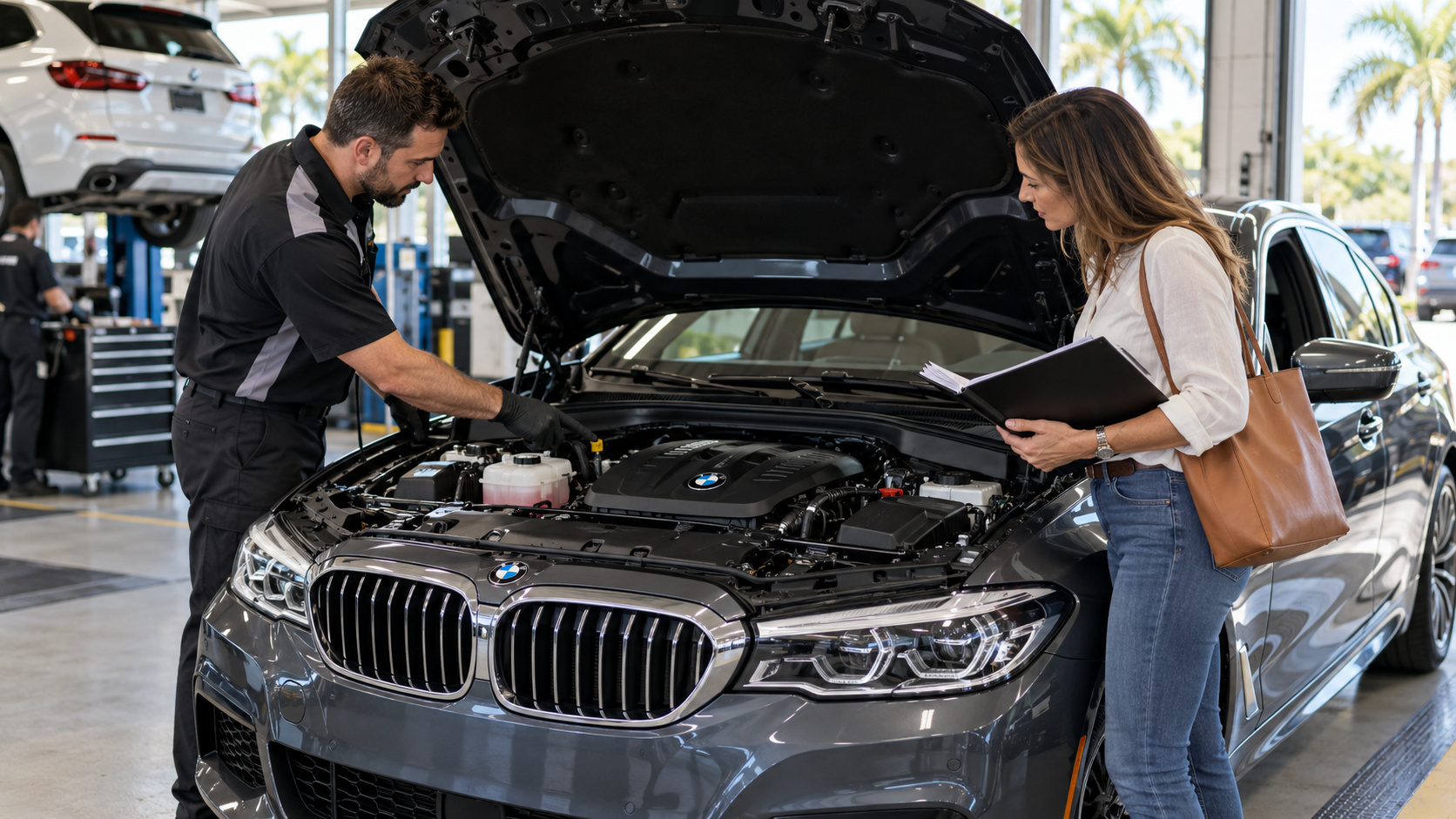
BMW maintenance matters more as mileage and age rise, but no fixed odometer number applies to every BMW. Two cars can reach the same mileage with very different service records and repair histories. Therefore, Orange Park owners should treat mileage as one part of a larger record. Oil care, cooling health, brake fluid, battery testing, tire wear, and underbody checks all add context.
How Long Can a BMW Last?
How long can a BMW last? No fixed mileage applies to every BMW because service history and mechanical state vary. A well documented car may show steady care across many years. Another car with fewer miles may have missing records or delayed repairs.
Therefore, start with evidence before making a judgment. Review recurring service work, major repairs, fluid service, battery replacement, brake work, and tire records. In addition, note whether warning lights or leaks received prompt attention.
Additionally, a current inspection matters too. Check for fluid leaks, unusual noises, uneven tire wear, and warning messages. Moreover, a diagnostic scan can reveal stored faults that are not obvious during a visual review.
Mileage still matters because parts accumulate wear through heat, motion, and time. However, the odometer works best beside the service record and current inspection findings.
Service Records Show How the Car Was Cared For
Service records show whether care happened as the car aged. They can also reveal long gaps, recurring repairs, and parts that may soon need attention. Therefore, the record set should be read as a pattern, not a pile of receipts.
Which records matter most? Start with oil service, brake fluid, cooling repairs, battery replacement, brake work, tires, and inspections. These items touch several parts of the car that age through different processes.
Look for a few clear patterns.
- Regular oil service shows whether engine lubrication received steady attention across the recorded history.
- Cooling repairs can reveal whether pumps, hoses, seals, or coolant loss needed work in prior years.
- Brake, battery, and tire records show how age related items were handled as the car accumulated time and mileage.
Missing records do not prove that service was skipped. However, they create unanswered questions. For this reason, a fresh inspection becomes more useful when the paper trail is incomplete.
Oil Cooling Brakes Battery and Tires Need Separate Review
Oil, cooling, brakes, batteries, and tires do not age in the same way. Each area needs its own review because heat, friction, fluid age, and electrical load act differently.
Why does oil service matter as mileage rises? Engine oil separates moving metal surfaces and carries heat away from internal parts. It also holds contaminants until the oil is replaced. Therefore, correct oil and regular service remain central to engine care.
Moreover, cooling deserves its own review. Coolant moves heat away from the engine through pumps, passages, hoses, and heat exchangers. A leak or weak component can reduce temperature control before a major warning appears.
Brake fluid follows a different timeline. The fluid can absorb moisture as it ages, so time matters beside mileage. In addition, pads, discs, and brake lines need direct inspection for wear or damage.
Additionally, battery health deserves testing. Florida heat can accelerate battery aging. Tires need separate attention because tread depth, age, pressure, and wear patterns reveal different issues.
Florida Heat Humidity and Coastal Air Add Inspection Priorities
Orange Park and Jacksonville add local inspection priorities because heat, humidity, and coastal air can stress certain parts faster. The goal is not to assume damage. Instead, inspect the areas that deserve closer attention after years in Florida.
What should Orange Park owners review more closely? Start with cooling, battery health, rubber parts, tires, and visible underbody components. BMW maintenance guidance also calls for underbody checks for damage and corrosion.
Use a simple Florida review.
- Check coolant history, hoses, and visible connections before signs of overheating appear.
- Test the battery as it ages, since sustained heat can reduce reserve strength.
- Inspect visible underbody parts and exposed metal for damage, corrosion, or moisture related wear.
Humidity and coastal air make visual checks worth adding to routine service visits. In addition, rubber seals and hoses deserve attention as they age in heat. The point is early detection, not prediction.
What Should You Check Before Choosing a Used BMW?
What should you check before choosing a used BMW? Review records, fluids, cooling, battery health, brakes, tires, underbody findings, and diagnostic results. Those items provide a broader view than mileage alone.
BMW Certified Pre Owned vehicles add a structured inspection process. BMW reviews service and vehicle history, then checks brakes, tires, mechanical items, electronics, body areas, and road operation. Therefore, certification adds documented evidence about the car at the time of review.
Certification does not promise a fixed future lifespan. Parts continue to age after the inspection. Service, repairs, driving patterns, and time still shape what comes next.
A standard used BMW can still be reviewed carefully. Ask for records, request a pre purchase inspection, and review current diagnostic findings before deciding.
For Orange Park owners who plan to keep a BMW for many years, the same approach applies. Keep records organized, address warning signs early, and inspect age related areas on schedule. Tom Bush BMW Orange Park can support service scheduling. Current CPO and used inventory also give shoppers inspected and broader used options to compare.