

Blog

BMW Maintenance Plan and Ultimate Care Coverage Explained

The BMW maintenance plan that comes with every new vehicle is called Ultimate Care, and it covers factory-scheduled services for the first 3 years or 36,000 miles. Most shoppers know the name but not the mechanics behind it. Understanding how the program is structured, what the Condition Based Service system does, and how Ultimate Care differs from Ultimate Care+ gives you a clearer picture of what you are actually getting. Moreover, knowing what decisions must be made before you leave the dealership protects you from missing options that cannot be added later.

How BMW Ultimate Care Works and What It Covers

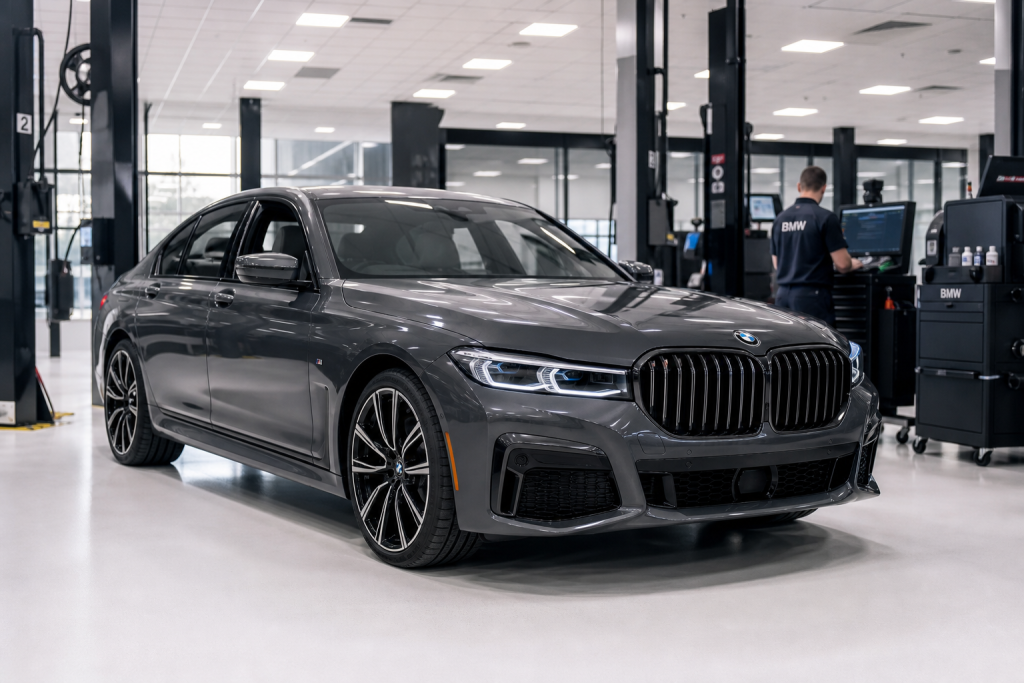
Every new BMW includes Ultimate Care at no additional cost. The program covers all factory-scheduled maintenance services for the duration of the coverage window. That includes engine oil and filter changes, brake fluid service, vehicle check services, and remote software updates where applicable. All covered services must be performed at an authorized BMW center using BMW-approved parts and fluids.

The coverage window closes at whichever limit arrives first: 3 years or 36,000 miles. A driver who reaches 36,000 miles in 18 months exhausts the program at that point. A driver who keeps annual mileage low will hit the 3-year calendar limit before reaching the mileage cap. Knowing which boundary applies to your driving pattern matters because it shapes how much remaining coverage you carry into any extension decision.

BMW does not trigger services through fixed mileage intervals under this program. Instead, the Condition Based Service system monitors vehicle data continuously and calculates when each service is actually needed. This is why two owners driving identical models can receive oil change alerts at different mileage points. The interval reflects actual vehicle state, not a number on a sticker.

Condition Based Service: The System Behind the Schedule

Condition Based Service is a sensor-driven monitoring system built into every BMW. It tracks multiple vehicle parameters simultaneously, including engine oil quality, brake fluid moisture content, air filter load, and microfilter condition. Each parameter feeds into a separate service counter that calculates remaining life as a percentage. Additionally, the system alerts the driver when a threshold approaches so service can be scheduled before a condition deteriorates.

How CBS Calculates Oil Life

Oil life calculation under CBS goes beyond simple mileage counting. The system evaluates oil temperature cycles, engine load history, cold start frequency, and short-trip accumulation. A vehicle used primarily for highway driving at steady throttle will carry healthier oil longer than one used for repeated short urban trips, even at identical mileage. As a result, CBS-driven oil change intervals on BMWs frequently extend beyond 10,000 miles and can reach up to 15,000 miles under favorable conditions.

How CBS Monitors Brake Fluid

Brake fluid monitoring works differently from oil tracking. CBS measures the moisture absorption level of the fluid rather than mileage or calendar date alone. Brake fluid absorbs water through the hydraulic system, which lowers its boiling point and reduces stopping reliability under heavy use. When CBS detects that moisture content crosses a threshold, it flags a brake fluid service regardless of mileage traveled. This approach reflects how BMW calibrates service needs to actual vehicle state rather than fixed-schedule assumptions.

Ultimate Care vs. Ultimate Care+: What Actually Separates Them

BMW includes Ultimate Care with every new vehicle purchase, requiring no decision at the point of sale. Ultimate Care+ is a separate, optional program that extends and expands coverage beyond the base plan. However, a buyer must purchase Ultimate Care+ at the time of vehicle acquisition. After taking delivery without adding it, that window closes permanently.

The most significant coverage difference between the two programs is wear-and-tear item inclusion. Base Ultimate Care covers scheduled maintenance services only. Ultimate Care+, by contrast, adds coverage for items that wear through normal use, including front and rear brake pads, brake discs, wiper blade inserts, belts, and clutch linings on manual transmission vehicles. BMW's new vehicle limited warranty does not cover these items. They are, however, among the most common service costs an owner encounters in years two through five of ownership.

Ultimate Care+ runs across four extension tiers, each defined by a cumulative mileage window that begins where base Ultimate Care ends:

  • Ultimate Care+1 extends coverage an additional 12 months, adding wear-and-tear item coverage alongside continued scheduled maintenance up to 14,000 miles beyond the base plan endpoint
  • Ultimate Care+2 covers 24 months and extends the program to 39,000 miles beyond base coverage, including both scheduled maintenance and wear-and-tear items throughout
  • Ultimate Care+3 runs 36 months and extends to 64,000 miles beyond the base endpoint, maintaining the same dual coverage structure across a longer ownership window
  • Ultimate Care+4 provides the broadest extension at 48 months, covering scheduled maintenance and wear-and-tear items to 89,000 miles beyond where base Ultimate Care concludes

The right tier depends on expected ownership length and annual mileage. A driver who keeps vehicles for five or six years and covers 15,000 miles annually will exhaust base Ultimate Care early. Without an extension, several years of out-of-pocket service costs follow.

What Does Ultimate Care Actually Exclude?

Understanding what the program does not cover is as important as knowing what it does. Base Ultimate Care is a scheduled maintenance program, not a comprehensive service contract. BMW schedules what it covers. Wear, breakage, and consumption outside those scheduled intervals fall to the owner.

Tires are excluded from both Ultimate Care and Ultimate Care+. Tire wear varies too significantly based on driving habits, road surface, and load to incorporate into a fixed program structure. Batteries also fall outside coverage, including both the main drive battery on electric models and the 12-volt auxiliary battery on all vehicles. Furthermore, fluid top-offs between scheduled services, including coolant, windshield washer fluid, and power steering fluid, are excluded entirely.

  • Tires, wheels, and wheel alignments are not covered under any tier of Ultimate Care or Ultimate Care+, and BMW treats tire wear as an owner-managed consumable cost
  • The 12-volt auxiliary battery and, on electric models, the high-voltage drive battery fall outside program coverage regardless of which Ultimate Care tier is active
  • Fluid top-offs between scheduled service intervals are the owner's responsibility and BMW does not reimburse them under either the base program or any Ultimate Care+ extension

Damage from accidents, misuse, or environmental factors also falls outside the scope of this program. BMW's new vehicle limited warranty addresses manufacturing defects. Auto insurance covers external damage. Shoppers who understand the boundary between scheduled maintenance, wear-and-tear coverage, and warranty protection can evaluate each layer of their BMW's coverage accurately.

Is Extending Your Coverage Worth It?

The value calculation for Ultimate Care+ comes down to two numbers: what the extension costs at acquisition and what covered services would cost out of pocket at an authorized BMW center. A single brake pad and disc service on a BMW can run between $400 and $700 per axle depending on the model. Brake fluid service typically runs $150 to $250. Furthermore, an oil and filter service at a BMW dealer averages $150 to $200 per visit.

Drivers who keep their vehicles beyond 36,000 miles and plan to use authorized BMW service will face those costs without an extension. Ultimate Care+ consolidates them into a single prepaid amount at acquisition. It also locks in current labor and parts pricing rather than paying rates that may increase across the ownership period. For higher-mileage drivers, that math frequently favors the extension. For drivers who trade vehicles before 50,000 miles, the decision is tighter and depends on which wear-and-tear items would realistically be needed within that window.

Transferability is also worth evaluating at the point of purchase. For BMW vehicles from the 2022 model year forward, Ultimate Care coverage transfers to a subsequent owner. That transferability adds a verifiable service history component to the vehicle's resale profile. Ultimate Care+ carries separate transferability terms and transfers independently of the base program. Shoppers who prioritize resale positioning benefit from documented, dealer-performed maintenance under a transferable program.

The team at Tom Bush BMW can walk you through which Ultimate Care+ tier aligns with your expected mileage and ownership timeline before your acquisition window closes. For Orange Park drivers who want full visibility into their BMW's service structure from day one, that conversation is worth having before delivery.

Recommended Posts

BMW Roadside Assistance services, including emergency support and towing

BMW Roadside Assistance: Coverage, Contact Steps, and What to Prepare

BMW Roadside Assistance: Coverage, Contact Steps, and What to Prepare BMW Roadside Assistance is a program designed to help eligible BMW owners when a vehicle becomes disabled or an unexpected roadside issue interrupts a trip. Available services and eligibility depend on the vehicle and current program terms. Before relying on a particular benefit, confirm coverage through BMW’s current documentation or an authorized BMW representative. What Does it Include? BMW Roadside Assistance includes, but is not limited to, the following services: • Battery jump starts • Delivery of driver-paid fuel or operating fluids • Tire changes • Lock-out services If your vehicle is disabled due to mechanical issues, hazard damage, or accident, BMW Roadside Assistance will provide towing service to the nearest authorized BMW Center. When to Seek Roadside Help If your vehicle will not start, has a tire problem, or another condition that makes driving unsafe, you should call for roadside support. The assistance offered for each situation can vary. If the vehicle is still safely operable, a dealership service appointment may be the more appropriate next step. How to Contact Support Trained BMW Roadside Agents are available 24 hours a day, 365 days a year, through these convenient contact options: • Call 1-800-332-4BMW (800-332-4269) • Select BMW Roadside Assistance from the BMW Assist menu of ConnectedDrive, or with the BMW Connected app. • With a valid BMW ConnectedDrive subscriber agreement, pressing your vehicle's BMW Assist SOS button For non-emergency questions, email [email protected]. When you connect with an assistance representative, explain the vehicle’s condition, your location, and any immediate safety concerns. Follow their instructions about whether to remain with the vehicle and whe n help will arrive. Information to Have Ready Before calling, gather your VIN, model and model year, license plate, callback number, and a precise description of your location. Be prepared to explain warning messages, if the vehicle starts, and if it can be moved safely. If possible, identify a nearby road marker, business, or cross street. Keep your phone charged and let the representative know about passengers, mobility needs, or a hazardous stopping location. Safety Comes Before Service If you are stopped in a dangerous location, prioritize moving to safety only when it can be done without additional risk. Use hazard lights as appropriate and follow local roadway safety guidance. For a collision, fire, medical emergency, or immediate threat to people, call emergency services first. Roadside assistance is not a substitute for police, fire, or medical response. Is BMW Roadside Assistance Included With the Purchase of a New BMW? Roadside assistance is typically included for a limited period with new BMW vehicles, but coverage duration and terms vary depending on your vehicle, model year, and location. Most new BMW models come with complimentary roadside assistance for 24- 36 months (or up to a certain mileage limit, typically 36,000 miles). For more information, contact your local BMW dealership for specific details about your vehicle, or call the BMW Roadside Assistance phone number in your vehicle's documentation. After Getting Assistance Once the vehicle is secure, ask what assistance was authorized and where it will be taken if transportation is required. Keep any case number and service paperwork. Tom Bush BMW Orange Park can help arrange follow-up diagnostics or repairs and clarify the next service appointment. For current roadside benefits, contact details, and eligibility, consult BMW’s official program information before making assumptions about coverage.

BMW tire pressure recommendations

BMW Tire Pressure and TPMS: What Orange Park Drivers Should Know

There isn’t a single tire pressure target that works for every BMW in Orange Park, FL. The right cold inflation pressure depends entirely on your exact model, your wheel and tire combination, and how much cargo or passenger weight you’re carrying. You can find your car's exact numbers on the tire pressure sticker located inside the driver's door jamb, as well as in your owner’s manual. Always follow those specific factory recommendations rather than the maximum pressure number stamped on the side of the rubber itself. Why Front and Rear Pressures Might Not Match If you notice the recommended pressures for your front and rear tires are different, don't worry— that's completely normal. Many BMW models carry weight differently across each axle, and many feature staggered setups where the rear wheels and tires are wider than the front. Just make sure the tires currently on your vehicle match the sizes listed on your door jamb sticker, especially if you've recently replaced your tires or upgraded your wheels. If you're ever unsure about your setup, a quick check with a BMW technician at Tom Bush BMW can give you the answers that you need. How North Florida Temperature Swings Affect Your Tires Living around Orange Park means generally warm to hot weather; the area can still have noticeable temperature shifts, and your tire pressure moves right along with the weather. On a cooler morning, you might suddenly see a low-pressure warning that wasn't there the afternoon before—simply because cold air causes pressure to drop. Always check and adjust your tires when they are cold (before you've driven more than a mile or two). If you've been driving down the highway and the tires are hot, avoid letting air out just to match the sticker on the door, as heat naturally builds up pressure while driving. Understanding Your TPMS Warnings Your BMW’s Tire Pressure Monitoring System (TPMS) is designed to keep an eye on your tires and alert you the moment inflation levels drop or the system detects an issue. Depending on your model and iDrive version, you might see exact real-time pressures for each tire or a general warning light on the dash. If a light comes on, use a reliable tire pressure gauge to check all four tires and top them off to the correct cold PSI. Once your pressures are set, remember to perform a quick TPMS reset through your iDrive menu so the system can store the new baseline. When to Get Professional Tire Service If a low-pressure light keeps coming back, a tire repeatedly loses air, or you notice sidewall damage, persistent vibration, or unusual handling, it's best to have it looked at right away. Continuing to drive on a severely underinflated tire can ruin the tire structure and compromise your control on the road. The team at Tom Bush BMW Orange Park can inspect your tires, wheels, and TPMS sensors, locate the cause of any leak, and help you determine whether a simple repair or a full replacement is the safest path forward.

BMW fuel requirements and recommended octane ratings

Does a BMW Require Higher-Octane Gasoline?

A BMW badge alone doesn't tell you the whole story about what gas you need to put into your tank in Orange Park, FL. Required fuel grades change depending on your BMW's exact model, engine type, and model year. The best place to double-check is right inside your fuel filler door— there’s a sticker right there listing your car’s needs—or in your owner’s manual. It is always worth verifying, especially if you recently switched from a different model or engine style. What Octane Ratings Mean Octane simply measures how well gasoline can withstand premature ignition, often called engine knocking. T hat’s the Anti-Knock Index (AKI) number you see on the pump buttons. It is easy to think that getting the highest-octane gas automatically gives your car extra power, but that isn't quite how it works. Engines are built to run best on specific fuel blends, so following what BMW recommends is far better than just grabbing the most expensive option. Understanding Recommended vs. Minimum Fuel Grades When you check your manual, you might notice two numbers: a recommended octane and a minimum allowed octane. The recommended grade is what helps your BMW hit its full potential for horsepower, fuel economy, and smooth engine performance. The minimum grade is the lowest threshold your engine can safely run on without risking long-term damage. While using the minimum grade can get you by in a pinch, sticking with the recommended fuel gives you the driving experience your car was engineered for. What to Do i f You Accidentally Use the Wrong Fuel If you accidentally put a lower grade of gas in your tank, don't panic. Just drive gently—avoid heavy acceleration, high speeds, or hauling heavy loads—until you use up enough gas to top off the tank with the correct fuel. If the engine starts running rough or a check engine light pops on, give a service department a call to be safe. However, if you accidentally put diesel into a gas BMW (or gas into a diesel), do not start the engine. Leaving the car off prevents the wrong fuel from circulating through your fuel lines and engine, which saves you from a much bigger repair headache. Have Questions? Ask the Experts at Tom Bush BMW Orange Park If you are ever unsure about which gas to use or need help after an accidental mix-up, our team at Tom Bush BMW Orange Park is always happy to help. Just give us a call with your VIN and model year, and we can look up your exact factory specs in seconds. Whether you need a quick answer or want to bring your car in for a checkup, we are here to make sure your BMW keeps running smoothly.