


Compare Current BMW X Series Inventory
Schedule a BMW X Series Test Drive
Speak With a BMW Client Advisor
| Labor Day Sales | ||
| Day | Open | Closed |
| Monday | 8:30AM | 5:00PM |
| Tuesday | 8:30AM | 7:30PM |
| Wednesday | 8:30AM | 7:30PM |
| Thursday | 8:30AM | 7:30PM |
| Friday | 8:30AM | 7:30PM |
| Saturday | 8:00AM | 6:00PM |
| Sunday | Closed | Closed |
| Labor Day Service | ||
| Day | Open | Closed |
| Monday | Closed | Closed |
| Tuesday | 7:00AM | 6:00PM |
| Wednesday | 7:00AM | 6:00PM |
| Thursday | 7:00AM | 6:00PM |
| Friday | 7:00AM | 6:00PM |
| Saturday | 8:00AM | 4:00PM |
| Sunday | Closed | Closed |
| Labor Day Parts | ||
| Day | Open | Closed |
| Monday | Closed | Closed |
| Tuesday | 7:00AM | 6:00PM |
| Wednesday | 7:00AM | 6:00PM |
| Thursday | 7:00AM | 6:00PM |
| Friday | 7:00AM | 6:00PM |
| Saturday | 8:00AM | 4:00PM |
| Sunday | Closed | Closed |
Compare BMW X Series Sizes for Your Orange Park Driving Plans
A BMW X1 vs X3 vs X5 vs X7 comparison starts with the space you need each week. Parking, passengers, cargo, towing, and travel plans separate these four SUVs.
Each step upward brings more exterior length, cabin room, and cargo space. The move to the X7 also adds a third seating row. Yet a larger vehicle is not the automatic answer. Extra size only earns its place when it supports the people and items you carry.
Begin with your usual passenger count. Then review cargo, garage fit, parking, road trips, and trailer plans. That order keeps the choice tied to your routine.
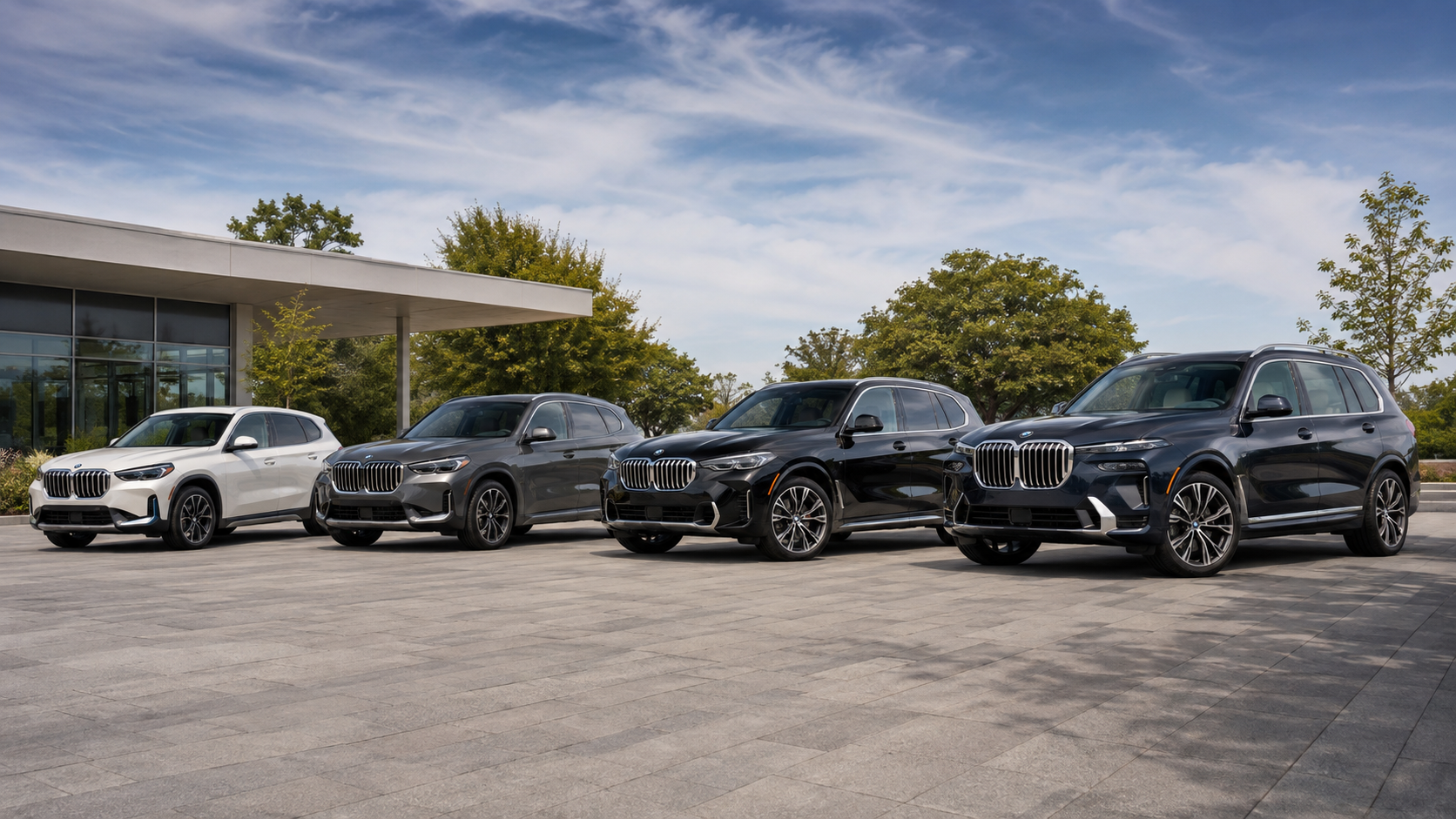
Compare the BMW X Series at a Glance
The X1, X3, X5, and X7 create a steady size progression. The X1 and X3 sit in the compact range. The X5 offers a larger two row cabin. The X7 adds three row seating and the largest exterior footprint in this group.
| Model | Starting MSRP | Engine Options | Horsepower | Maximum Cargo Capacity | Seating |
|---|---|---|---|---|---|
| BMW X1 | $43,200 | 2.0L BMW TwinPower Turbo 4 cylinder | 241 to 312 hp | 46.8 cubic feet | 5 |
| BMW X3 | $51,300 | 2.0L 4 cylinder or 3.0L inline 6 cylinder with 48V mild hybrid technology | 255 to 393 hp | About 67 cubic feet | 5 |
| BMW X5 | $68,300 | 3.0L inline 6 cylinder, plug in hybrid, or 4.4L V8 | 394 to 617 hp | Up to 67.7 cubic feet | 5 |
| BMW X7 | $87,500 | 3.0L inline 6 cylinder or 4.4L V8 with 48V mild hybrid technology | 375 to 523 hp | Up to 90.4 cubic feet | 6 or 7 |
Current dimensions, prices, engine choices, output figures, and cargo measurements may vary by model year, trim, powertrain, and seating arrangement. Use the chart to narrow your list, then confirm the exact vehicle specifications.
The most useful comparison is often between adjacent models. An X1 shopper may only need to compare the X3. An X3 shopper may want to see whether the added room in the X5 earns its larger body. An X5 shopper should move to the X7 only when a third row or greater passenger room will see regular use.
Choose the X1 for a Smaller Footprint
The BMW X1 suits a shopper who wants five seats, useful cargo room, and a body that remains easier to place in tighter spaces.
Its size fits crowded shopping areas, narrow parking rows, apartment garages, and city travel through Jacksonville. The rear seat still gives the X1 room for passengers, while the split folding seat supports larger items when fewer people are aboard.
The X1 may be enough for one or two adults, a small household, or a driver who rarely fills every seat. Its cargo area handles groceries, work bags, sports gear, and shorter trips without moving into a larger SUV.
The reason to move to the X3 is rear room and cargo demand. Frequent adult passengers, bulky child equipment, or regular travel bags may make the next size easier to live with.
Choose the X1 when compact dimensions remain a priority and the cabin supports the items you carry most often.
Move to the X3 for More Room
The BMW X3 adds roughly ten inches of exterior length over the X1. That increase brings a roomier cabin and a larger cargo area while retaining a five passenger layout.
The X3 fits shoppers who carry rear passengers more often or need more cargo room without moving into the wider body of the X5. It may suit school travel, weekend trips, larger grocery runs, outdoor equipment, or regular airport luggage.
Parking remains easier than it may be in a larger SUV. Still, the X3 asks for more garage and curb space than the X1. Measure the garage opening and review the available space around the vehicle when doors are open.
The X3 also deserves attention from shoppers with light trailer plans. Properly equipped versions may carry a factory trailer hitch and a published trailer rating. The exact engine, hitch, trailer weight, and braking equipment need review before towing.
Move down to the X1 when the extra rear and cargo room will remain unused. Move up to the X5 when cabin width, luggage volume, or longer family trips carry more weight.
Choose the X5 for a Larger Two Row Cabin
The BMW X5 gives five passengers more room without adding a permanent third seating row.
Its wider cabin may suit adults who use the second row often, families carrying child seats, or households that need room for luggage beside occupied rear seats. The cargo area also offers greater space for longer travel, large shopping trips, golf equipment, or outdoor gear.
The X5 occupies more road, garage, and parking space than the X3. That size may feel worthwhile during highway trips yet unnecessary for a shopper who travels alone most days.
A larger body also changes the parking routine. Test the camera views, turning circle, door clearance, and garage access. Bring the items that shape the decision, such as a stroller, luggage, mobility equipment, or sports gear.
The X5 lineup may also offer a wider selection of powertrain choices. Review the exact current inventory when fuel type, charging, output, or trailer plans belong in the purchase.
Stay with the X3 when five seats and moderate cargo room are enough. Choose the X5 when a larger two row cabin better fits passengers and travel.
Move to the X7 for Three Rows
The BMW X7 is the largest vehicle in this four model comparison. It offers seating for seven with a second row bench or six with available captain’s chairs on applicable configurations.
The third row is the main reason to choose it. Families who regularly carry more than five people may need the added seats. The X7 may also suit households transporting children, grandparents, friends, or visiting family during the same trip.
A three row SUV creates a cargo decision. With every seat occupied, the available storage area is smaller than the maximum figure shown with seats folded. Test the space behind the third row with groceries, school bags, luggage, or sports equipment.
The larger exterior also requires more garage length and parking room. Measure your garage and check the liftgate clearance. During the test drive, review low speed turns, parking views, rear visibility, and passenger entry.
Captain’s chairs create easier third row access and separate second row seating. A bench raises total seating to seven. Choose the arrangement based on how often the third row will be occupied.
The X7 earns its size when six or seven passenger travel forms part of the household routine. A five passenger household may find the X5 easier to place and equally suited to its needs.
Compare Passenger Space With Cargo Space
Passenger and cargo needs compete for the same cabin area.
Maximum cargo figures usually require rear seats to be folded. Those numbers work for furniture, boxed items, bicycles, or large travel loads when fewer passengers are aboard. They do not show the space available during a full family trip.
Start with the number of occupied seats. Then place the remaining cargo behind those passengers.
The X1 and X3 offer two rows with folding rear seat sections. They let you carry one longer item while preserving part of the second row. The X5 follows the same broad two row approach with more cabin and storage room.
The X7 adds another decision because the third row may be raised or folded. Carrying six or seven people leaves a different cargo area than traveling with four people and the third row lowered.
Bring common items to the dealership. A stroller, folding wagon, sports bag, suitcase, cooler, or pet crate reveals more than a maximum volume figure.
Review floor height, opening width, seat folding steps, liftgate clearance, and the shape of the cargo walls. A smaller cargo figure with a useful shape may suit your items better than a larger figure with limited loading room.
Review Towing Before Choosing
Towing needs should begin with the trailer and its loaded weight.
Write down the trailer type, cargo, passengers, hitch equipment, and expected trip distance. Then compare those needs with the exact BMW configuration.
The X3 may suit lighter trailer plans when properly equipped. The X5 and X7 deserve review for larger towing needs, subject to engine, hitch, vehicle equipment, trailer brakes, and published limits.
Do not rely on a model name or a maximum advertising figure. Confirm the vehicle identification number, factory hitch equipment, owner guidance, and the rating for the selected BMW.
Passenger and cargo weight also belong in the towing review. A full cabin and loaded cargo area add weight before the trailer is attached.
Ask the BMW Client Advisor to review the exact vehicle and trailer plan. A clear match protects the model comparison from being based on a rating the selected stock unit does not carry.
Test Adjacent Models Side by Side
Narrow the list to two neighboring models before visiting Tom Bush BMW Orange Park.
Compare the X1 with the X3 when parking and rear room are the main questions. Compare the X3 with the X5 when family travel and cabin width matter. Compare the X5 with the X7 when the third row remains unresolved.
Use the same route for both drives. Review seat entry, outward visibility, steering effort, braking, parking, road noise, rear passenger room, and cargo access.
Place your usual items in each cargo area. Sit in every row that your household will use. Check the garage measurements before the final choice.
The correct BMW X Series model should give you the space you need without asking you to carry unused size through every trip.
How many X Series models are there in the BMW lineup?
The BMW X family includes several SUV and coupe shaped SUV models, with availability changing across model years. The X1, X3, X5, and X7 create the clearest size progression. Other X models use different rooflines, body shapes, powertrains, or seating arrangements.
What does xDrive mean on a BMW?
xDrive is BMW all wheel drive. It distributes power between the front and rear axles as the vehicle responds to steering, acceleration, and available grip. Equipment varies across models, so confirm whether xDrive is standard or included on the exact BMW you are reviewing.
Does BMW offer electric or plug in hybrid SUVs?
BMW offers electric and plug in hybrid SUV choices within its wider lineup. Current availability changes by model year and inventory. Review charging access, travel distance, cargo room, passenger space, and current powertrain choices before comparing one with an X1, X3, X5, or X7.
How much cargo space does the BMW X7 provide behind the third row?
The space behind the raised third row is smaller than the maximum cargo figure shown with seats folded. Current measurements vary by model year and seating arrangement. Confirm the specification for the exact X7, then test the area with the luggage or equipment you carry.
Specifications, starting prices, seating layouts, cargo figures, towing ratings, powertrains, and vehicle availability may change. Contact Tom Bush BMW Orange Park for current model details.