
Blog / Tom Bush BMW Orange Park

5 Impressive Aspects of the 2025 BMW X1

2025 BMW X1

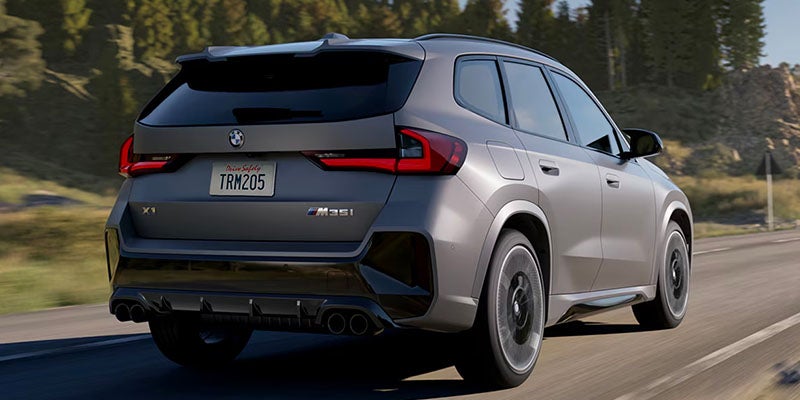
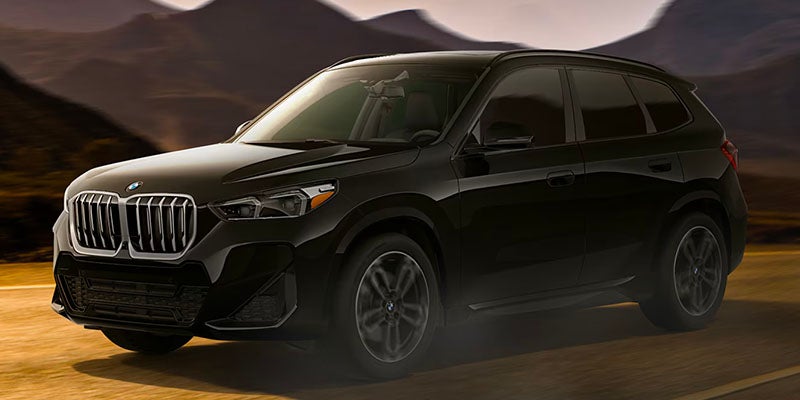
The 2025 BMW X1 is a subcompact luxury SUV with satisfying power and a long list of standard tech to complement its spacious interior. Compact dimensions and a finely tuned chassis make it easy to maneuver, and everyone will enjoy a smooth ride. Learn more about the impressive aspects that make this SUV a must-see.

5 Impressive Aspects of the 2025 BMW X1

1. Twin-Turbo Power

A 2.0-liter twin-scroll turbo inline-four engine under the hood of the base 2025 X1 xDrive28i churns out 241 horsepower and 295 pound-feet of torque, paired with a seven-speed dual-clutch automatic transmission for smooth, powerful acceleration from zero to 60 mph in as little as 6.2 seconds. With a highway fuel economy rating of 33 mpg, it's also an efficient choice for your daily commute.

2. Superior Handling

BMW's xDrive all-wheel-drive system is standard for superior traction control. Gas-pressure shock absorbers help cushion the X1's ride, and braking features like Dynamic Brake Control and Cornering Brake Control enable fun, sporty handling on winding roads. The My Modes feature lets you customize your driving experience with Sport, Efficient, and Personal modes. The optional M Sport package further enhances performance with adaptive dampers and paddle shifters mounted on the steering wheel.

3. Luxurious Comfort

Dual-zone automatic climate control helps keep the five-person cabin comfortable, and three-stage heated front seats are standard with power adjustments and a memory system for the driver. The X1 may be compact, but shoulder room and legroom are surprisingly generous in both rows. Standard ambient lighting lets you customize the mood, and high-quality materials throughout enhance the luxurious feel.

4. Cargo and Storage Space

A convenient power liftgate opens to reveal a 25.7 cubic foot cargo area, which is perfect for loading whatever you need to haul. Folding the rear seats down opens up 57.2 cubes when you need more room for larger cargo. A floating center console and cupholders in both rows offer plenty of room to stash small items.

5. High-Tech Digital Experience

The 2025 X1 features a crisp single panel of glass across two-thirds of the dashboard to house the 10.25-inch curved instrument cluster and a 10.7-inch center display. The BMW Operating System 9 is optimized for responsive touch and voice control and includes cloud-based navigation with over-the-air map updates. Standard Apple CarPlay and Android Auto let you integrate your compatible smartphone, and hands-free Bluetooth technology enables wireless audio streaming.

Subcompact SUVs are great vehicles for daily driving, and the impressive features of the luxurious 2025 X1 make it a top choice in its segment. When you're ready to get behind the wheel and see it in action, visit us at Tom Bush BMW Orange Park in Jacksonville, FL for a test drive.
Posted in:

Related Posts

How BMW Prioritizes Driving Feel Through Engineering and Chassis Design

BMW has long defined its vehicles around a specific goal: preserving a clear, confident connection between driver and road. For Orange Park, Jacksonville drivers, that driving feel is not created by a single feature or mode. It is the result of layered engineering decisions that start at the chassis and extend all the way into the cabin. Suspension geometry, weight distribution, steering calibration, and digital cockpit design all work together to deliver control without isolation and comfort without detachment. Understanding how BMW approaches this balance explains why its vehicles feel distinct even as technology becomes more prominent. Chassis Balance as the Foundation of Driving Feel Driving feel begins with how a vehicle carries and manages its mass. BMW engineers aim for balanced weight distribution across the chassis to support predictable handling behavior. Key chassis priorities include: Near even front to rear weight distribution where platform design allows Rigid body structures that resist flex under load Strategic use of lightweight materials to reduce unnecessary mass Low center of gravity to improve stability during cornering This balance allows suspension and steering systems to operate within predictable ranges, which is essential for consistent feedback on everyday roads. more Suspension Geometry and Real World Tuning BMW suspension systems are not tuned solely for smooth pavement or aggressive driving. They are calibrated for real world conditions that include uneven surfaces, highway expansion joints, and variable speeds. Engineering considerations include: Suspension geometry designed to maintain tire contact during cornering Damping calibrated to absorb imperfections without disconnecting the driver Bushing selection that balances isolation and road feedback Adaptive damping systems that adjust in real time based on driving inputs Rather than choosing comfort or performance outright, BMW tuning blends both so that the vehicle remains composed without feeling numb. Steering Calibration and Feedback Steering feel is one of the most defining aspects of BMW driving dynamics. Engineers focus on linear response rather than exaggerated weighting. Steering system goals include: Predictable on center response at highway speeds Progressive resistance as steering angle increases Clear communication of front axle grip levels Integration with suspension and chassis behavior This approach allows drivers to make small, precise inputs without constant correction, which is especially noticeable during daily commuting and longer drives around Orange Park and Jacksonville. Chassis Stiffness and Structural Integrity A stiff chassis allows suspension and steering components to work accurately. BMW emphasizes structural rigidity to improve ride quality and handling precision. Benefits of chassis stiffness include: Reduced vibration transfer through the cabin More accurate suspension movement Improved steering response consistency Better control during rapid direction changes This structural integrity is foundational to how BMW vehicles maintain confidence across varying road conditions. Integrating Cabin Technology Without Losing Focus As interior technology evolves, BMW designs cabin systems to support driving rather than distract from it. This philosophy is especially visible in the digital cockpit and curved display layout. BMW cabin technology is engineered to: Keep critical information within the driver’s natural line of sight Reduce eye movement away from the road Consolidate controls into intuitive interfaces Minimize visual clutter during active driving The curved display is not intended to overwhelm with data. Instead, it centralizes information so drivers can absorb it quickly and return attention to the road. Driver Focused Digital Cockpit Design BMW’s digital cockpit reinforces its driver first approach. Key design elements include: Displays angled toward the driver Instrument layouts that adapt based on driving mode Simplified visuals during relaxed driving Expanded performance data when appropriate This adaptability ensures that technology responds to driving context rather than remaining static. Weight Distribution and Ride Quality Relationship Balanced weight distribution also plays a direct role in ride quality. When mass is evenly managed, suspension components can operate more efficiently. This results in: Reduced pitch and dive during acceleration and braking Improved composure over uneven surfaces Consistent handling behavior regardless of passenger load Smoother transitions between road conditions For daily drivers, this translates into comfort that does not feel disconnected from control. Adaptive Systems Supporting Mechanical Feel Modern BMWs use adaptive systems to enhance rather than replace mechanical feedback. These systems can: Adjust damping based on road input Modify steering assistance dynamically Coordinate with stability systems to preserve balance Support confidence without masking driver input The goal is to assist the driver while preserving the underlying character of the chassis. Engineering Over Spec Sheets BMW’s focus on driving feel is not easily summarized by numbers alone. Steering response, suspension behavior, and chassis balance are experiential qualities that emerge from engineering choices rather than specifications. This philosophy explains why BMW vehicles often feel cohesive rather than segmented into comfort or performance categories. Why This Matters for Orange Park Drivers Orange Park and Orange Park, Jacksonville drivers encounter a mix of highway travel, urban driving, and longer continuous trips. BMW’s engineering approach supports these conditions by delivering vehicles that feel stable, predictable, and engaging without demanding constant attention. Driving feel is not about pushing limits. It is about confidence, control, and comfort working together. Ownership Perspective BMW prioritizes driving feel through deliberate engineering choices that extend from the chassis to the digital cockpit. By balancing suspension tuning, steering calibration, structural integrity, and driver focused cabin technology, BMW maintains a clear connection between driver and road. For drivers in Orange Park and the surrounding Jacksonville area, this approach delivers a refined yet engaging experience that remains consistent across everyday driving scenarios.

2025 BMW X7 Three-Row Engineering and Capability Overview for Jacksonville Drivers

The 2025 BMW X7 is engineered to solve one of the hardest challenges in vehicle design: delivering true three-row passenger comfort without sacrificing driving control, ride quality, or long-distance composure. Many large SUVs prioritize size first and attempt to manage dynamics afterward. BMW approaches the X7 differently by engineering the platform, suspension, and drivetrain as a unified system designed to make a full-size luxury SUV feel controlled and confidence inspiring in everyday use. For Jacksonville drivers balancing family needs, highway travel, and premium comfort expectations, understanding how the X7 is built explains why it feels fundamentally different from traditional large SUVs. Platform Architecture and Structural Engineering The BMW X7 is built on BMW’s luxury SUV architecture designed to support large dimensions while maintaining rigidity and balance. Structural stiffness is critical at this size because flex compromises ride quality, steering precision, and safety system effectiveness. Key structural characteristics include: High-strength steel and aluminum construction for rigidity without excess weight A long wheelbase that supports third-row legroom and ride stability Reinforced suspension mounting points to maintain alignment under load Balanced weight distribution that supports predictable handling This foundation allows the X7 to carry passengers and cargo without feeling unsettled or disconnected from the road. Three-Row Seating Designed for Real Passengers The X7 is a true three-row SUV, not a two-row vehicle with an occasional-use third row. BMW designs the interior around adult comfort across all seating positions. Third-row and cabin considerations include: Proper seat height that avoids a knees-up posture Adequate legroom supported by the extended wheelbase Wide door openings that improve access to the third row Dedicated climate control vents for rear passengers For families regularly using all three rows, this design reduces fatigue and improves comfort on longer drives. Cargo Flexibility Without Compromising Seating Comfort Cargo space in the X7 is designed around flexibility rather than raw volume alone. The goal is to allow real use with passengers still onboard. Cargo functionality includes: Usable cargo space behind the third row for daily needs A flat load floor when rear rows are folded Power-operated seating adjustments for easy reconfiguration Wide rear opening that accommodates bulky items This balance allows the X7 to transition easily between passenger-focused and cargo-focused roles. Air Suspension and Ride Control Technology One of the most important systems in the X7 is its available air suspension. Managing ride height and damping is essential for a vehicle of this size. Air suspension benefits include: Automatic ride height adjustment based on speed and load Improved ride comfort over uneven pavement Enhanced stability during highway cruising Easier entry and exit through adjustable ride height By actively managing suspension behavior, BMW ensures the X7 remains composed regardless of passenger or cargo load. Chassis Tuning and Driving Confidence Large SUVs often feel isolated or disconnected when driven aggressively or at highway speeds. BMW counters this with chassis tuning focused on driver confidence. Chassis and handling characteristics include: Steering calibration that provides accurate feedback Suspension geometry that minimizes body roll Brake systems sized to manage mass without abrupt feel Stability control systems tuned to intervene smoothly These elements work together to make the X7 feel smaller than its dimensions suggest. Powertrain Capability and Everyday Performance The X7’s powertrain options are engineered to deliver smooth, confident acceleration rather than aggressive behavior. Torque availability at lower engine speeds is critical for a vehicle carrying multiple passengers. Powertrain priorities include: Strong low-end torque for effortless acceleration Smooth power delivery for passenger comfort Transmission tuning that avoids constant gear changes Efficient cruising behavior at highway speeds This makes merging, passing, and long-distance travel feel relaxed rather than demanding. Interior Craftsmanship and Material Engineering Luxury in the X7 is expressed through material quality and attention to detail rather than excess ornamentation. Surfaces are selected for durability as well as tactile feel. Interior craftsmanship highlights include: Supportive seating designed for long drives Materials chosen for temperature stability Solid control interfaces with consistent resistance Thoughtful storage and passenger-focused layout These details contribute to a cabin that feels premium without becoming fragile. Technology Integration for a Large Cabin Technology in the X7 is designed to manage complexity without overwhelming occupants. Systems are integrated to support awareness and comfort across all three rows. Technology considerations include: Clear digital instrumentation for the driver Intuitive infotainment layout Driver assistance systems calibrated for large vehicle dynamics Climate control zoning that supports passenger comfort Technology serves the experience rather than dominating it. Long-Distance Comfort and Family Use For Jacksonville drivers who frequently travel highways or take extended trips, the X7 excels as a long-distance vehicle. Long-trip advantages include: Stable highway tracking Reduced wind and road noise Comfortable seating across all rows Smooth ride quality even on varied road surfaces This makes the X7 well suited for family travel without fatigue. What Three-Row SUV Shoppers Should Evaluate When evaluating a three-row luxury SUV, shoppers should look beyond passenger count. Important evaluation factors include: True third-row comfort for adults Ride quality under full load Ease of entry and exit Cargo flexibility with passengers onboard Driving confidence at highway speeds The X7 performs strongly in these real-world categories. Final Perspective on the 2025 BMW X7 The 2025 BMW X7 demonstrates how thoughtful engineering can redefine what a large luxury SUV feels like to drive and live with. Its platform rigidity, air suspension technology, balanced chassis tuning, and genuine three-row comfort create an experience that is both capable and refined. For Jacksonville drivers seeking a three-row SUV that delivers premium comfort without sacrificing control or confidence, the BMW X7 stands as a clear example of BMW’s engineering-first approach applied at full scale.

Why Jacksonville Drivers Value the Performance Dynamics of the 2025 BMW 3 Series

The 2025 BMW 3 Series continues to define what a modern performance sedan should feel like. In a market increasingly dominated by SUVs, the 3 Series remains relevant because it delivers something crossovers cannot replicate: precise control, balanced feedback, and confidence that comes from engineering designed around the driver. For Jacksonville drivers navigating highways, bridges, suburban corridors, and daily commutes, those dynamics translate directly into comfort, stability, and engagement. Understanding why the 3 Series feels different requires looking beyond horsepower figures and into how BMW engineers the car as a complete system. Performance Dynamics as a System, Not a Spec Sheet BMW performance dynamics are not built around a single component. The 3 Series is engineered as an integrated platform where chassis balance, steering response, suspension geometry, and power delivery work together. Core system elements include: Near ideal weight distribution that keeps the car neutral through corners A low center of gravity that improves stability at speed Rigid body structure that allows suspension tuning to work precisely Powertrain calibration that emphasizes usable torque rather than abrupt output This system level approach is why the 3 Series feels composed even in everyday driving rather than only at the limit. Chassis Balance and Rear Wheel Drive Foundations The 3 Series is built around a rear wheel drive based architecture, which plays a major role in how it handles. By separating steering from propulsion, the front wheels focus on direction while the rear wheels manage power delivery. Benefits of this layout include: More accurate steering feel Reduced torque influence through the steering wheel Better balance during acceleration out of turns Predictable behavior during lane changes and evasive maneuvers For Jacksonville drivers who spend time on highways and surface roads alike, this balance improves confidence during merging, passing, and long distance cruising. Steering Precision and Driver Feedback Steering is one of the most defining characteristics of the BMW 3 Series. BMW tunes steering to communicate road information clearly without feeling heavy or artificial. Steering characteristics include: Linear response that matches driver input Consistent weighting at highway speeds Precise on center feel for straight line stability Progressive feedback as cornering loads increase This matters during everyday driving. Subtle steering corrections feel natural rather than over amplified, reducing fatigue during longer commutes. Suspension Tuning for Real World Roads The suspension in the 3 Series is calibrated to balance performance with comfort. Rather than using overly soft or overly firm settings, BMW tunes suspension geometry to keep the tires working efficiently across varying road surfaces. Suspension benefits include: Controlled body movement over uneven pavement Stable cornering without harsh ride quality Predictable responses during braking and acceleration Confidence inspiring behavior on highway on ramps and curves This tuning is particularly valuable on Florida roads where surface conditions can change quickly. Engine Performance and Everyday Acceleration The 2025 BMW 3 Series offers turbocharged engines designed to deliver smooth, immediate acceleration rather than peaky power. Turbocharging allows the engine to produce strong torque at lower engine speeds, which improves everyday drivability. Engine performance characteristics include: Responsive throttle input for city driving Strong midrange acceleration for highway passing Efficient power delivery that avoids unnecessary strain Seamless integration with the transmission Acceleration feels effortless rather than aggressive, which is why the 3 Series performs well as both a commuter and a performance sedan. Transmission Behavior and Power Delivery Transmission tuning is a critical but often overlooked part of driving dynamics. In the 3 Series, gear changes are designed to support smooth momentum rather than constant shifting. Transmission behavior includes: Quick but refined gear changes Intelligent gear selection based on driving conditions Smooth downshifts that support controlled deceleration Minimal hesitation during acceleration This contributes to a driving experience that feels cohesive rather than mechanical. Highway Stability and Long Distance Comfort Jacksonville drivers often spend significant time on highways. The 3 Series excels in these conditions due to its aerodynamic design and chassis tuning. Highway focused advantages include: Strong straight line stability at speed Reduced wind and road noise Confident lane tracking with minimal steering correction Comfortable ride quality over extended distances These traits make the 3 Series a sedan that feels relaxed at speed while remaining responsive when needed. Daily Drivability Without Sacrifice One of the reasons the 3 Series remains a benchmark is its ability to deliver performance without sacrificing daily usability. Controls are intuitive, visibility is clear, and the driving position supports both comfort and engagement. Daily driving strengths include: Ergonomic seating that supports posture Clear outward visibility Predictable handling in traffic Smooth behavior in stop and go conditions Performance is present when desired but never overwhelming. Why Sedans Still Matter for Performance Oriented Drivers Sedans like the 3 Series offer inherent advantages over taller vehicles. Lower ride height, reduced weight, and balanced proportions all contribute to better handling and efficiency. For drivers who value: Steering precision Chassis balance Driving engagement Confident road feel The 3 Series continues to deliver a compelling alternative to larger vehicles. What Jacksonville Drivers Should Evaluate When evaluating performance sedans, drivers should look beyond numbers and consider: How the vehicle feels during everyday driving Steering confidence at highway speeds Ride quality on real roads Balance between comfort and responsiveness These factors define true performance dynamics. Final Perspective on the 2025 BMW 3 Series The 2025 BMW 3 Series remains a benchmark because its performance dynamics are engineered holistically. Chassis balance, steering precision, suspension control, and power delivery work together to create a sedan that feels confident, engaging, and comfortable in real world driving. For Jacksonville drivers who value connection to the road without sacrificing refinement, the 3 Series continues to represent BMW’s commitment to performance driven engineering that enhances every mile.