
Blog / Tom Bush BMW Orange Park

Blog

All Tom Bush BMW Orange Park Jacksonville BMW Dealer Things To Do In Jacksonville Jacksonville BMW Service Jacksonville Amenities Jacksonville Luxury Cars Tom Bush BMW Orange Park Service Jacksonville Entertainment Jacksonville Used Cars Tom Bush Family of Dealerships Jacksonville Restaurants Jacksonville Eateries Jacksonville Parks Family Fun in Jacksonville Jacksonville Landmarks Orange Park Florida BMW Dealer Day Trips Jacksonville Art Jacksonville Foodies Jacksonville Road Trips Orange Park BMW Dealer Orange Park Florida BMW Service Tourists Fun
BMW Roadside Assistance services, including emergency support and towing

BMW Roadside Assistance: Coverage, Contact Steps, and What to Prepare

BMW Roadside Assistance: Coverage, Contact Steps, and What to Prepare BMW Roadside Assistance is a program designed to help eligible BMW owners when a vehicle becomes disabled or an unexpected roadside issue interrupts a trip. Available services and eligibility depend on the vehicle and current program terms. Before relying on a particular benefit, confirm coverage through BMW’s current documentation or an authorized BMW representative. What Does it Include? BMW Roadside Assistance includes, but is not limited to, the following services: • Battery jump starts • Delivery of driver-paid fuel or operating fluids • Tire changes • Lock-out services If your vehicle is disabled due to mechanical issues, hazard damage, or accident, BMW Roadside Assistance will provide towing service to the nearest authorized BMW Center. When to Seek Roadside Help If your vehicle will not start, has a tire problem, or another condition that makes driving unsafe, you should call for roadside support. The assistance offered for each situation can vary. If the vehicle is still safely operable, a dealership service appointment may be the more appropriate next step. How to Contact Support Trained BMW Roadside Agents are available 24 hours a day, 365 days a year, through these convenient contact options: • Call 1-800-332-4BMW (800-332-4269) • Select BMW Roadside Assistance from the BMW Assist menu of ConnectedDrive, or with the BMW Connected app. • With a valid BMW ConnectedDrive subscriber agreement, pressing your vehicle's BMW Assist SOS button For non-emergency questions, email [email protected]. When you connect with an assistance representative, explain the vehicle’s condition, your location, and any immediate safety concerns. Follow their instructions about whether to remain with the vehicle and whe n help will arrive. Information to Have Ready Before calling, gather your VIN, model and model year, license plate, callback number, and a precise description of your location. Be prepared to explain warning messages, if the vehicle starts, and if it can be moved safely. If possible, identify a nearby road marker, business, or cross street. Keep your phone charged and let the representative know about passengers, mobility needs, or a hazardous stopping location. Safety Comes Before Service If you are stopped in a dangerous location, prioritize moving to safety only when it can be done without additional risk. Use hazard lights as appropriate and follow local roadway safety guidance. For a collision, fire, medical emergency, or immediate threat to people, call emergency services first. Roadside assistance is not a substitute for police, fire, or medical response. Is BMW Roadside Assistance Included With the Purchase of a New BMW? Roadside assistance is typically included for a limited period with new BMW vehicles, but coverage duration and terms vary depending on your vehicle, model year, and location. Most new BMW models come with complimentary roadside assistance for 24- 36 months (or up to a certain mileage limit, typically 36,000 miles). For more information, contact your local BMW dealership for specific details about your vehicle, or call the BMW Roadside Assistance phone number in your vehicle's documentation. After Getting Assistance Once the vehicle is secure, ask what assistance was authorized and where it will be taken if transportation is required. Keep any case number and service paperwork. Tom Bush BMW Orange Park can help arrange follow-up diagnostics or repairs and clarify the next service appointment. For current roadside benefits, contact details, and eligibility, consult BMW’s official program information before making assumptions about coverage.
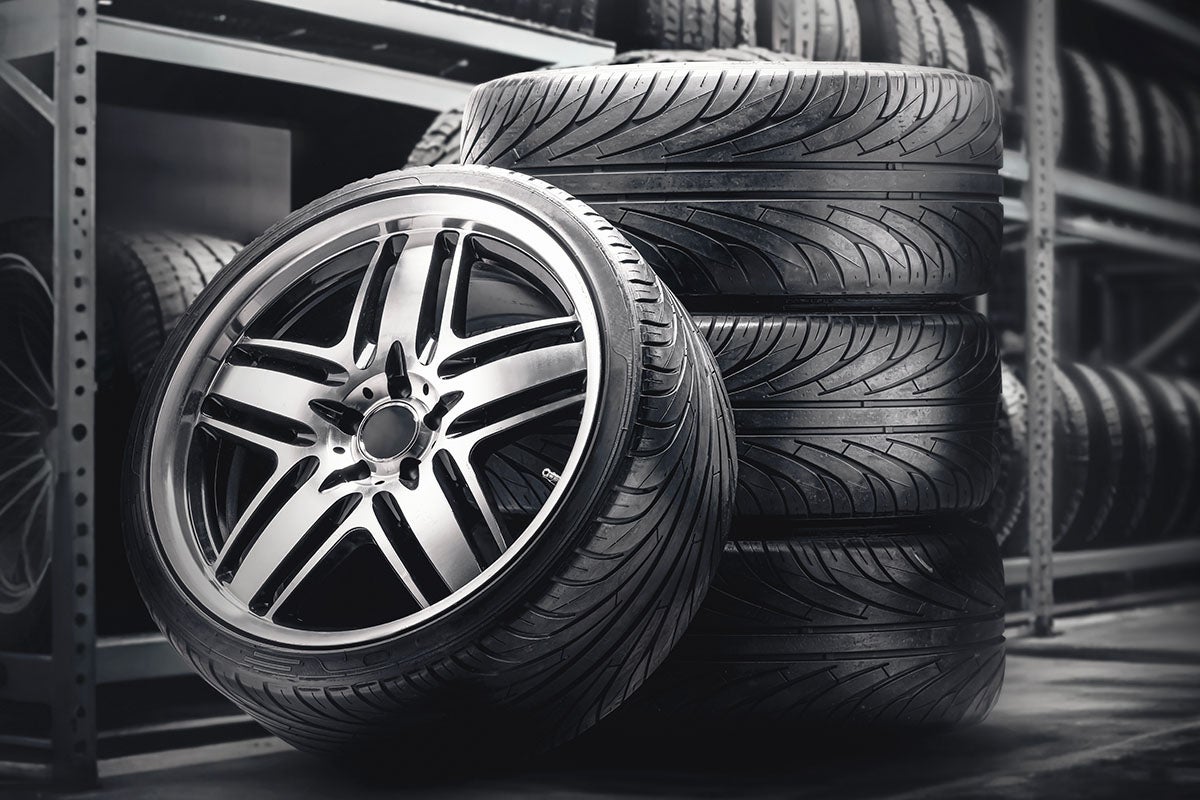
BMW tire pressure recommendations

BMW Tire Pressure and TPMS: What Orange Park Drivers Should Know

There isn’t a single tire pressure target that works for every BMW in Orange Park, FL. The right cold inflation pressure depends entirely on your exact model, your wheel and tire combination, and how much cargo or passenger weight you’re carrying. You can find your car's exact numbers on the tire pressure sticker located inside the driver's door jamb, as well as in your owner’s manual. Always follow those specific factory recommendations rather than the maximum pressure number stamped on the side of the rubber itself. Why Front and Rear Pressures Might Not Match If you notice the recommended pressures for your front and rear tires are different, don't worry— that's completely normal. Many BMW models carry weight differently across each axle, and many feature staggered setups where the rear wheels and tires are wider than the front. Just make sure the tires currently on your vehicle match the sizes listed on your door jamb sticker, especially if you've recently replaced your tires or upgraded your wheels. If you're ever unsure about your setup, a quick check with a BMW technician at Tom Bush BMW can give you the answers that you need. How North Florida Temperature Swings Affect Your Tires Living around Orange Park means generally warm to hot weather; the area can still have noticeable temperature shifts, and your tire pressure moves right along with the weather. On a cooler morning, you might suddenly see a low-pressure warning that wasn't there the afternoon before—simply because cold air causes pressure to drop. Always check and adjust your tires when they are cold (before you've driven more than a mile or two). If you've been driving down the highway and the tires are hot, avoid letting air out just to match the sticker on the door, as heat naturally builds up pressure while driving. Understanding Your TPMS Warnings Your BMW’s Tire Pressure Monitoring System (TPMS) is designed to keep an eye on your tires and alert you the moment inflation levels drop or the system detects an issue. Depending on your model and iDrive version, you might see exact real-time pressures for each tire or a general warning light on the dash. If a light comes on, use a reliable tire pressure gauge to check all four tires and top them off to the correct cold PSI. Once your pressures are set, remember to perform a quick TPMS reset through your iDrive menu so the system can store the new baseline. When to Get Professional Tire Service If a low-pressure light keeps coming back, a tire repeatedly loses air, or you notice sidewall damage, persistent vibration, or unusual handling, it's best to have it looked at right away. Continuing to drive on a severely underinflated tire can ruin the tire structure and compromise your control on the road. The team at Tom Bush BMW Orange Park can inspect your tires, wheels, and TPMS sensors, locate the cause of any leak, and help you determine whether a simple repair or a full replacement is the safest path forward.

BMW fuel requirements and recommended octane ratings

Does a BMW Require Higher-Octane Gasoline?

A BMW badge alone doesn't tell you the whole story about what gas you need to put into your tank in Orange Park, FL. Required fuel grades change depending on your BMW's exact model, engine type, and model year. The best place to double-check is right inside your fuel filler door— there’s a sticker right there listing your car’s needs—or in your owner’s manual. It is always worth verifying, especially if you recently switched from a different model or engine style. What Octane Ratings Mean Octane simply measures how well gasoline can withstand premature ignition, often called engine knocking. T hat’s the Anti-Knock Index (AKI) number you see on the pump buttons. It is easy to think that getting the highest-octane gas automatically gives your car extra power, but that isn't quite how it works. Engines are built to run best on specific fuel blends, so following what BMW recommends is far better than just grabbing the most expensive option. Understanding Recommended vs. Minimum Fuel Grades When you check your manual, you might notice two numbers: a recommended octane and a minimum allowed octane. The recommended grade is what helps your BMW hit its full potential for horsepower, fuel economy, and smooth engine performance. The minimum grade is the lowest threshold your engine can safely run on without risking long-term damage. While using the minimum grade can get you by in a pinch, sticking with the recommended fuel gives you the driving experience your car was engineered for. What to Do i f You Accidentally Use the Wrong Fuel If you accidentally put a lower grade of gas in your tank, don't panic. Just drive gently—avoid heavy acceleration, high speeds, or hauling heavy loads—until you use up enough gas to top off the tank with the correct fuel. If the engine starts running rough or a check engine light pops on, give a service department a call to be safe. However, if you accidentally put diesel into a gas BMW (or gas into a diesel), do not start the engine. Leaving the car off prevents the wrong fuel from circulating through your fuel lines and engine, which saves you from a much bigger repair headache. Have Questions? Ask the Experts at Tom Bush BMW Orange Park If you are ever unsure about which gas to use or need help after an accidental mix-up, our team at Tom Bush BMW Orange Park is always happy to help. Just give us a call with your VIN and model year, and we can look up your exact factory specs in seconds. Whether you need a quick answer or want to bring your car in for a checkup, we are here to make sure your BMW keeps running smoothly.

BMW Remote Engine Start feature and controls in a BMW vehicle

BMW Remote Start: How It Works and How to Check Compatibility

We all know that days in Jacksonville, FL can get hot. And even in a car as advanced as a BMW, it can take a second for your air conditioning to cool off your vehicle’s cabin. That’s why B MW remote start is such a great feature. On a compatible BMW, R emote S tart can start the engine before you enter the vehicle and begin preparing the cabin temperature. For Orange Park drivers facing warm weather, that convenience can make everything more comfortable when you get into your BMW. The feature is equipment-dependent, so the first step is confirming that your specific BMW supports it. Confirm Availability for Your BMW Look for Remote Start in the vehicle’s feature information, owner’s manual, and available settings. The VIN and model year help identify factory equipment and any compatible digital services. Some BMWs may support Remote Start only with certain software, hardware, or activation arrangements. Do not assume that a feature shown in an advertisement or demonstrated on another model is installed on your vehicle, always use the information that came with your specific BMW. Ways to Start a Compatible Vehicle Depending on the vehicle, a driver may be able to request Remote Start through the My BMW App or a supported vehicle-key function. Activation instructions, prerequisites, and operating limits differ. Follow the instructions supplied for your BMW, including requirements involving vehicle security, ventilation, and local idling rules. Never remotely start a gasoline-powered vehicle in an enclosed garage. Why the Option May Be Missing If Remote Start does not appear in the My BMW App, check if the vehicle is correctly associated with your account and if the feature is supported and active. Vehicle software, network connectivity, and service eligibility can affect access. If the feature appears but will not operate, check for messages and vehicle conditions identified in the manual. A missing menu option alone does not mean a component has failed. Get Help at Tom Bush BMW Orange Park Remote Start is a specific feature, separate from BMW Digital Key and broader ConnectedDrive functions. When contacting Tom Bush BMW Orange Park, have your VIN, model year, and a description of the problem ready. The team can help confirm compatibility and determine if a service inspection is appropriate. Explore new BMW inventory to compare available equipment, or contact the service department for assistance.

BMW 3 Series vs 5 Series

BMW 3 Series vs 5 Series Guide for Jacksonville Drivers

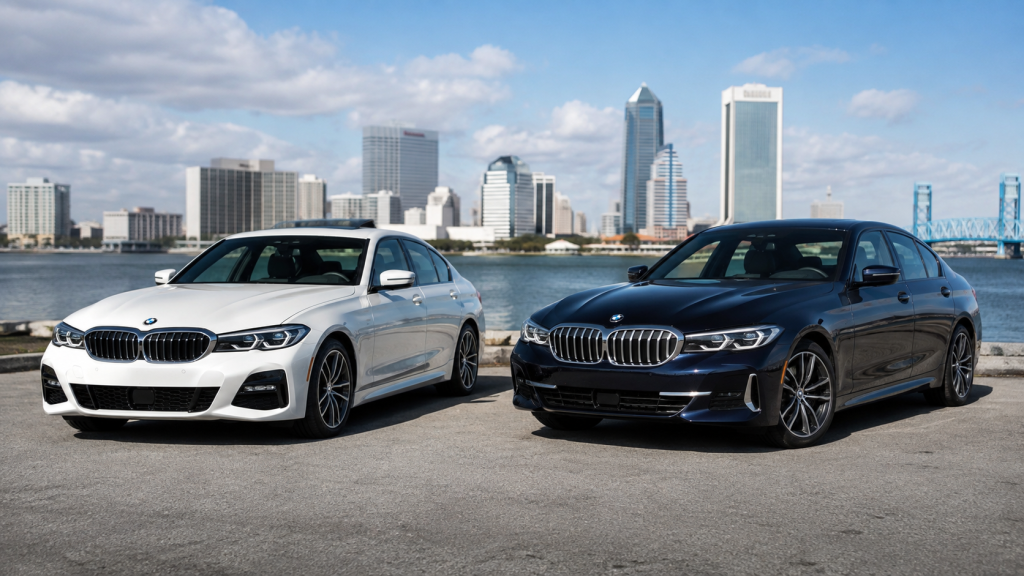
BMW 3 Series vs 5 Series decisions involve cabin space, trunk room, technology, and road response. Both sedans share familiar BMW design cues and current digital tools. However, their size, weight, and cabin proportions create two distinct paths for Orange Park and Jacksonville travel. The 3 Series keeps a smaller footprint that suits tight parking and busy streets. The 5 Series adds length, wheelbase, rear room, and trunk volume. Therefore, the choice should start with how much space you need and where you drive most. BMW 3 Series and 5 Series Size Comparison How much larger is the 5 Series? The current 530i measures 199.2 inches long, while the 330i measures 185.9 inches. That 13.3 inch gap is easy to notice in a garage or parking space. In addition, the 5 Series wheelbase stretches 117.9 inches. The 3 Series wheelbase measures 112.2 inches. Furthermore, a longer wheelbase gives designers more room between the front and rear axles. Therefore, cabin packaging can devote more space to rear passengers. The shorter 3 Series takes up less pavement, which can simplify tight parking near Jacksonville shops or offices. Comparison Chart 1 Measurement BMW 330i BMW 530i Length 185.9 inches 199.2 inches Width 71.9 inches 74.8 inches Wheelbase 112.2 inches 117.9 inches Curb weight 3,644 pounds 4,041 pounds Trunk volume 16.9 cubic feet 18.3 cubic feet Those numbers matter most when tied to your routine. If your garage is narrow, measure the space before choosing either sedan. If rear passengers ride with you frequently, the larger cabin deserves a closer look. Passenger Space Changes With Wheelbase Where does the extra wheelbase show inside the 5 Series? Much of it appears in the passenger compartment, particularly behind the front seats. Rear legroom measures about 35.2 inches in the 3 Series and 37 inches in the 5 Series. Therefore, adults riding in back may notice the extra room on longer trips. In addition, the difference can matter when front seats move rearward for taller occupants. The 3 Series still seats five and offers useful rear space for shorter trips. However, the 5 Series gives the second row more breathing room. That can matter for families, coworkers, or frequent airport runs. Seat comfort also comes from more than one measurement. Cushion shape, seatback angle, roof shape, and front seat position all change how the cabin feels. Therefore, sit in both rows during a test drive instead of relying only on specifications. Trunk Space for Commuting and Travel Which trunk gives you more room for travel? The 5 Series provides 18.3 cubic feet, while the 3 Series provides 16.9 cubic feet. The difference is 1.4 cubic feet. That is not a dramatic gap, but it can matter when several bags need to fit at once. A Jacksonville airport run may involve carry ons, larger luggage, and personal items in the same load. Furthermore, trunk shape matters too. A wide opening can make bulky bags easier to place, while usable depth changes how luggage stacks. Therefore, open both trunks and test the items you carry most. For daily commuting, either sedan can handle groceries, work bags, and smaller gear. Longer family travel gives the 5 Series more room before the trunk reaches its limit. 330i and 530i Driving Differences Why can two sedans with the same base horsepower feel different? Weight, wheelbase, steering calibration, and chassis tuning change how power reaches the road. The 330i and 530i both produce 255 horsepower and 295 pound feet of torque. However, the 530i weighs about 397 pounds more. In addition, the longer 5 Series places the axles farther apart. Comparison Chart 2 Specification BMW 330i BMW 530i Horsepower 255 255 Torque 295 pound feet 295 pound feet Transmission 8 speed automatic 8 speed automatic Drive layout Rear wheel drive Rear wheel drive Curb weight 3,644 pounds 4,041 pounds Zero to 60 mph 5.6 seconds 5.9 seconds The lighter 3 Series has less mass to move with the same base output. Therefore, it can feel quicker to react when changing direction. The longer 5 Series places more emphasis on cabin space and steady highway travel. A test drive should include slow streets, highway merging, and a few tighter turns. Those roads reveal more than acceleration data alone. Technology Across the Two Sedans What technology should you compare inside each sedan? Start with the interface, driver assistance options, display layout, and controls you use every day. Both current sedans use BMW Operating System 8.5. Therefore, core navigation, media, and connected functions follow a familiar digital structure. In addition, wireless Apple CarPlay and Android Auto appear across the current line. However, cabin design differs around that software. Screen placement, trim, available seating features, roof choices, and driver assistance packages vary by model and configuration. For this reason, compare the exact cars in stock instead of treating the software name as the whole cabin story. Pay attention to how quickly you can reach navigation, climate settings, camera views, and audio controls. In addition, check which assistance packages are installed on the specific sedan you plan to drive. Choosing the Right BMW Sedan for Your Routine Which sedan fits your Orange Park routine more closely? The answer starts with passenger needs, parking space, cargo demands, and the roads you travel most. Choose the 3 Series for a smaller exterior footprint and lower curb weight. Its dimensions fit drivers who want easier placement in tighter spaces. By contrast, the 5 Series gives rear passengers more room and adds trunk volume for longer travel. Before deciding, compare a few details in person: Sit in the rear seat with the front seat adjusted for your normal driving position. Load the trunk with the type of luggage, work gear, or family items you carry. Drive both sedans through city streets and highway traffic before comparing their road response. Tom Bush BMW Orange Park carries current BMW sedan inventory for shoppers near Orange Park and Jacksonville. A side by side test drive can make the differences easier to judge. From there, you can move into the separate comparison landing page or current inventory for the next step.

How BMW Prioritizes Driving Feel Through Engineering and Chassis Design

BMW has long defined its vehicles around a specific goal: preserving a clear, confident connection between driver and road. For Orange Park, Jacksonville drivers, that driving feel is not created by a single feature or mode. It is the result of layered engineering decisions that start at the chassis and extend all the way into the cabin. Suspension geometry, weight distribution, steering calibration, and digital cockpit design all work together to deliver control without isolation and comfort without detachment. Understanding how BMW approaches this balance explains why its vehicles feel distinct even as technology becomes more prominent. Chassis Balance as the Foundation of Driving Feel Driving feel begins with how a vehicle carries and manages its mass. BMW engineers aim for balanced weight distribution across the chassis to support predictable handling behavior. Key chassis priorities include: Near even front to rear weight distribution where platform design allows Rigid body structures that resist flex under load Strategic use of lightweight materials to reduce unnecessary mass Low center of gravity to improve stability during cornering This balance allows suspension and steering systems to operate within predictable ranges, which is essential for consistent feedback on everyday roads. Suspension Geometry and Real World Tuning BMW suspension systems are not tuned solely for smooth pavement or aggressive driving. They are calibrated for real world conditions that include uneven surfaces, highway expansion joints, and variable speeds. Engineering considerations include: Suspension geometry designed to maintain tire contact during cornering Damping calibrated to absorb imperfections without disconnecting the driver Bushing selection that balances isolation and road feedback Adaptive damping systems that adjust in real time based on driving inputs Rather than choosing comfort or performance outright, BMW tuning blends both so that the vehicle remains composed without feeling numb. Steering Calibration and Feedback Steering feel is one of the most defining aspects of BMW driving dynamics. Engineers focus on linear response rather than exaggerated weighting. Steering system goals include: Predictable on center response at highway speeds Progressive resistance as steering angle increases Clear communication of front axle grip levels Integration with suspension and chassis behavior This approach allows drivers to make small, precise inputs without constant correction, which is especially noticeable during daily commuting and longer drives around Orange Park and Jacksonville. Chassis Stiffness and Structural Integrity A stiff chassis allows suspension and steering components to work accurately. BMW emphasizes structural rigidity to improve ride quality and handling precision. Benefits of chassis stiffness include: Reduced vibration transfer through the cabin More accurate suspension movement Improved steering response consistency Better control during rapid direction changes This structural integrity is foundational to how BMW vehicles maintain confidence across varying road conditions. Integrating Cabin Technology Without Losing Focus As interior technology evolves, BMW designs cabin systems to support driving rather than distract from it. This philosophy is especially visible in the digital cockpit and curved display layout. BMW cabin technology is engineered to: Keep critical information within the driver’s natural line of sight Reduce eye movement away from the road Consolidate controls into intuitive interfaces Minimize visual clutter during active driving The curved display is not intended to overwhelm with data. Instead, it centralizes information so drivers can absorb it quickly and return attention to the road. Driver Focused Digital Cockpit Design BMW’s digital cockpit reinforces its driver first approach. Key design elements include: Displays angled toward the driver Instrument layouts that adapt based on driving mode Simplified visuals during relaxed driving Expanded performance data when appropriate This adaptability ensures that technology responds to driving context rather than remaining static. Weight Distribution and Ride Quality Relationship Balanced weight distribution also plays a direct role in ride quality. When mass is evenly managed, suspension components can operate more efficiently. This results in: Reduced pitch and dive during acceleration and braking Improved composure over uneven surfaces Consistent handling behavior regardless of passenger load Smoother transitions between road conditions For daily drivers, this translates into comfort that does not feel disconnected from control. Adaptive Systems Supporting Mechanical Feel Modern BMWs use adaptive systems to enhance rather than replace mechanical feedback. These systems can: Adjust damping based on road input Modify steering assistance dynamically Coordinate with stability systems to preserve balance Support confidence without masking driver input The goal is to assist the driver while preserving the underlying character of the chassis. Engineering Over Spec Sheets BMW’s focus on driving feel is not easily summarized by numbers alone. Steering response, suspension behavior, and chassis balance are experiential qualities that emerge from engineering choices rather than specifications. This philosophy explains why BMW vehicles often feel cohesive rather than segmented into comfort or performance categories. Why This Matters for Orange Park Drivers Orange Park and Orange Park, Jacksonville drivers encounter a mix of highway travel, urban driving, and longer continuous trips. BMW’s engineering approach supports these conditions by delivering vehicles that feel stable, predictable, and engaging without demanding constant attention. Driving feel is not about pushing limits. It is about confidence, control, and comfort working together. Ownership Perspective BMW prioritizes driving feel through deliberate engineering choices that extend from the chassis to the digital cockpit. By balancing suspension tuning, steering calibration, structural integrity, and driver focused cabin technology, BMW maintains a clear connection between driver and road. For drivers in Orange Park and the surrounding Jacksonville area, this approach delivers a refined yet engaging experience that remains consistent across everyday driving scenarios.

2025 BMW X7 Three-Row Engineering and Capability Overview for Jacksonville Drivers

The 2025 BMW X7 is engineered to solve one of the hardest challenges in vehicle design: delivering true three-row passenger comfort without sacrificing driving control, ride quality, or long-distance composure. Many large SUVs prioritize size first and attempt to manage dynamics afterward. BMW approaches the X7 differently by engineering the platform, suspension, and drivetrain as a unified system designed to make a full-size luxury SUV feel controlled and confidence inspiring in everyday use. For Jacksonville drivers balancing family needs, highway travel, and premium comfort expectations, understanding how the X7 is built explains why it feels fundamentally different from traditional large SUVs. Platform Architecture and Structural Engineering The BMW X7 is built on BMW’s luxury SUV architecture designed to support large dimensions while maintaining rigidity and balance. Structural stiffness is critical at this size because flex compromises ride quality, steering precision, and safety system effectiveness. Key structural characteristics include: High-strength steel and aluminum construction for rigidity without excess weight A long wheelbase that supports third-row legroom and ride stability Reinforced suspension mounting points to maintain alignment under load Balanced weight distribution that supports predictable handling This foundation allows the X7 to carry passengers and cargo without feeling unsettled or disconnected from the road. Three-Row Seating Designed for Real Passengers The X7 is a true three-row SUV, not a two-row vehicle with an occasional-use third row. BMW designs the interior around adult comfort across all seating positions. Third-row and cabin considerations include: Proper seat height that avoids a knees-up posture Adequate legroom supported by the extended wheelbase Wide door openings that improve access to the third row Dedicated climate control vents for rear passengers For families regularly using all three rows, this design reduces fatigue and improves comfort on longer drives. Cargo Flexibility Without Compromising Seating Comfort Cargo space in the X7 is designed around flexibility rather than raw volume alone. The goal is to allow real use with passengers still onboard. Cargo functionality includes: Usable cargo space behind the third row for daily needs A flat load floor when rear rows are folded Power-operated seating adjustments for easy reconfiguration Wide rear opening that accommodates bulky items This balance allows the X7 to transition easily between passenger-focused and cargo-focused roles. Air Suspension and Ride Control Technology One of the most important systems in the X7 is its available air suspension. Managing ride height and damping is essential for a vehicle of this size. Air suspension benefits include: Automatic ride height adjustment based on speed and load Improved ride comfort over uneven pavement Enhanced stability during highway cruising Easier entry and exit through adjustable ride height By actively managing suspension behavior, BMW ensures the X7 remains composed regardless of passenger or cargo load. Chassis Tuning and Driving Confidence Large SUVs often feel isolated or disconnected when driven aggressively or at highway speeds. BMW counters this with chassis tuning focused on driver confidence. Chassis and handling characteristics include: Steering calibration that provides accurate feedback Suspension geometry that minimizes body roll Brake systems sized to manage mass without abrupt feel Stability control systems tuned to intervene smoothly These elements work together to make the X7 feel smaller than its dimensions suggest. Powertrain Capability and Everyday Performance The X7’s powertrain options are engineered to deliver smooth, confident acceleration rather than aggressive behavior. Torque availability at lower engine speeds is critical for a vehicle carrying multiple passengers. Powertrain priorities include: Strong low-end torque for effortless acceleration Smooth power delivery for passenger comfort Transmission tuning that avoids constant gear changes Efficient cruising behavior at highway speeds This makes merging, passing, and long-distance travel feel relaxed rather than demanding. Interior Craftsmanship and Material Engineering Luxury in the X7 is expressed through material quality and attention to detail rather than excess ornamentation. Surfaces are selected for durability as well as tactile feel. Interior craftsmanship highlights include: Supportive seating designed for long drives Materials chosen for temperature stability Solid control interfaces with consistent resistance Thoughtful storage and passenger-focused layout These details contribute to a cabin that feels premium without becoming fragile. Technology Integration for a Large Cabin Technology in the X7 is designed to manage complexity without overwhelming occupants. Systems are integrated to support awareness and comfort across all three rows. Technology considerations include: Clear digital instrumentation for the driver Intuitive infotainment layout Driver assistance systems calibrated for large vehicle dynamics Climate control zoning that supports passenger comfort Technology serves the experience rather than dominating it. Long-Distance Comfort and Family Use For Jacksonville drivers who frequently travel highways or take extended trips, the X7 excels as a long-distance vehicle. Long-trip advantages include: Stable highway tracking Reduced wind and road noise Comfortable seating across all rows Smooth ride quality even on varied road surfaces This makes the X7 well suited for family travel without fatigue. What Three-Row SUV Shoppers Should Evaluate When evaluating a three-row luxury SUV, shoppers should look beyond passenger count. Important evaluation factors include: True third-row comfort for adults Ride quality under full load Ease of entry and exit Cargo flexibility with passengers onboard Driving confidence at highway speeds The X7 performs strongly in these real-world categories. Final Perspective on the 2025 BMW X7 The 2025 BMW X7 demonstrates how thoughtful engineering can redefine what a large luxury SUV feels like to drive and live with. Its platform rigidity, air suspension technology, balanced chassis tuning, and genuine three-row comfort create an experience that is both capable and refined. For Jacksonville drivers seeking a three-row SUV that delivers premium comfort without sacrificing control or confidence, the BMW X7 stands as a clear example of BMW’s engineering-first approach applied at full scale.

BMW Lease Options for Orange Park Drivers Comparing the X3 and X5 Models

Leasing a BMW SUV is not simply about securing a lower monthly payment. It is a structured way to align vehicle size, technology, and usage with how value changes over time. For Orange Park drivers comparing the BMW X3 and BMW X5, understanding how lease mechanics interact with vehicle engineering helps clarify which model fits both lifestyle and financial priorities. This guide explains how BMW leasing works, how the X3 and X5 differ from a depreciation and usage standpoint, and what drivers should evaluate before choosing a lease path. How BMW Leasing Is Structured A BMW lease is based on projected vehicle value over a fixed term rather than full ownership. You pay for the portion of the vehicle’s value that is expected to be used during the lease period. Core lease components include: Capitalized cost, which reflects the negotiated vehicle price Residual value, the projected value at lease end Money factor, which represents the financing cost Lease term length, commonly 24 to 36 months Mileage allowance tied to expected usage The difference between the capitalized cost and the residual value represents depreciation. Monthly payments are built around that figure rather than the full vehicle price. Why Residual Value Differs Between the X3 and X5 Residual value plays a major role in lease affordability. Vehicles expected to retain more value over time typically lease more efficiently. The BMW X3 and X5 behave differently in this regard: X3 benefits from strong demand in the compact luxury SUV segment X3 size and efficiency support consistent resale interest X5 carries higher original cost due to size and capability X5 depreciation reflects its larger footprint and additional complexity Because the X3 uses fewer resources and appeals to a broader audience, its residual value often supports lower monthly lease payments compared to the X5. Size, Weight, and Their Impact on Lease Costs Vehicle size influences more than interior space. It affects fuel consumption, tire wear, braking components, and long term maintenance, all of which factor into leasing models. Engineering differences include: X3 lighter overall weight supports efficiency and reduced wear X5 larger chassis supports towing and passenger capacity X5 requires larger tires and brakes due to mass X3 favors agility and everyday efficiency For drivers who prioritize manageable operating costs and urban driving, these differences matter. Mileage Planning Based on Real Driving Habits Mileage allowances are a critical lease decision. Exceeding agreed mileage results in per mile charges at lease end. Typical BMW lease mileage options include: 10,000 miles per year 12,000 miles per year 15,000 miles per year X3 lessees often choose moderate mileage allowances due to commuter focused use. X5 lessees may require higher allowances if the vehicle serves as a family hauler or road trip vehicle. Choosing the correct mileage allowance at the start prevents unnecessary costs later. Technology Cycles and Lease Strategy BMW vehicles incorporate rapidly evolving technology, from driver assistance systems to infotainment and digital displays. Leasing allows drivers to access these advancements without long term commitment. Technology considerations include: X3 technology focused on daily convenience and efficiency X5 offers additional advanced systems tied to size and capability Leasing supports regular updates as systems evolve Warranty coverage typically aligns with the lease term For drivers who value staying current with BMW technology, leasing provides flexibility. Lease Versus Buy for the X3 and X5 Leasing and financing serve different ownership goals. Leasing may be ideal for drivers who: Prefer predictable monthly costs Want warranty coverage throughout ownership Drive within defined mileage limits Enjoy upgrading vehicles every few years Financing may suit drivers who: Plan to keep the vehicle long term Drive high annual mileage Want to eliminate payments eventually Prefer ownership flexibility beyond lease terms The X3 often aligns well with leasing due to its balanced depreciation. The X5 may appeal to buyers who plan to keep the vehicle longer and extract long term value from its capability. Driving Experience and Lease Value Driving dynamics also influence lease value. Vehicles that feel stable and predictable tend to return in better condition, which supports residual assumptions. Engineering traits that support lease performance include: X3 balanced chassis and agile handling X5 stable highway behavior and confident load management BMW suspension tuning that minimizes uneven tire wear Powertrain calibration focused on smooth torque delivery These traits reduce stress on components during everyday use. What Orange Park Drivers Should Evaluate Before choosing between leasing an X3 or X5, drivers should evaluate: Daily commute distance and traffic conditions Passenger and cargo needs Parking and maneuverability preferences Expected annual mileage Desire for flexibility versus long term ownership Matching vehicle size to actual use is more important than choosing the largest option available. Why BMW Lease Programs Appeal to SUV Shoppers BMW lease programs are designed to reflect how vehicles are actually used. Residual values, mileage structures, and term options are calibrated around real world driving patterns rather than assumptions. This approach benefits drivers who: Want clarity around monthly costs Prefer structured ownership Value predictable transitions between vehicles Final Perspective on BMW X3 and X5 Lease Options Leasing a BMW X3 or X5 is about aligning engineering, usage, and value over time. The X3 offers an efficient, agile leasing option well suited for daily driving and commuting. The X5 provides space, presence, and capability that may justify higher lease costs for drivers who regularly use those advantages. For Orange Park drivers comparing these two BMW SUVs, understanding how size, technology, and depreciation influence leasing decisions ensures the chosen path supports both lifestyle and long term confidence.

Why Jacksonville Drivers Value the Performance Dynamics of the 2025 BMW 3 Series

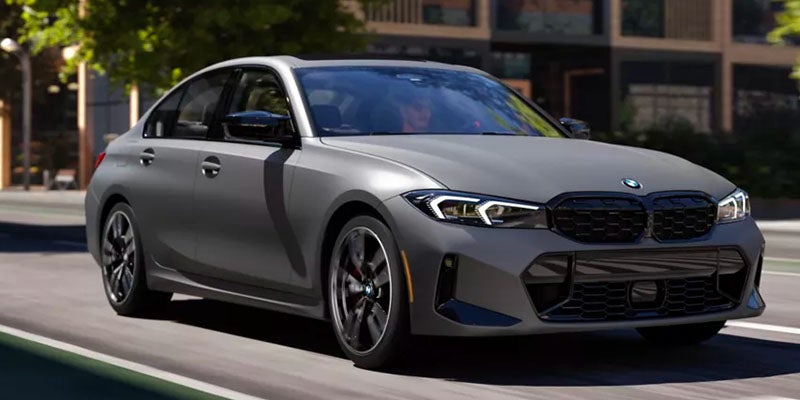
The 2025 BMW 3 Series continues to define what a modern performance sedan should feel like. In a market increasingly dominated by SUVs, the 3 Series remains relevant because it delivers something crossovers cannot replicate: precise control, balanced feedback, and confidence that comes from engineering designed around the driver. For Jacksonville drivers navigating highways, bridges, suburban corridors, and daily commutes, those dynamics translate directly into comfort, stability, and engagement. Understanding why the 3 Series feels different requires looking beyond horsepower figures and into how BMW engineers the car as a complete system. Performance Dynamics as a System, Not a Spec Sheet BMW performance dynamics are not built around a single component. The 3 Series is engineered as an integrated platform where chassis balance, steering response, suspension geometry, and power delivery work together. Core system elements include: Near ideal weight distribution that keeps the car neutral through corners A low center of gravity that improves stability at speed Rigid body structure that allows suspension tuning to work precisely Powertrain calibration that emphasizes usable torque rather than abrupt output This system level approach is why the 3 Series feels composed even in everyday driving rather than only at the limit. Chassis Balance and Rear Wheel Drive Foundations The 3 Series is built around a rear wheel drive based architecture, which plays a major role in how it handles. By separating steering from propulsion, the front wheels focus on direction while the rear wheels manage power delivery. Benefits of this layout include: More accurate steering feel Reduced torque influence through the steering wheel Better balance during acceleration out of turns Predictable behavior during lane changes and evasive maneuvers For Jacksonville drivers who spend time on highways and surface roads alike, this balance improves confidence during merging, passing, and long distance cruising. Steering Precision and Driver Feedback Steering is one of the most defining characteristics of the BMW 3 Series. BMW tunes steering to communicate road information clearly without feeling heavy or artificial. Steering characteristics include: Linear response that matches driver input Consistent weighting at highway speeds Precise on center feel for straight line stability Progressive feedback as cornering loads increase This matters during everyday driving. Subtle steering corrections feel natural rather than over amplified, reducing fatigue during longer commutes. Suspension Tuning for Real World Roads The suspension in the 3 Series is calibrated to balance performance with comfort. Rather than using overly soft or overly firm settings, BMW tunes suspension geometry to keep the tires working efficiently across varying road surfaces. Suspension benefits include: Controlled body movement over uneven pavement Stable cornering without harsh ride quality Predictable responses during braking and acceleration Confidence inspiring behavior on highway on ramps and curves This tuning is particularly valuable on Florida roads where surface conditions can change quickly. Engine Performance and Everyday Acceleration The 2025 BMW 3 Series offers turbocharged engines designed to deliver smooth, immediate acceleration rather than peaky power. Turbocharging allows the engine to produce strong torque at lower engine speeds, which improves everyday drivability. Engine performance characteristics include: Responsive throttle input for city driving Strong midrange acceleration for highway passing Efficient power delivery that avoids unnecessary strain Seamless integration with the transmission Acceleration feels effortless rather than aggressive, which is why the 3 Series performs well as both a commuter and a performance sedan. Transmission Behavior and Power Delivery Transmission tuning is a critical but often overlooked part of driving dynamics. In the 3 Series, gear changes are designed to support smooth momentum rather than constant shifting. Transmission behavior includes: Quick but refined gear changes Intelligent gear selection based on driving conditions Smooth downshifts that support controlled deceleration Minimal hesitation during acceleration This contributes to a driving experience that feels cohesive rather than mechanical. Highway Stability and Long Distance Comfort Jacksonville drivers often spend significant time on highways. The 3 Series excels in these conditions due to its aerodynamic design and chassis tuning. Highway focused advantages include: Strong straight line stability at speed Reduced wind and road noise Confident lane tracking with minimal steering correction Comfortable ride quality over extended distances These traits make the 3 Series a sedan that feels relaxed at speed while remaining responsive when needed. Daily Drivability Without Sacrifice One of the reasons the 3 Series remains a benchmark is its ability to deliver performance without sacrificing daily usability. Controls are intuitive, visibility is clear, and the driving position supports both comfort and engagement. Daily driving strengths include: Ergonomic seating that supports posture Clear outward visibility Predictable handling in traffic Smooth behavior in stop and go conditions Performance is present when desired but never overwhelming. Why Sedans Still Matter for Performance Oriented Drivers Sedans like the 3 Series offer inherent advantages over taller vehicles. Lower ride height, reduced weight, and balanced proportions all contribute to better handling and efficiency. For drivers who value: Steering precision Chassis balance Driving engagement Confident road feel The 3 Series continues to deliver a compelling alternative to larger vehicles. What Jacksonville Drivers Should Evaluate When evaluating performance sedans, drivers should look beyond numbers and consider: How the vehicle feels during everyday driving Steering confidence at highway speeds Ride quality on real roads Balance between comfort and responsiveness These factors define true performance dynamics. Final Perspective on the 2025 BMW 3 Series The 2025 BMW 3 Series remains a benchmark because its performance dynamics are engineered holistically. Chassis balance, steering precision, suspension control, and power delivery work together to create a sedan that feels confident, engaging, and comfortable in real world driving. For Jacksonville drivers who value connection to the road without sacrificing refinement, the 3 Series continues to represent BMW’s commitment to performance driven engineering that enhances every mile.

2026 BMW X& at Tom Bush BMW Orange Park

Top Features That Make the 2026 BMW X7 Stand Out

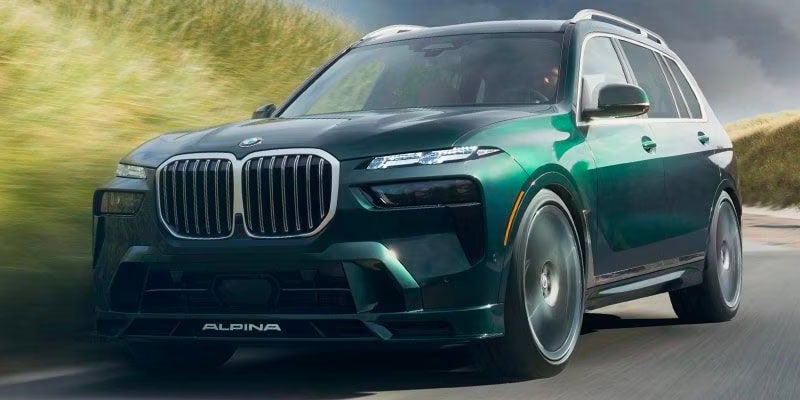
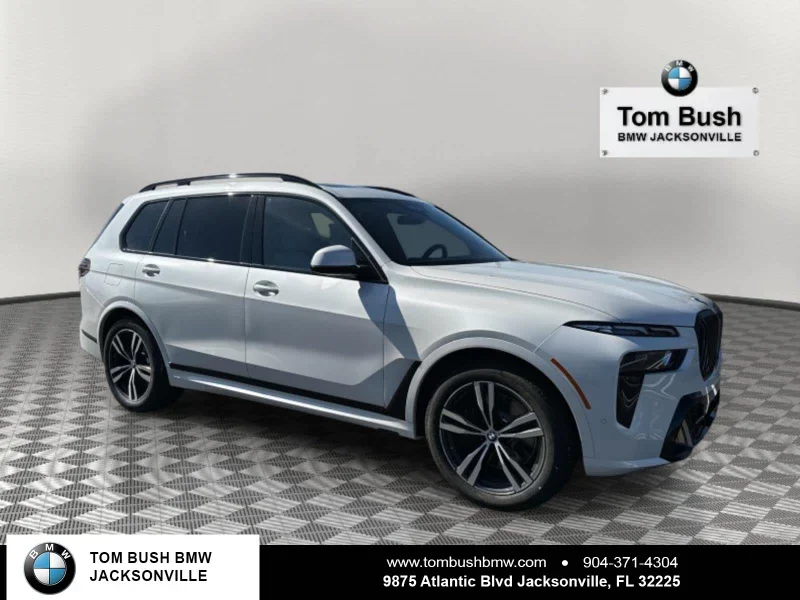
The 2026 BMW X7 is a cut above all other full-size luxury SUVs. Along with an expansive and richly appointed interior, the X7 delivers remarkable agility and state-of-the-art tech to guide, entertain, and protect you. Let's explore the latest iteration of BMW's flagship SUV. Spacious, Flexible Seating If you have a large family, the X7 overdelivers on seating space and storage capacity. Cargo room reaches a maximum of 90 cubic feet with the second- and third-row seats folded down, and there's a great deal of flexibility in seating arrangements, including a power-adjustable second-row captain's chair. Panoramic Glass Sunroof The meticulously designed cabin is bedecked in premium upholstery and panel materials. A large panoramic glass sunroof in the high ceiling adds to your comfort with a sweeping view of the sky and a sense of space and openness. Standard Air Suspension Your comfort inside the X7 is further enhanced by the pillow-like softness of standard air suspension with adaptive dampers. Safe, stable cornering is guaranteed by anti-roll bars. In the higher-end trims, you can opt for even sportier suspension, plus rear-axle steering. Intelligent All-Wheel Drive The X7 is an extremely safe vehicle, even in wet or icy weather. You have an extensive range of cutting-edge safety features, plus BMW's acclaimed xDrive, an intelligent AWD system that uses real-time driving data to adapt the power delivered to each wheel. Impressive Engine Output Whenever you need to speed up rapidly, the BMW X7 provides responsive, smooth acceleration. The intercooled, turbocharged DOHC 24-valve inline-6 engine delivers a punchy 398 lb-ft of torque and 375 horsepower through a quick-shifting 8-speed automatic transmission. For even more power, you can choose the sportier M60i trim, which delivers up to 523 horsepower with a potent 4.4L V8 engine. 14.9-Inch Touchscreen The driver-focused cabin of the X7 boasts a broad, slightly curved digital display with a 12.3-inch instrument cluster beside a 14.9-inch infotainment touchscreen. Controlling the vehicle's sophisticated navigation and entertainment features is intuitive and effortless, either with touch or voice commands. Power-Adjustable Steering Wheel As the driver, you're well-supported by all kinds of high-end tech and comfort features, such as heated and power-adjustable front seats. Even the steering wheel is powered to adapt to your ideal driving height, angle, and sitting posture. Commanding Appearance The X7 is a fine-looking vehicle, with a striking, prominent front grill and gliding, aerodynamic body contours that have a distinctly modern aesthetic. It's an enormously satisfying SUV to see in your driveway and take out on your daily commutes. If you're looking for a new luxury full-size SUV, you won't find better than the latest BMW X7. Come to Tom Bush BMW Orange Park in Jacksonville, FL, to see it up close and enjoy a test drive.

2025 BMW M8 at Tom Bush BMW Orange Park

Precision Engineering in the 2025 BMW M8

Speed, luxury, and a generous cargo capacity mark the 2025 BMW M8 as one of the top models in the premium subcompact segment. This performance coupe is fashioned after classic European models and has the heart of a racetrack car. The M8, also known as the M8 Competition Coupe, has a standard all-wheel drivetrain that delivers maximum traction on wet and dry roads, particularly when you need extra stability taking corners at high speeds. The crowning glory of this performance model is its 4.4-liter twin-turbocharged V8 motor, which produces 617 horsepower and 553 lb-ft of torque. An eight-speed sport automatic transmission with selectable drive modes is standard. This sporty coupe has a few essential engineering features that optimize ride feel and handling, such as the adaptive suspension system, power-assisted speed-sensitive steering, and electro-mechanical limited-slip differential. The brake system is sophisticated with vented disc brakes, brake assist to enhance braking power, and systems that hold the brakes or regulate brake pressure on hills. Exterior Features BMW has sensible standard features for the M8 Competition Coupe, such as heated, power-folding side mirrors with auto-dimming glass on the driver's side and turn signals. This model has rain-detecting front windshield wipers with variable speed to automatically keep up with rainfall, as well as heated jets to blast away frost if you're traveling in cooler climates. The M8 has front cornering lights that illuminate curbs as you turn corners, directionally adaptive and auto-leveling headlights, and bi-LED beams for optimized road visibility in all driving environments. When you approach the vehicle, perimeter lights turn on to illuminate the space around the coupe for easier vehicle entry. Interior Features The M8 cabin is outfitted with 14-way power-adjustable front seats with heated cushions and armrests. An M Sport heated and leather-wrapped steering wheel with auto tilt-away is standard. The steering wheel has cruise control buttons to quickly engage or disengage cruise control as you drive. A day/night auto-dimming rearview mirror automatically optimizes road visibility by reducing headlight brightness from vehicles driving behind you. The M8 Competition Coupe has a four-passenger seating capacity. The trunk holds up to 14.8 cubic feet of cargo, which is enough to accommodate a couple of medium-sized suitcases or a set of golf clubs. Technology Features This subcompact model is equipped with advanced technology to improve your daily travels, such as the Live Cockpit Pro with navigation. A head-up display puts critical vehicle information within your line of sight. This model also comes with BMW Assist eCall so you can access assistance in case of emergency. The sport-inspired M8 has an attractive design, space for four passengers, and track-inspired performance. Reserve a test drive at Tom Bush BMW Orange Park in Jacksonville, FL.

BMW Oil CHange

How Often Should You Get Your BMW's Oil Changed?

The motor oil in your engine plays a crucial role in the world-class performance of your BMW vehicle. When it's time for an oil change in Orange Park, the best place to go for trusted service and high-quality motor oil is Tom Bush Orange Park in Jacksonville. Learn the ins and outs of oil service before you drop by. It's a good idea to schedule an oil service every 7,500 for new BMW vehicles. The motor oil used in new cars tends to last longer than the oil used on older engines, which is why the age-old recommendation to schedule oil service every 3,000 miles isn't common anymore. For most drivers, an oil service every 7,500 or so miles means scheduling service twice a year, or once every six months. Even if you don't drive your BMW every day, a six-month oil service is a good idea. This is because the motor oil in your engine will naturally degrade over time, regardless of how often you drive your vehicle. By the same token, if you drive your car long distances every day and rack up a lot of miles on your car, you may want to schedule oil service more frequently. Are There Best Times to Schedule Oil Service? Aside from keeping an eye on your odometer, there are two other times when it's a good idea to schedule an oil service. First, if you plan to take your car on a long road trip, you should schedule service before your trip to ensure your car is in good condition. It's also a good idea to schedule oil service after extreme heat to make sure your oil levels are good. What Type of Oil Is Best? In general, newer vehicle models tend to run on synthetic or semi-synthetic motor oil rather than conventional oil. While conventional oil can get the job done to lubricate the internal parts of your engine, synthetic oil is specially developed to pull heat from the engine, protect it from friction, and enhance motor performance. Our Service Techs will consult BMW's recommendations for your precise make and model to service your vehicle so your engine gets the best care. Genuine motor oil from BMW, along with genuine oil and air filters, will promote excellent vehicle performance in the long run. Most drivers should schedule oil service with genuine BMW motor oil at least twice a year, even if the BMW vehicle isn't driven every day. When you notice performance issues, like less fuel economy, you should schedule service right away. Book your oil service appointment at Tom Bush BMW Orange Park in Jacksonville, FL.

Contact Us

Fill out this form below and we'll contact you shortly
*Required Fields