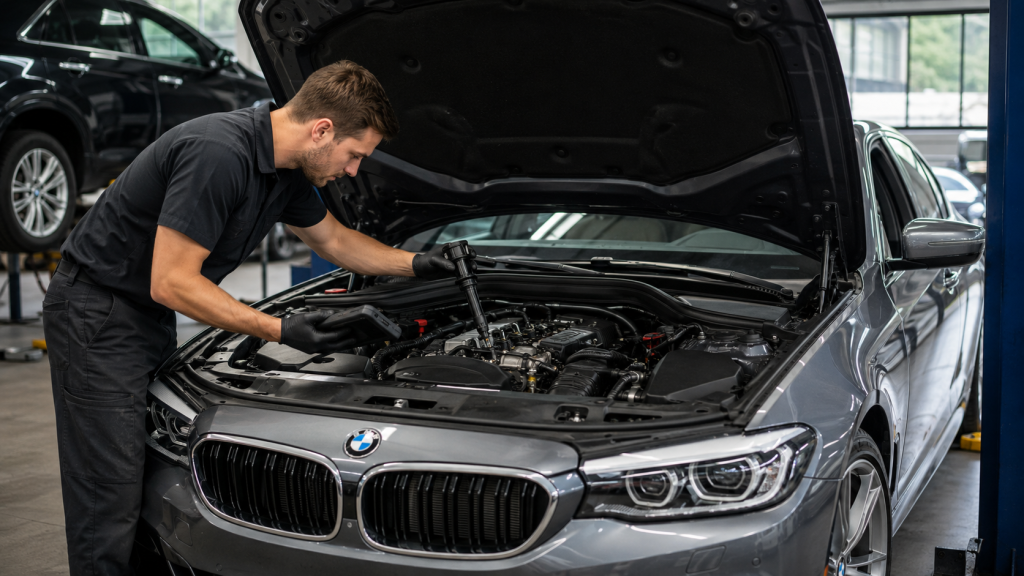



BMW warning lights can point to a tire pressure concern or a fault that requires you to stop driving. Therefore, the first step is reading the icon and the accompanying Check Control message. Color gives an urgency clue, but the message adds the specific instruction for your BMW.
A red warning usually calls for immediate attention. A yellow warning usually calls for prompt inspection. However, the exact response still depends on the warning and the way the BMW is operating. For this reason, use the Driver's Guide or Vehicle Status screen when the message is not clear.
BMW Warning Light Colors Give the First Urgency Clue
What does the color tell you? Red usually signals greater urgency, while yellow usually signals a concern that needs timely review.
However, color alone cannot identify the failed part. A red icon may relate to oil pressure, braking, or engine temperature. A yellow icon may point to emissions, tire pressure, or another monitored function.
Therefore, read the Check Control message before making assumptions. BMW pairs warning icons with text that can explain the fault category or next action. In addition, the Driver's Guide can show model specific warning information.
Use these three steps when a warning first appears:
- Read the full Check Control message before dismissing it or restarting the vehicle.
- Note the warning color and whether the icon stays on, flashes, or disappears after startup.
- Watch for changes in steering, braking, engine sound, temperature, or electrical operation.
Those observations give the service team useful context. They also help you decide whether to stop, inspect the BMW, or arrange service promptly.
Check Engine Lights Need Steady Versus Flashing Context
Can you drive with a check engine light? A steady light may permit a short drive to service when the BMW runs normally.
However, a flashing check engine light calls for greater urgency. Flashing can accompany a severe misfire that may send unburned fuel into the exhaust. Therefore, continued driving can raise the risk of catalytic converter damage.
If the light stays steady, pay attention to engine sound, power delivery, and idle quality. In addition, check the message shown by Check Control. A BMW that runs rough, loses power, or shakes strongly needs quicker attention.
A flashing light paired with rough running is different. In that situation, reduce speed, move to a safe location, and contact service. Do not continue a long trip simply because the BMW still moves.
The warning does not identify the failed part by itself. Therefore, diagnosis still requires fault code review and testing.
Oil Pressure and Coolant Warnings Can Require an Immediate Stop
Which engine warnings can mean stop driving? Oil pressure and high coolant temperature warnings can require you to stop safely and shut off the engine.
Engine oil creates a protective film between moving parts. Therefore, low oil pressure can leave bearings and other surfaces without enough lubrication. Continued operation can cause rapid internal damage.
Coolant controls engine temperature by carrying heat away from the engine. However, an overheating warning means that heat may no longer be leaving the engine fast enough. Continuing to drive can raise the risk of severe engine damage.
If either warning appears, move out of traffic as soon as it is safe. Then shut the engine off and review the BMW message. In addition, avoid opening a hot cooling circuit, because pressurized coolant can cause burns.
Do not assume that adding fluid solves the fault. Oil pressure and overheating warnings can have several causes. Therefore, professional inspection should come before further driving when the warning remains active.
Brake and Battery Warnings Need Prompt Review
What should you do when a brake or battery warning appears? Read the message, note how the BMW responds, and arrange prompt inspection.
In addition, a brake warning can relate to several monitored areas. Therefore, pedal feel matters. A soft pedal, reduced braking response, or another red brake message raises urgency and may require you to stop.
Battery warnings also need quick attention. The 12 volt electrical network relies on a charging source while the vehicle operates. If charging stops, stored battery energy can keep the BMW running only for a limited period.
For this reason, reduce unnecessary electrical loads after a charging warning appears. Then arrange inspection before the battery loses enough charge to shut down essential functions.
Neither warning icon gives a complete diagnosis. Brake hardware, sensors, wiring, the charging circuit, or another component may need testing. Therefore, use the message and vehicle response to choose the next action.
Tire Pressure and Driver Assistance Warnings Need Inspection
Can you continue driving after a tire pressure or driver assistance warning? Sometimes you can, but you should inspect the BMW and read the exact message first.
A tire pressure warning means the monitored pressure has moved outside the expected range. Temperature changes can alter pressure, but a puncture can do the same. Therefore, inspect the tire before adding air and continuing a long trip.
Check each tire for visible damage, low pressure, or an object in the tread. In addition, use Vehicle Status on supported BMW models to review displayed pressure values. If one tire loses pressure again, schedule inspection.
By contrast, driver assistance alerts need a different response. A warning may indicate that a feature is unavailable or has a fault. Therefore, keep full control of the BMW and do not rely on the unavailable feature.
The Check Control message should explain which feature needs attention. If the warning remains, arrange service so the related sensors and electronic components can be tested.
Use the BMW Message to Decide the Next Step
Where should you verify the exact warning? Start with Check Control, then use the BMW Driver's Guide for model specific information.
A simple response plan keeps the decision clear:
- Stop safely when a red warning involves oil pressure, overheating, severe braking concerns, or a flashing check engine light.
- Inspect the BMW when a tire pressure alert or similar yellow warning appears and the vehicle still feels normal.
- Schedule service promptly when a warning remains active, returns after restart, or changes the way the BMW drives.
When you contact Tom Bush BMW Orange Park, describe the warning color, icon, message, and any change you noticed. That information gives the technician useful context before diagnosis.
Furthermore, a dashboard warning is a request for attention, not a complete repair answer. Therefore, use the message to judge urgency and avoid guessing at the failed part. If the BMW feels unsafe or shows a stop driving warning, move to a safe location and contact service.