


Driver assistance technology has evolved quickly in recent years, and one feature that many drivers now expect in a new vehicle is adaptive cruise control. Traditional cruise control has existed for decades, helping drivers maintain a steady speed on long highway drives. Adaptive cruise control builds on that idea by allowing the vehicle to automatically adjust speed based on surrounding traffic.
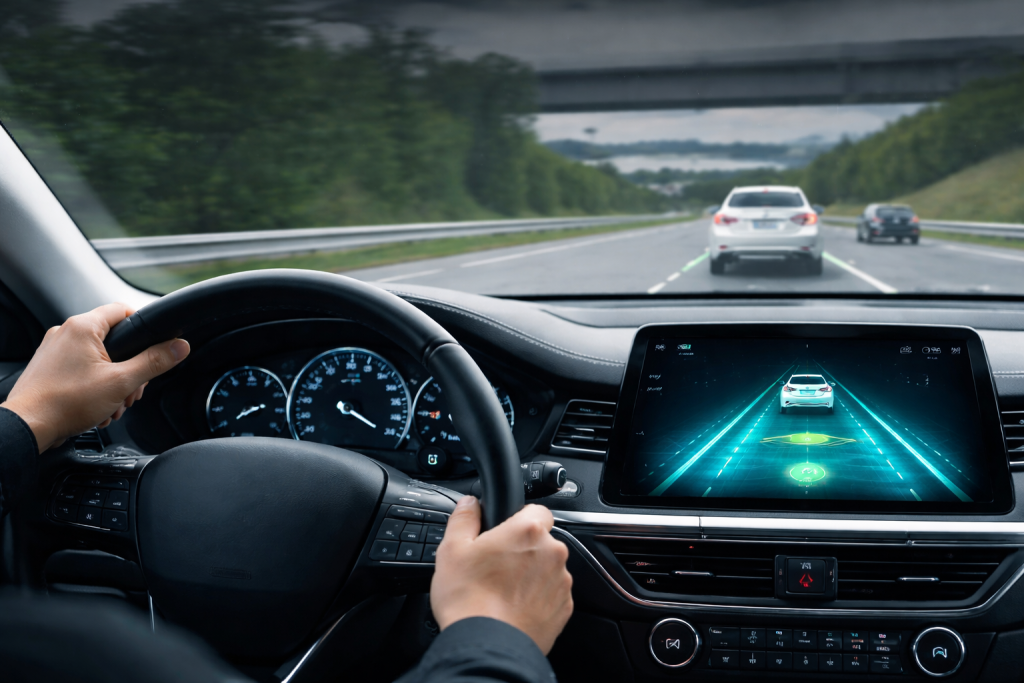
Instead of simply holding a constant speed, adaptive cruise control monitors the road ahead and responds to changing traffic conditions. The system can slow the vehicle when traffic slows and accelerate again when the lane clears. This helps reduce driver fatigue during highway travel and adds an additional layer of safety by maintaining a consistent following distance.
Understanding how adaptive cruise control works helps drivers see why this technology has become a core part of modern vehicle design.
How Traditional Cruise Control Works
Traditional cruise control focuses on one task: maintaining a set speed. When a driver activates cruise control and selects a speed, the vehicle’s engine control system automatically manages throttle input to keep the vehicle traveling at that speed.
This works well when traffic conditions remain consistent. However, it has a major limitation in real world driving situations.
If the vehicle approaches slower traffic, the driver must manually disengage cruise control and apply the brakes. Once traffic clears, the driver must accelerate again and reset the system.
Adaptive cruise control solves this limitation by allowing the vehicle to respond to traffic automatically.
What Adaptive Cruise Control Adds
Adaptive cruise control takes the basic idea of speed control and combines it with traffic monitoring. Instead of simply maintaining a constant speed, the system actively tracks vehicles ahead and adjusts speed accordingly.
When the system is active, drivers select both a target speed and a following distance. The vehicle then manages acceleration and braking to maintain that spacing.
Key functions include:
- Detecting vehicles ahead in the same lane
- Maintaining a safe following distance
- Automatically slowing down when traffic slows
- Returning to the preset speed when the road clears
This creates a smoother and more relaxed highway driving experience, especially during long trips or moderate traffic.
The Sensors That Power Adaptive Cruise Control
Adaptive cruise control relies on several sensors that constantly monitor the road ahead. These sensors gather data that allows the vehicle’s computer to determine how far away other vehicles are and how quickly the distance between them is changing.
Most systems rely on two primary technologies:
- Radar sensors mounted in the front grille or bumper
- Forward facing cameras positioned near the windshield
Radar sensors send signals forward and measure how long it takes for those signals to bounce back from objects ahead. This allows the vehicle to calculate distance and relative speed with high accuracy.
The camera system helps identify vehicles, lane markings, and other objects. Together, radar and camera inputs give the vehicle a clear picture of traffic conditions ahead.
The vehicle’s onboard computer processes this information many times per second, allowing the system to respond smoothly to changing traffic speeds.
How the Vehicle Adjusts Speed Automatically
Once the system detects a vehicle ahead, adaptive cruise control begins managing speed automatically.
If the vehicle ahead slows down, the system reduces throttle input and may apply the brakes to maintain the selected following distance. When the lane clears again, the system gradually accelerates back to the preset cruising speed.
This process involves coordination between multiple vehicle systems:
- Engine management system adjusts throttle input
- Electronic braking system slows the vehicle when needed
- Distance control software determines the safe following gap
Drivers typically have the option to choose between several distance settings. These settings control how much space the system maintains between vehicles, allowing drivers to adjust the system to match their comfort level.
Adaptive Cruise Control in Stop and Go Traffic
Some modern vehicles extend adaptive cruise control functionality even further with stop and go capability. These systems can bring the vehicle to a complete stop if traffic ahead stops.
Once traffic begins moving again, the system can automatically accelerate and resume following the vehicle ahead. In many vehicles, the driver may only need to tap the accelerator or press a button to reactivate the system after a stop.
This feature can significantly reduce driver workload during heavy traffic conditions or long highway commutes.
How Adaptive Cruise Control Works with Other Safety Systems
Adaptive cruise control is often part of a broader network of driver assistance technologies. These systems work together to improve situational awareness and help drivers respond to changing road conditions.
Common related technologies include:
- Forward collision warning alerts the driver if a potential collision is detected
- Automatic emergency braking applies brakes if a crash risk becomes imminent
- Lane centering or lane keeping assistance helps maintain position within a lane
When combined, these systems create a more comprehensive driver assistance environment. While they do not replace the driver, they can make highway travel smoother and less stressful.
What Drivers Should Know Before Using Adaptive Cruise Control
Although adaptive cruise control adds convenience and safety support, it is still important for drivers to understand its limitations.
Driver attention remains essential. The system is designed to assist, not replace, the driver.
Situations where adaptive cruise control may require additional driver attention include:
- Heavy rain, snow, or fog that may affect sensors
- Sudden lane changes by other vehicles
- Stationary objects beyond the system’s detection range
- Complex road environments such as construction zones
Drivers should always keep their hands on the wheel and remain ready to take control when necessary.
Why Adaptive Cruise Control Is Becoming a Must Have Feature
As vehicles become more advanced, driver assistance technology continues to evolve. Adaptive cruise control is now widely available across many vehicle segments, from compact cars to full size SUVs and trucks.
Drivers appreciate the technology because it improves comfort during long highway trips and helps manage the constant speed adjustments required in traffic.
By combining radar sensors, cameras, braking systems, and advanced computing, adaptive cruise control represents an important step toward safer and more intelligent vehicle systems.
For many shoppers researching modern vehicles, understanding how these systems work can make it easier to choose a vehicle that fits their daily driving needs.
Connect with us


