


The 2025 BMW 3 Series continues to define what a modern performance sedan should feel like. In a market increasingly dominated by SUVs, the 3 Series remains relevant because it delivers something crossovers cannot replicate: precise control, balanced feedback, and confidence that comes from engineering designed around the driver. For Jacksonville drivers navigating highways, bridges, suburban corridors, and daily commutes, those dynamics translate directly into comfort, stability, and engagement.
Understanding why the 3 Series feels different requires looking beyond horsepower figures and into how BMW engineers the car as a complete system.
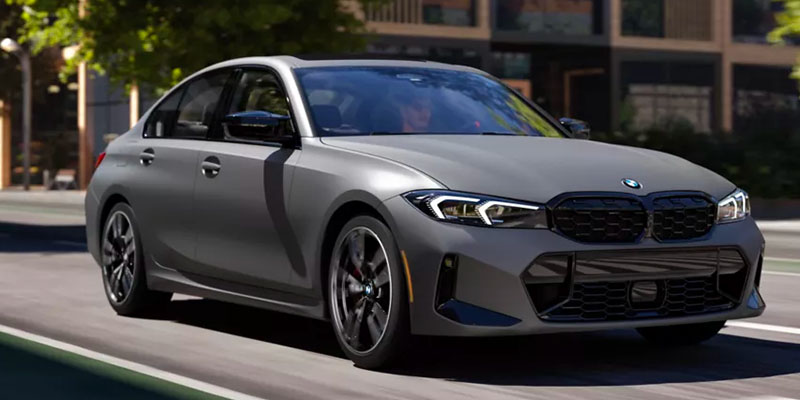
Performance Dynamics as a System, Not a Spec Sheet
BMW performance dynamics are not built around a single component. The 3 Series is engineered as an integrated platform where chassis balance, steering response, suspension geometry, and power delivery work together.
Core system elements include:
- Near ideal weight distribution that keeps the car neutral through corners
- A low center of gravity that improves stability at speed
- Rigid body structure that allows suspension tuning to work precisely
- Powertrain calibration that emphasizes usable torque rather than abrupt output
This system level approach is why the 3 Series feels composed even in everyday driving rather than only at the limit.
Chassis Balance and Rear Wheel Drive Foundations
The 3 Series is built around a rear wheel drive based architecture, which plays a major role in how it handles. By separating steering from propulsion, the front wheels focus on direction while the rear wheels manage power delivery.
Benefits of this layout include:
- More accurate steering feel
- Reduced torque influence through the steering wheel
- Better balance during acceleration out of turns
- Predictable behavior during lane changes and evasive maneuvers
For Jacksonville drivers who spend time on highways and surface roads alike, this balance improves confidence during merging, passing, and long distance cruising.
Steering Precision and Driver Feedback
Steering is one of the most defining characteristics of the BMW 3 Series. BMW tunes steering to communicate road information clearly without feeling heavy or artificial.
Steering characteristics include:
- Linear response that matches driver input
- Consistent weighting at highway speeds
- Precise on center feel for straight line stability
- Progressive feedback as cornering loads increase
This matters during everyday driving. Subtle steering corrections feel natural rather than over amplified, reducing fatigue during longer commutes.
Suspension Tuning for Real World Roads
The suspension in the 3 Series is calibrated to balance performance with comfort. Rather than using overly soft or overly firm settings, BMW tunes suspension geometry to keep the tires working efficiently across varying road surfaces.
Suspension benefits include:
- Controlled body movement over uneven pavement
- Stable cornering without harsh ride quality
- Predictable responses during braking and acceleration
- Confidence inspiring behavior on highway on ramps and curves
This tuning is particularly valuable on Florida roads where surface conditions can change quickly.
Engine Performance and Everyday Acceleration
The 2025 BMW 3 Series offers turbocharged engines designed to deliver smooth, immediate acceleration rather than peaky power. Turbocharging allows the engine to produce strong torque at lower engine speeds, which improves everyday drivability.
Engine performance characteristics include:
- Responsive throttle input for city driving
- Strong midrange acceleration for highway passing
- Efficient power delivery that avoids unnecessary strain
- Seamless integration with the transmission
Acceleration feels effortless rather than aggressive, which is why the 3 Series performs well as both a commuter and a performance sedan.
Transmission Behavior and Power Delivery
Transmission tuning is a critical but often overlooked part of driving dynamics. In the 3 Series, gear changes are designed to support smooth momentum rather than constant shifting.
Transmission behavior includes:
- Quick but refined gear changes
- Intelligent gear selection based on driving conditions
- Smooth downshifts that support controlled deceleration
- Minimal hesitation during acceleration
This contributes to a driving experience that feels cohesive rather than mechanical.
Highway Stability and Long Distance Comfort
Jacksonville drivers often spend significant time on highways. The 3 Series excels in these conditions due to its aerodynamic design and chassis tuning.
Highway focused advantages include:
- Strong straight line stability at speed
- Reduced wind and road noise
- Confident lane tracking with minimal steering correction
- Comfortable ride quality over extended distances
These traits make the 3 Series a sedan that feels relaxed at speed while remaining responsive when needed.
Daily Drivability Without Sacrifice
One of the reasons the 3 Series remains a benchmark is its ability to deliver performance without sacrificing daily usability. Controls are intuitive, visibility is clear, and the driving position supports both comfort and engagement.
Daily driving strengths include:
- Ergonomic seating that supports posture
- Clear outward visibility
- Predictable handling in traffic
- Smooth behavior in stop and go conditions
Performance is present when desired but never overwhelming.
Why Sedans Still Matter for Performance Oriented Drivers
Sedans like the 3 Series offer inherent advantages over taller vehicles. Lower ride height, reduced weight, and balanced proportions all contribute to better handling and efficiency.
For drivers who value:
- Steering precision
- Chassis balance
- Driving engagement
- Confident road feel
The 3 Series continues to deliver a compelling alternative to larger vehicles.
What Jacksonville Drivers Should Evaluate
When evaluating performance sedans, drivers should look beyond numbers and consider:
- How the vehicle feels during everyday driving
- Steering confidence at highway speeds
- Ride quality on real roads
- Balance between comfort and responsiveness
These factors define true performance dynamics.
Final Perspective on the 2025 BMW 3 Series
The 2025 BMW 3 Series remains a benchmark because its performance dynamics are engineered holistically. Chassis balance, steering precision, suspension control, and power delivery work together to create a sedan that feels confident, engaging, and comfortable in real world driving.
For Jacksonville drivers who value connection to the road without sacrificing refinement, the 3 Series continues to represent BMW’s commitment to performance driven engineering that enhances every mile.
Driving confidence is built long before a situation becomes critical. BMW approaches safety not as a collection of reactive features, but as a continuously operating system designed to support driver awareness, vehicle stability, and decision making in real world conditions. BMW Intelligent Safety reflects this philosophy by integrating sensors, software, and chassis behavior into a unified safety framework that works quietly in the background rather than aggressively interrupting the drive.
For Orange Park drivers navigating suburban traffic, highway corridors, and daily commutes, understanding how BMW Intelligent Safety systems actually function helps explain why BMW vehicles feel composed and reassuring even before intervention is required.
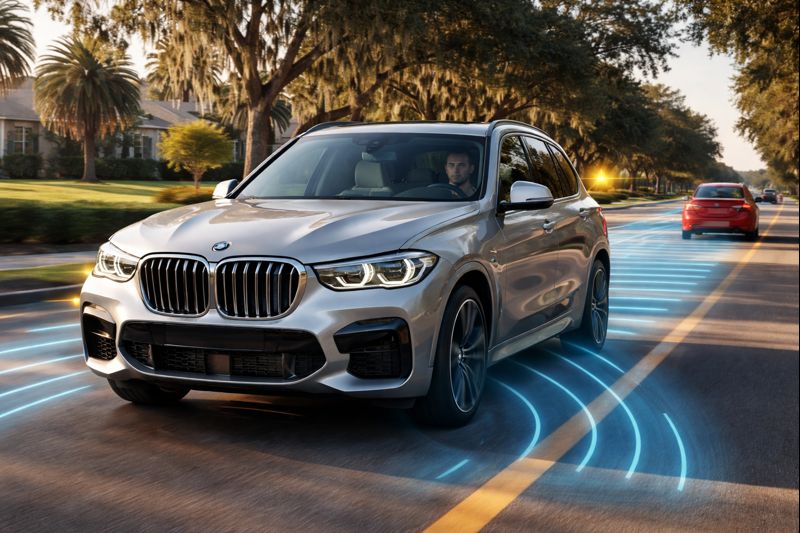
What BMW Intelligent Safety Really Is
BMW Intelligent Safety is not a single feature. It is a system level architecture that combines multiple driver assistance technologies under a common control strategy. Cameras, radar sensors, and electronic control units work together to monitor surroundings and predict potential risks.
Key components of BMW Intelligent Safety include:
- Forward facing cameras that recognize vehicles pedestrians cyclists and lane markings
- Radar sensors that track distance speed and relative motion
- Central processing modules that evaluate risk in real time
- Brake steering and powertrain interfaces that enable controlled intervention
Rather than waiting for a collision scenario, these systems operate continuously to assess changes in traffic flow and driver input.
Sensor Fusion and Why It Matters
BMW relies on sensor fusion rather than isolated detection. Each sensor type has strengths and limitations, so combining them creates a more reliable understanding of the driving environment.
Sensor fusion allows BMW systems to:
- Cross check data between camera and radar inputs
- Maintain accuracy in varying weather and lighting conditions
- Reduce false alerts caused by shadows reflections or road debris
- Respond smoothly instead of abruptly
This layered approach is critical for maintaining driver trust. Interventions feel measured because the system has higher confidence in what it is detecting.
Forward Collision Warning and Automatic Emergency Braking
BMW forward collision warning is designed to alert the driver early enough to respond naturally. Visual and audible alerts are calibrated to escalate only when necessary.
If the driver does not respond in time, automatic emergency braking can apply braking force to reduce impact severity or avoid a collision entirely.
Key design priorities include:
- Early warning rather than last second braking
- Progressive braking force instead of sudden stops
- Integration with chassis balance and tire grip
This ensures that braking interventions feel stable and controlled rather than startling.
Lane Keeping and Steering Support Systems
Lane keeping assistance in BMW vehicles is designed to guide rather than force. Cameras track lane boundaries and evaluate steering input to determine whether a correction is needed.
BMW lane support behavior includes:
- Gentle steering input rather than aggressive correction
- Activation only when the driver appears inattentive
- Deactivation when deliberate lane changes are detected
- Coordination with vehicle speed and road curvature
The result is a system that supports the driver on longer highway stretches without creating resistance or steering conflict.
Adaptive Cruise Control and Traffic Support
BMW adaptive cruise control maintains distance from vehicles ahead while adjusting speed smoothly. In traffic conditions common around Orange Park and Jacksonville corridors, this reduces driver fatigue without diminishing control.
System characteristics include:
- Smooth acceleration and deceleration tuned to traffic flow
- Predictive responses rather than reactive braking
- Integration with navigation data where available
- Stability focused behavior that avoids unnecessary speed changes
This is especially beneficial in stop and go traffic where consistency improves safety.
Blind Spot Monitoring and Surround Awareness
Blind spot monitoring uses radar sensors to track vehicles approaching from adjacent lanes. Alerts are delivered visually in the side mirrors rather than audibly unless escalation is needed.
BMW designs these alerts to:
- Provide awareness without distraction
- Avoid constant warnings in dense traffic
- Activate only when lane change intent is detected
This targeted approach reinforces awareness without overwhelming the driver.
How Chassis Engineering Enhances Safety Systems
Safety systems do not operate in isolation. BMW chassis tuning plays a major role in how effective these technologies feel. Steering precision suspension control and weight distribution allow electronic systems to work predictably.
Chassis contributions include:
- Balanced weight distribution that supports stable braking
- Suspension tuning that maintains tire contact under load
- Steering feedback that keeps the driver engaged
- Predictable vehicle response during corrective maneuvers
Because the vehicle behaves consistently, safety interventions can remain subtle rather than aggressive.
Intelligent Safety Versus Autonomous Driving
BMW Intelligent Safety is not autonomous driving. BMW’s philosophy emphasizes driver engagement with electronic support rather than replacement.
Key distinctions include:
- Driver remains responsible at all times
- Systems support decision making instead of removing it
- Interventions are designed to assist not override
- Feedback is provided to keep the driver informed
This approach aligns with BMW’s performance heritage while enhancing everyday safety.
Why These Systems Matter in Real World Orange Park Driving
Orange Park drivers encounter a mix of suburban roads highways school zones and unpredictable traffic patterns. Intelligent Safety systems are most valuable in these everyday scenarios rather than extreme situations.
Real world benefits include:
- Reduced stress during daily commutes
- Enhanced confidence in highway merging and lane changes
- Additional awareness in dense traffic
- Support during long drives without fatigue
Safety becomes a continuous experience rather than a reactive one.
What Drivers Should Evaluate When Comparing Safety Systems
When evaluating safety technology, drivers should look beyond feature lists and consider system behavior.
Important evaluation points include:
- How smoothly systems intervene
- Whether alerts feel informative or intrusive
- How well systems integrate with steering braking and throttle
- Whether the vehicle still feels engaging to drive
BMW Intelligent Safety excels when judged by how naturally it supports the driver.
Final Perspective on BMW Intelligent Safety
BMW Intelligent Safety enhances confidence by working quietly and intelligently in the background. Through sensor fusion precise calibration and integration with BMW chassis engineering, these systems support awareness stability and control without diminishing the driving experience.
For Orange Park drivers who value both engagement and reassurance, BMW Intelligent Safety represents a balanced approach to modern vehicle safety. It is not about replacing the driver, but about empowering them to drive with greater confidence every mile.
Top Features That Make the 2026 BMW X7 Stand Out
The 2026 BMW X7 is a cut above all other full-size luxury SUVs. Along with an expansive and richly appointed interior, the X7 delivers remarkable agility and state-of-the-art tech to guide, entertain, and protect you. Let’s explore the latest iteration of BMW’s flagship SUV.
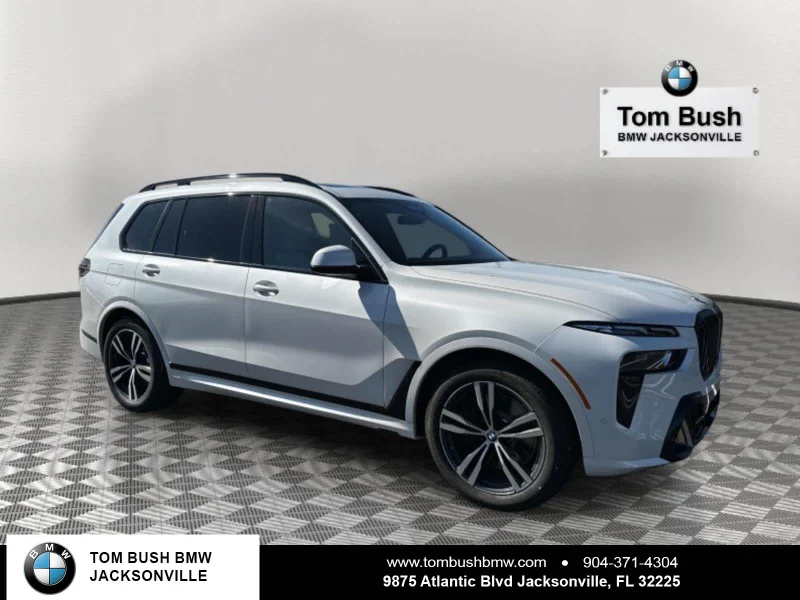
Spacious, Flexible Seating
If you have a large family, the X7 overdelivers on seating space and storage capacity. Cargo room reaches a maximum of 90 cubic feet with the second- and third-row seats folded down, and there’s a great deal of flexibility in seating arrangements, including a power-adjustable second-row captain’s chair.
Panoramic Glass Sunroof
The meticulously designed cabin is bedecked in premium upholstery and panel materials. A large panoramic glass sunroof in the high ceiling adds to your comfort with a sweeping view of the sky and a sense of space and openness.
Standard Air Suspension
Your comfort inside the X7 is further enhanced by the pillow-like softness of standard air suspension with adaptive dampers. Safe, stable cornering is guaranteed by anti-roll bars. In the higher-end trims, you can opt for even sportier suspension, plus rear-axle steering.
Read the rest of this entry »Precision Engineering in the 2025 BMW M8
Speed, luxury, and a generous cargo capacity mark the 2025 BMW M8 as one of the top models in the premium subcompact segment. This performance coupe is fashioned after classic European models and has the heart of a racetrack car.
The M8, also known as the M8 Competition Coupe, has a standard all-wheel drivetrain that delivers maximum traction on wet and dry roads, particularly when you need extra stability taking corners at high speeds. The crowning glory of this performance model is its 4.4-liter twin-turbocharged V8 motor, which produces 617 horsepower and 553 lb-ft of torque. An eight-speed sport automatic transmission with selectable drive modes is standard.

This sporty coupe has a few essential engineering features that optimize ride feel and handling, such as the adaptive suspension system, power-assisted speed-sensitive steering, and electro-mechanical limited-slip differential. The brake system is sophisticated with vented disc brakes, brake assist to enhance braking power, and systems that hold the brakes or regulate brake pressure on hills.
Read the rest of this entry »How Often Should You Get Your BMW’s Oil Changed?
The motor oil in your engine plays a crucial role in the world-class performance of your BMW vehicle. When it’s time for an oil change in Orange Park, the best place to go for trusted service and high-quality motor oil is Tom Bush Orange Park in Jacksonville. Learn the ins and outs of oil service before you drop by.
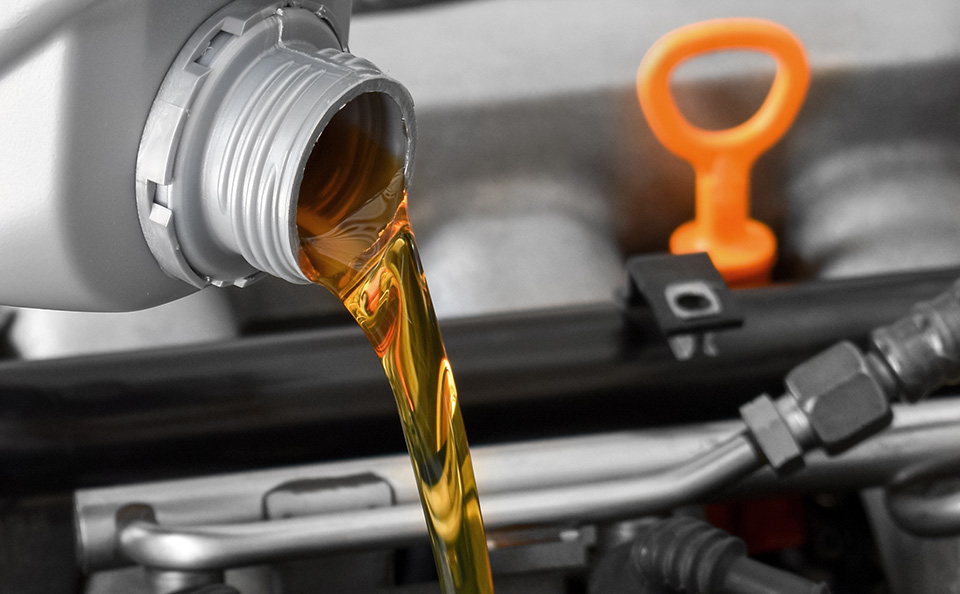
It’s a good idea to schedule an oil service every 7,500 for new BMW vehicles. The motor oil used in new cars tends to last longer than the oil used on older engines, which is why the age-old recommendation to schedule oil service every 3,000 miles isn’t common anymore. For most drivers, an oil service every 7,500 or so miles means scheduling service twice a year, or once every six months.
Even if you don’t drive your BMW every day, a six-month oil service is a good idea. This is because the motor oil in your engine will naturally degrade over time, regardless of how often you drive your vehicle. By the same token, if you drive your car long distances every day and rack up a lot of miles on your car, you may want to schedule oil service more frequently.
Are There Best Times to Schedule Oil Service?
Aside from keeping an eye on your odometer, there are two other times when it’s a good idea to schedule an oil service. First, if you plan to take your car on a long road trip, you should schedule service before your trip to ensure your car is in good condition. It’s also a good idea to schedule oil service after extreme heat to make sure your oil levels are good.
Read the rest of this entry »Balanced Utility and Style in the 2025 BMW X3
The 2025 BMW X3 is the most popular SUV that BMW makes and is now in its fourth generation. This year, it comes with refreshments to the exterior, interior, and mechanics that are designed to make it more functional for the family and more distinctively BMW-stylish than ever before. Here’s why this offering is worth taking a look at.
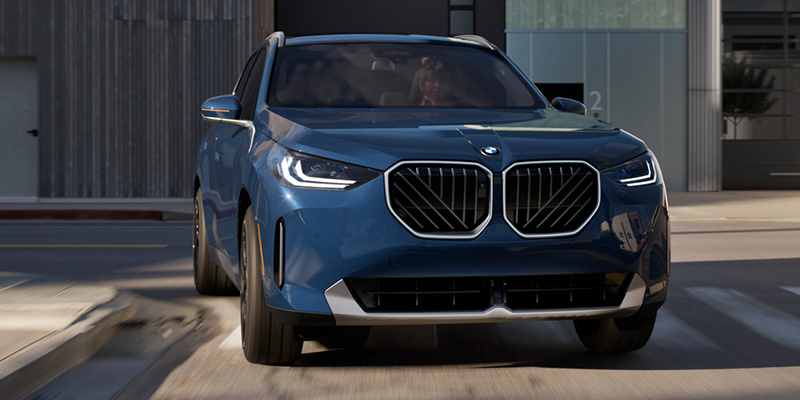
Let’s start with the basics. The base trim comes with a 2 L, twin-turbocharged engine that has been sport tuned. It’s a mild hybrid powertrain that can give you 255 hp and 295 pound-feet of torque. It can get you from 0 to 60 mph in just six seconds, and it’s paired with an eight-speed automatic transmission. That transmission comes with Sport and Manual modes, too, which means that you can customize how it responds to you depending on where you’re driving and what you feel like at the moment. As you go up into other trims, you get extra goodies that are designed to give you a particularly smooth and comfortable ride. Anti-roll stabilizer bars come standard with the 30 xDrive trim, which also has AWD drivetrain that allows you to feel confident in any weather and even in taking on some off-road trails. You also get the Driving Dynamics Control that BMW has developed which allows you to further tweak your powertrain performance. Choose SPORT mode when you want more stiffness and control, COMFORT for long highway drives, or ECO PRO when saving fuel is your primary consideration.
Read the rest of this entry »5 Impressive Features of the 2025 BMW i7
The all-electric 2025 BMW i7 has tons of practical yet aesthetic features that make it a four-door sedan like no other. Get to know the i7 here, and then schedule a test drive at our Jacksonville BMW dealership to see how it handles in person.
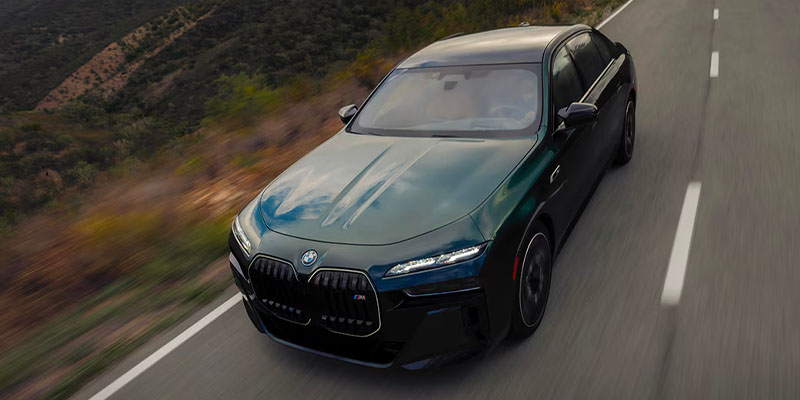
5 Awesome Features of the Fully Electric 2025 BMW i7
1. Excellent Performance
The i7 offers a top-tier powertrain with its fifth-generation electric synchronous motor and sophisticated lithium-ion traction battery with run-down protection. The single-speed transmission with driver-selectable modes is the cherry on top, giving the i7 a maximum of 449 horsepower and 549 lb-ft. of torque. And with its gas-pressurized shock absorbers and double wishbone front suspension with air springs, riding with that much power is still smooth and easy.
Read the rest of this entry »Coupe-Utility Style in the 2025 BMW X4 M
Drivers in the market for a blend of speed and versatility are sure to love what the 2025 BMW X4 M has to offer. Your next Sports Activity Coupe offers a thrilling, sporty drive in a practical yet refined package.
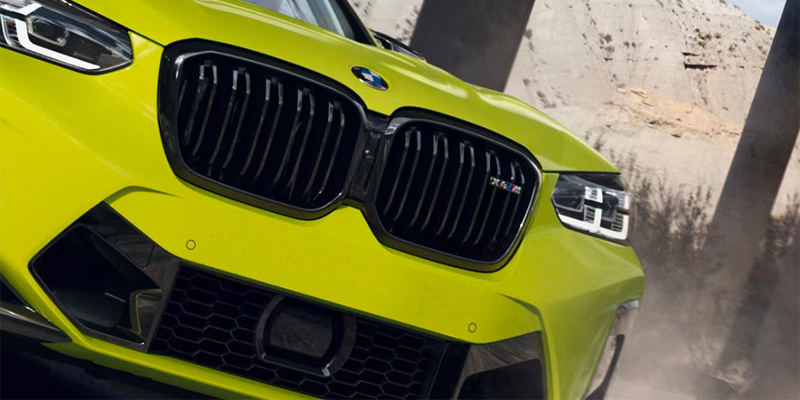
Coupe-Utility Style in the 2025 BMW X4 M
Sporty Performance
The 2025 X4 M comes standard with a 3.0-liter BMW M TwinPower Turbo inline 6-cylinder engine producing 473 horsepower and 457 lb-ft of torque, combining Double-VANOS and Valvetronic technology with high-precision direct injection for optimal efficiency. Its 8-speed M Sport Automatic transmission with Drivelogic, manual shift modes, paddle shifters, and Launch Control provides precise control whether pushing performance or cruising comfortably, while electronic throttle control and Auto Start-Stop functionality balance responsiveness with fuel savings.
Practical Handling
The X4 M’s standard M Sport Differential maximizes traction when cornering, and M-tuned xDrive all-wheel-drive system helps to balance power for superior grip. Standard Hill Descent Control, M Drive settings, and Performance Control with M-tuned electric power steering help to further deliver a responsive driving experience. Dynamic Stability Control, with features including Brake Drying and Brake Stand-by, supports consistent braking response, while ventilated M Compound disc brakes help to provide stopping strength.
Luxury and Tech Meet in the 2026 BMW X5
Mild hybrid engineering gives the athletic 2026 BMW X5 an eco-friendly edge. With stately good looks, smooth performance, and tons of luxurious standard features, the latest X5 is an ideal pick for commuters and growing families.
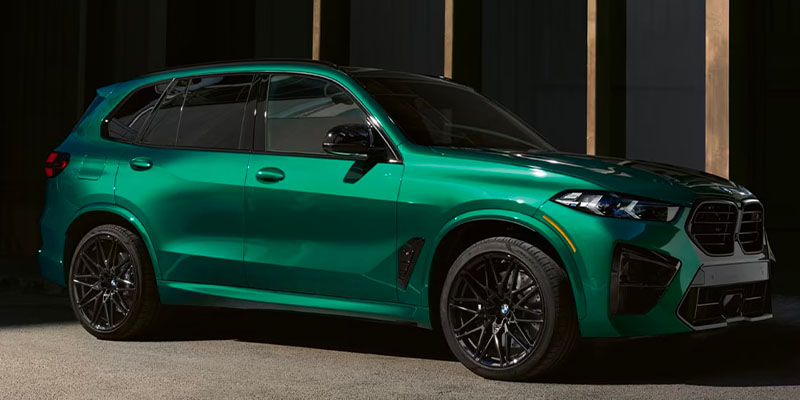
Luxury and Tech Meet in the 2026 BMW X5
The X5 is equipped with a 3.0-liter intercooled turbocharged gas motor with a mild hybrid drive designed to boost the overall efficiency of the motor. This engine produces 375 horsepower and 398 lb-ft of torque. The estimated gas mileage for this model is 23 MPG in urban areas and 27 MPG on the highway.
The powertrain is mated with an eight-speed sport automatic transmission with selectable modes and steering wheel-mounted controls. A rear-wheel drive is standard on the base model, while upper trims have an AWD system for improved handling. This model also has a regenerative brake system to recharge the mild hybrid motor while you drive and a multi-link rear suspension.
Sleek Utility in the 2026 BMW X6
BMW’s sleek and sporty coupe-style SUV returns with three powertrain options and tons of attitude. Explore the highlights of the 2026 BMW X6 to see why now is a perfect time to upgrade your ride.
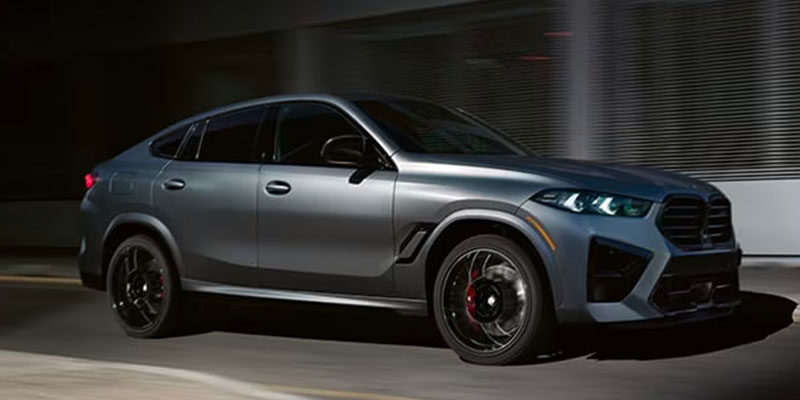
Sleek Utility in the 2026 BMW X6
The entry-level 3.0-liter TwinPower turbocharged I6 engine is standard for the xDrive40i models. The engine generates up to 375 horsepower and 398 lb-ft of torque. This engine can hit 60 MPH in 5.2 seconds and offers a combined efficiency of 23 MPG. An eight-speed sport automatic transmission with Manual and Sport modes is standard.
The M60i models have a 4.4-liter M Performance twin-turbocharged V8 engine that produces 523 horsepower and 553 lb-ft of torque. This motor effortlessly maintains a 130 MPH top track speed and reaches 60 MPH in 4.2 seconds. The fastest engine is exclusive to the X6 M model, which provides 617 horsepower and 553 lb-ft of torque. This engine only needs 3.7 seconds to go from zero to 60 MPH.
Connect with us


Recent Blog Entries
- BMW Interior Craft and Driver Focused Design Principles Explained
- BMW Connected Services and Digital Features for Everyday Use
- Exploring BMW Electrification and Plug In Hybrid Systems in 2026 Models
- How BMW X5 and 5 Series Lease Considerations Support Orange Park Shoppers
- BMW Safety and Driver-Assistance Technologies for Florida Roads