


BMW 2 Series Lease Options
View 2026 BMW 2 Series Lease Offers
Speak with a BMW Specialist to Discuss Your Trade In
Schedule a 2026 BMW 2 Series Test Drive
| Sales | ||
| Day | Open | Closed |
| Monday | 8:30AM | 7:30PM |
| Tuesday | 8:30AM | 7:30PM |
| Wednesday | 8:30AM | 7:30PM |
| Thursday | 8:30AM | 7:30PM |
| Friday | 8:30AM | 7:30PM |
| Saturday | 8:00AM | 6:00PM |
| Sunday | Closed | Closed |
Lease the 2026 BMW 2 Series the Way You Want to Drive It
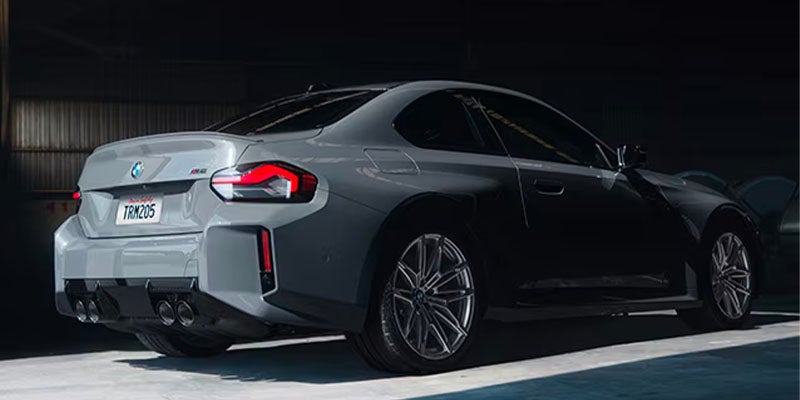
Leasing a BMW coupe often comes down to one question, whether you want the lower monthly payment of the 230i or the stronger six cylinder pull of the M240i, and in Orange Park that decision gets easier once you see how term length and mileage allowance shape the number you sign for. A lease is not just a lower payment version of buying. It is a different kind of contract, built around mileage, money factor, and residual value, and understanding those three pieces early makes the process easier to navigate.
For a coupe like the 2 Series, leasing tends to appeal to drivers who want the newest technology and the sharpest driving feel without a long term ownership commitment. That fits the personality of the car itself. The 2 Series is built around driver engagement rather than family duty, and a shorter lease cycle often matches how these owners use the vehicle.
How BMW 2 Series Lease Payments Are Structured
A BMW lease payment comes from three main inputs working together, and none of them behave the way a loan payment does. The capitalized cost is the negotiated price of the vehicle, similar to a purchase price. The residual value is what BMW predicts the car will be worth at the end of the lease, and a higher residual generally lowers the payment since you are financing less of the car's total value. The money factor works like an interest rate, applied to the combined cost and residual rather than the full purchase price.
Term length changes this equation more than most shoppers expect. A shorter term, such as 24 months, usually raises the monthly payment because the car depreciates faster early in its life, while a 36 month term spreads that depreciation more evenly and often lowers the monthly number. Mileage allowance adds another layer. Choosing 10,000 miles a year instead of 12,000 or 15,000 can lower the payment, but only if you are confident you will not exceed it, since going over triggers a per mile charge at lease end.
The tradeoff to weigh is simple. A lower mileage lease looks appealing on the monthly statement, but it can cost more overall if you consistently drive more than expected and pay overage fees at turn in.
230i vs M240i Lease Cost
The gap in lease payments between the 230i and M240i is larger than the horsepower difference alone would suggest, and that comes down to how capitalized cost and residual value interact. The M240i carries a higher MSRP going in, which raises the capitalized cost side of the lease formula immediately.
Residual value adds another layer to this comparison. A six cylinder performance coupe like the M240i does not always retain a proportionally higher percentage of its value compared with the 230i, which means the payment gap can be wider than the sticker price difference implies. That does not make the M240i a poor lease choice. It simply means the extra performance carries a real ongoing cost, not just a higher purchase price.
- Choose the M240i if the six cylinder engine and stronger acceleration are the reason you want this car, and treat the higher lease payment as the cost of that experience.
- Choose the 230i if you are drawn to the 2 Series mainly for its size, styling, and driving feel rather than outright power, since it delivers most of that personality for meaningfully less each month.
Lease vs Loan for a BMW Coupe
Orange Park shoppers frequently ask whether leasing or financing makes more sense for a BMW, and a compact coupe changes that math compared with a family sedan or SUV.
A lease usually makes more sense if you expect to want a new BMW again in two to four years, if you drive a predictable and moderate number of miles annually, and if you want the newest technology and safety features without holding the depreciation risk yourself. A loan makes more sense if you plan to keep the car well past the lease term, if your annual mileage runs high, or if you want to build equity toward eventual ownership rather than handing the car back.
The 2 Series adds a specific wrinkle to this decision. Because it is a smaller, more personal coupe rather than a primary family vehicle, many owners treat it as a shorter term relationship by nature, which tilts the math toward leasing for buyers who plan to rotate into a new BMW every few years. Drivers who see the 2 Series as a long term keeper, however, often find that financing builds toward something they will still want in six or seven years.
What to Expect at Lease End
Lease end terms deserve attention before you sign, not after. Mileage overage charges apply per mile beyond your contracted allowance, and they can add up quickly if your driving habits change during the lease. Wear and tear standards apply as well, covering anything beyond normal use, and a disposition fee often applies if you choose not to purchase the vehicle or lease another BMW.
The buyout price at lease end is based on the residual value set at signing, not the car's market value at that time. If the car is worth more than the residual, buying it out can be a smart move. If it is worth less, returning it and starting a new lease is usually the better financial choice.
Lease the 2026 BMW 2 Series in Orange Park
Tom Bush BMW Orange Park gives local shoppers a direct way to compare real lease offers on the 230i and M240i rather than relying on national payment estimates that rarely reflect current local pricing. Because the payment gap between trims comes down to real residual and money factor numbers, seeing current offers side by side is the only way to know what each trim costs you monthly.
Reviewing current offers, discussing trade in value, and driving both trims back to back gives you the clearest picture of which lease structure fits your mileage habits and how long you plan to keep the car.
Which lease terms matter most for a sporty luxury coupe?
Money factor, residual value, and mileage allowance work together to set your payment, and on a coupe like the 2 Series, residual value often matters more than it does on a typical sedan because performance trims can depreciate differently than base models.
Are there mileage limits I should know about before leasing?
Yes. BMW leases are usually offered in tiers such as 10,000, 12,000, and 15,000 miles per year, and choosing a tier below your driving habits is one of the most common reasons lessees face charges at turn in.
How are excess mileage charges calculated?
Excess mileage is billed at a set rate per mile over your contracted allowance, calculated at lease end based on your total mileage compared with your original agreement, so tracking mileage partway through the lease can help you avoid a large bill at turn in.
Is it better to lease or buy a BMW 2 Series?
If you plan to want a new BMW again within a few years and drive a predictable number of miles annually, leasing usually makes more sense. If you plan to keep the car long term or drive well above average mileage, financing typically works out better.
(Note: This page focuses on providing valuable information and does not mention specific pricing, for more information about financing and car buying, please reach out to our dealership.)