


BMW digital systems are engineered to support driving rather than compete with it. Connected Services and interior technology are designed around the driver’s environment, integrating navigation, vehicle data, and convenience features in a way that feels intentional instead of overwhelming. For shoppers evaluating modern BMW interiors, understanding how these systems work in daily use is more important than knowing feature names.
BMW approaches in vehicle technology as an extension of vehicle engineering. Software is expected to behave predictably, stay relevant over time, and remain secondary to the driving task.
What BMW Connected Services Actually Include
BMW Connected Services function as a centralized digital layer that links the vehicle, the driver, and supporting infrastructure. These services are not a single feature but a collection of systems working together.
Core capabilities include:
- Remote vehicle access for locking, unlocking, and status checks
- Vehicle location and security monitoring
- Maintenance alerts and service information
- Weather, traffic, and infrastructure data integration
- Digital key functionality on compatible devices
These services are designed to reduce friction during ownership rather than add interaction steps.
The BMW Digital Cockpit and Driver Environment
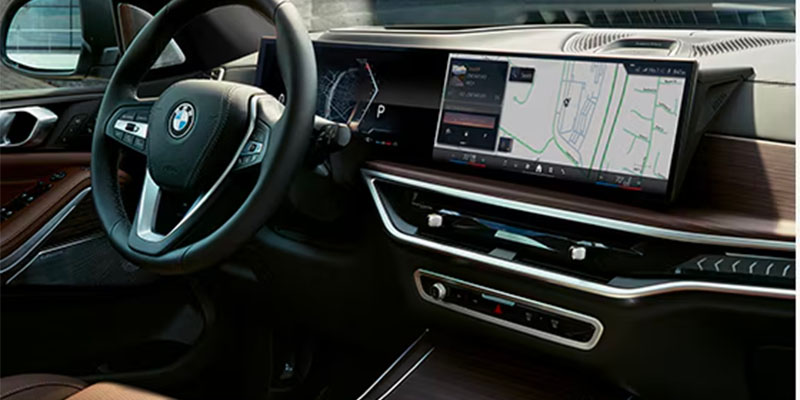
BMW interiors prioritize a driver focused layout where screens and controls support situational awareness. Displays are positioned to minimize eye movement, and interface logic follows driving priorities.
Key elements of the digital cockpit include:
- A configurable instrument display that adapts to drive modes
- A central display designed for glanceable information rather than deep menus
- Steering wheel controls that reduce reliance on touch interaction
- Logical separation between driving functions and comfort settings
This layout allows drivers to interact with technology without disengaging from the road.
Navigation That Integrates With the Vehicle
BMW navigation is built into the vehicle’s operating system rather than functioning as a standalone app. This allows it to interact with driver assistance systems and vehicle sensors.
Navigation advantages include:
- Real time traffic routing based on vehicle location and speed data
- Integration with adaptive cruise control and driver assistance alerts
- Display of route guidance within the instrument cluster
- Predictive routing that adjusts based on driving conditions
Unlike phone based navigation, built in systems can influence how the vehicle prepares for upcoming conditions.
Over the Air Software Updates and Longevity
BMW supports over the air software updates that enhance functionality after purchase. These updates are designed to maintain system stability while adding features or refinements.
Over the air updates can include:
- Interface improvements and usability refinements
- Feature expansions for supported systems
- Security and stability enhancements
- Compatibility updates for connected services
Updates occur without requiring a service visit and are designed to preserve vehicle reliability rather than introduce experimental behavior.
Subscription Transparency and Ownership Reality
Connected Services often raise questions about subscriptions and long term usability. BMW structures these services so that core vehicle functionality remains intact even if subscriptions expire.
Important ownership considerations include:
- Essential vehicle functions remain active without subscriptions
- Connected features may require renewal after an included period
- Navigation and safety systems continue to operate independently
- Subscription services primarily affect convenience and remote access
This structure helps prevent dependency on ongoing payments for core driving functionality.
AI Assisted Features Without Disruption
BMW integrates intelligent assistance carefully. Rather than branding features aggressively as artificial intelligence, BMW applies adaptive logic where it improves usability.
Examples include:
- Predictive navigation suggestions based on driving patterns
- Voice interaction tuned for command clarity rather than conversation
- Adaptive interface behavior based on driving context
The focus remains on reducing cognitive load rather than adding novelty.
Everyday Usability and Learning Curve
BMW digital systems are designed to become intuitive quickly. Physical controls are retained where tactile feedback matters, and digital elements are introduced where they provide clear benefit.
Daily usability benefits include:
- Minimal menu layering for common tasks
- Consistent control placement across models
- Customization options that do not require constant adjustment
- Clear visual hierarchy for driving critical information
This balance supports long term satisfaction rather than short term excitement.
How Digital Features Support Driving Rather Than Distract
BMW places strict boundaries on what digital systems are allowed to do while the vehicle is in motion. Features are prioritized based on safety relevance and driver attention.
Design principles include:
- Limiting complex interactions while driving
- Prioritizing alerts over entertainment notifications
- Maintaining manual control authority
- Ensuring system behavior remains predictable
This reinforces the idea that technology exists to support driving, not replace it.
What Shoppers Should Evaluate
When evaluating BMW Connected Services and interior technology, shoppers should consider:
- How much remote access matters in daily routines
- Preference for built in navigation versus phone mirroring
- Comfort with software updates over time
- Desire for customization versus simplicity
Understanding personal usage patterns helps determine which digital features provide real value.
The BMW Philosophy Behind Connected Technology
BMW’s approach to digital systems reflects a broader engineering philosophy. Technology should enhance awareness, reduce friction, and remain secondary to the driving experience.
Connected Services and digital features are designed to evolve quietly in the background, maintaining relevance without demanding attention. That approach aligns with the broader design intent of BMW and explains why BMW interiors emphasize clarity, control, and longevity over spectacle.
Connect with us


