


BMW brake pad replacement is one of the most common service decisions an owner faces, and knowing when to act makes the difference between a routine pad swap and a costlier brake system repair. BMW uses an electronic wear sensor system that alerts the driver at a specific pad thickness threshold. However, that warning light is not the only signal worth monitoring. Understanding how the sensor works, what physical signs precede it, and what a complete brake evaluation involves gives you a more accurate picture of where your brake system actually stands.
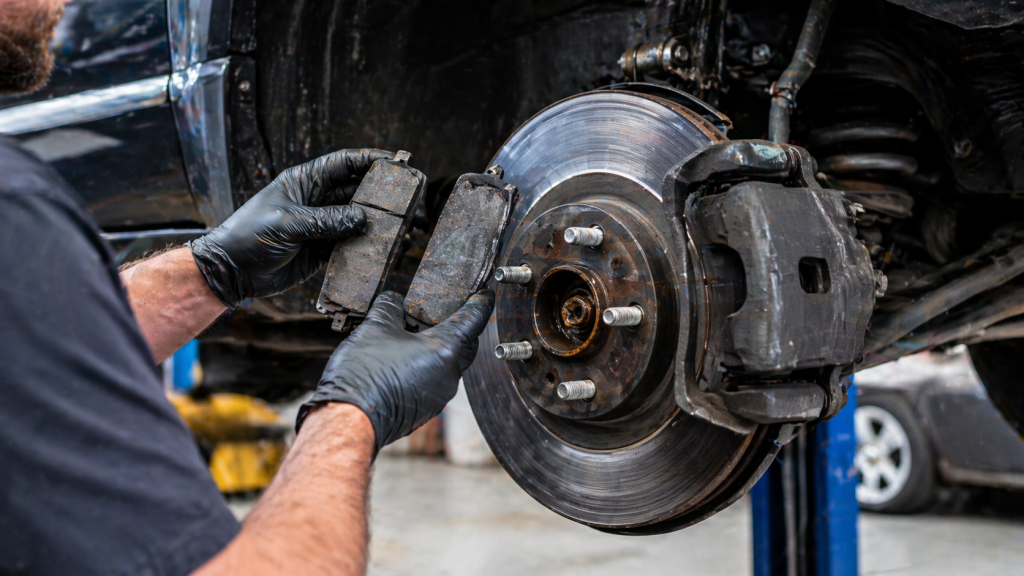
How BMW Brake Wear Sensors Work
BMW embeds electronic brake wear sensors directly into the brake pad material. Each sensor contains a resistive wire that maintains a closed electrical circuit while pad material surrounds it. As the pad wears to approximately 2 to 3mm of remaining thickness, the rotor contacts the wire and breaks that circuit. That interruption triggers the brake pad warning indicator on the instrument cluster.
The sensor is a single-use component. Once the rotor severs the wire, the sensor cannot be reset or reused. A technician must replace it alongside the pad at every service. BMW typically installs sensors on the front inner pads and one rear pad. These positions wear fastest and generate the most reliable wear data across the axle. However, a rear sensor alert confirms the rear pads have reached threshold. It does not confirm the front pads are in good condition.
Furthermore, CBS brake monitoring tracks pad wear as part of the vehicle’s continuous service calculation. The system uses wheel speed data, brake application frequency, and deceleration load to estimate remaining pad life between physical sensor triggers. Together, the CBS estimate and the physical sensor provide two layers of awareness before a pad reaches a critical state.
Can You Drive After the BMW Brake Warning Light Appears?
When the brake pad warning light activates, approximately 2mm of pad material remains at the sensor contact point. That thickness still provides functional stopping power. However, it represents a narrow safety margin. Most BMW owners can drive briefly after the alert without immediate mechanical danger. Continuing without scheduling service accelerates the risk of the pad reaching zero material, at which point the metal backing plate contacts the rotor directly.
What Happens If You Delay Service
Metal-on-metal contact between the backing plate and rotor causes rapid rotor scoring. It also significantly increases stopping distance. A pad replacement at $300 to $500 per axle becomes a pad and rotor replacement once scoring begins. Rotor replacement on a BMW adds $400 to $800 per axle depending on the model. Scheduling service within a few days of the warning light is the cleaner financial and safety decision.
Grinding during braking is a separate signal that requires immediate attention. Unlike the warning light, grinding means pad material is already gone and metal contact is actively occurring. At that stage, driving to a service appointment compounds rotor damage with every stop. A BMW owner who hears grinding should schedule same-day service rather than waiting for a convenient opening.
Why Do Front and Rear BMW Brake Pads Wear at Different Rates?
Most vehicles wear front pads faster than rear pads. Braking shifts vehicle weight forward, loading the front axle with the majority of stopping force. BMW’s calibration changes that dynamic on many models. Several BMW platforms apply a rear brake bias tuning that distributes more braking force to the rear axle at low to moderate deceleration levels. Additionally, BMW’s brake-based limited-slip differential function uses rear brake application to redirect torque during cornering. That places heat and friction load on the rear pads outside of normal braking events.
As a result, rear pads on certain BMW models wear at a rate closer to or faster than the fronts. An owner who checks front pad thickness and assumes the rears are in equal condition may miss a rear pad that has reached its sensor threshold. The CBS monitoring differences between front and rear axles mean the two wear rates can diverge without obvious warning until the sensor trips.
Checking both axles at every service interval is the more accurate approach for a BMW. A technician performing a brake inspection should measure pad thickness at all four corners and report them independently. That gives you a complete picture of where each axle stands relative to the replacement threshold.
Rotors and Brake Fluid: What a Full Brake Evaluation Covers
Pad replacement
Addresses the friction material but does not resolve rotor or fluid conditions that affect brake system function. A thorough brake evaluation covers three components: pad thickness measurement, rotor inspection, and brake fluid moisture assessment.
Rotor Inspection
Rotors carry a minimum thickness specification stamped or cast into the rotor hat. A technician measures rotor thickness with a micrometer at multiple points across the face. A rotor that has worn below minimum specification requires replacement regardless of surface appearance. Beyond thickness, the technician inspects for scoring, which are grooves cut into the rotor face by worn pad material or debris. A scored rotor accelerates wear on new pads and reduces the contact area between pad and rotor. Heat cycling also causes rotor warping, where the rotor face develops a slight runout that the driver feels as a pulsation through the brake pedal.
- Rotor minimum thickness is a hard specification, and a rotor measuring below that number requires replacement even if the surface looks acceptable
- Scoring deeper than 1.5mm into the rotor face cannot be corrected by resurfacing and requires full rotor replacement
- Brake fluid moisture content above 3 percent indicates the fluid has absorbed enough water to lower its boiling point, which BMW’s CBS system flags as a service need independent of pad wear
Brake fluid connects to pad service in a way most owners do not expect. Fluid with high moisture content boils under sustained heat load. That creates vapor pockets in the hydraulic line. Those pockets compress instead of transmitting pressure, causing the pedal to feel soft under repeated hard stops. New pads cannot compensate for degraded fluid. A complete brake evaluation should confirm fluid condition before the appointment closes.
Service Timing and What to Expect at the Dealer
BMW brake pad replacement intervals vary by model, driving pattern, and axle position. Front pads on most BMW models reach service threshold between 30,000 and 50,000 miles under mixed driving. Rear pads on models with brake-based differential function may reach threshold earlier. Aggressive urban driving, frequent highway braking, and towing accelerate wear on both axles.
At an authorized BMW dealer, a brake pad replacement service includes pad removal, wear sensor replacement, rotor inspection, caliper slide pin lubrication, and a brake system pressure check. The technician documents pad thickness at all four corners and notes rotor condition in the service record. That documentation matters for CBS recalibration after service and for the vehicle’s service history under a transferable maintenance plan.
- Front brake pad and rotor replacement at an authorized BMW dealer typically runs between $600 and $1,100 per axle depending on model and rotor specification
- Rear brake pad and rotor replacement runs between $500 and $900 per axle on most BMW models, with M Sport and performance trim variants carrying higher parts costs
- Scheduling service promptly after a warning light alert avoids rotor scoring and keeps the repair within the pad-only cost range
Tom Bush BMW’s service team handles brake inspections and pad replacement with BMW-trained technicians and genuine BMW parts. That ensures the CBS system recalibrates correctly after service. For Jacksonville drivers who want accurate brake wear data and a complete axle-by-axle evaluation, scheduling a brake inspection before the warning light appears is the most cost-controlled path through BMW brake ownership.
Connect with us


