
Blog

All Jacksonville BMW Dealer Tom Bush BMW Orange Park Things To Do In Jacksonville Jacksonville BMW Service Jacksonville Amenities Jacksonville Luxury Cars Tom Bush BMW Orange Park Service Jacksonville Entertainment Jacksonville Used Cars Tom Bush Family of Dealerships Jacksonville Restaurants Jacksonville Eateries Jacksonville Parks Family Fun in Jacksonville Jacksonville Landmarks Orange Park Florida BMW Dealer Day Trips Jacksonville Art Jacksonville Foodies Jacksonville Road Trips Tourists Fun

BMW Extended Warranty vs Third Party Coverage

BMW extended warranty vs third party coverage discussions usually focus on pricing, though the larger differences appear during repair approval, diagnostics, labor reimbursement, and dealership service processing. Modern BMW models rely heavily on integrated electronics, driver assistance technology, sensors, cooling modules, and communication systems that create more repair complexity once factory coverage expires. Because of that, ownership protection involves much more than selecting the cheapest plan available. Understanding how factory backed coverage and outside warranty providers process repairs helps BMW owners evaluate which option creates fewer repair complications during long term ownership. BMW Factory Extended Coverage Follows BMW Service Workflow BMW factory backed extended coverage operates through the same dealership repair structure used during the original factory warranty period. Once a covered repair concern is diagnosed, the dealership communicates directly with BMW claim systems for repair authorization, labor allocation, and approved parts replacement. That process changes ownership flow substantially because BMW technicians already understand the coverage structure, labor procedures, and approved repair categories tied to BMW protection plans. Diagnostics, repair documentation, labor times, and component approvals remain integrated inside the dealership workflow. BMW factory extended warranty plans usually cover major repair categories tied to: more • Engine components • Transmission assemblies • Cooling systems • Electrical modules • Fuel delivery systems • Steering components • Climate control systems Modern BMW vehicles contain interconnected electronics that communicate across multiple control modules simultaneously. If a sensor failure triggers communication faults throughout multiple systems, dealership technicians can diagnose and process repairs through one integrated approval structure instead of navigating third party authorization chains. This dealership integration becomes more noticeable during larger repairs involving electronics, drivability concerns, or intermittent fault tracing where multiple diagnostic procedures may be required before identifying the root issue. Third Party Warranty Providers Operate Through Separate Approval Structures Third party warranty companies use completely different repair authorization processes from BMW backed coverage. The dealership typically must contact the outside provider directly after diagnostics begin, then wait for repair authorization approval before continuing major repair work. That structure creates several variables owners should evaluate carefully before purchasing outside coverage. Some providers require additional inspections before approving repairs. Others limit labor reimbursement amounts or restrict certain repair categories through contract exclusions. Repair authorization differences commonly involve: • Labor reimbursement limits • Third party inspections • Component approval verification • Deductible structures • Parts sourcing restrictions • Diagnostic reimbursement limits A BMW dealership may charge labor rates that exceed the reimbursement amount approved by some outside warranty companies. When that happens, the remaining balance can become the owner's responsibility despite holding an active warranty contract. Coverage wording also matters heavily. Some providers advertise broad repair coverage while excluding electronics modules, communication systems, infotainment components, seals, gaskets, or diagnostic procedures within the actual contract language. This creates confusion because repair approvals rely less on marketing summaries and more on the exact wording contained inside the service agreement itself. BMW Electronics and Diagnostics Change Warranty Evaluation Completely Modern BMW ownership differs dramatically from older vehicle ownership because electronic integration now controls nearly every major operating system throughout the vehicle. Adaptive suspension calibration, driver assistance technology, communication modules, digital displays, parking systems, climate controls, drivetrain management, and steering systems all rely on complex electronics working together continuously. As vehicles become more electronically integrated, diagnostics become more involved as well. A fault inside one module can trigger communication interruptions throughout several connected systems simultaneously. Identifying the root issue may require extensive diagnostic tracing before replacing any physical component. BMW repair exposure commonly includes: • Sensor calibration faults • Cooling module failures • Infotainment communication issues • Digital display malfunctions • Driver assistance system interruptions • Suspension control module concerns This matters because diagnostics themselves carry substantial repair cost. Some third party warranty providers limit diagnostic reimbursement unless the failed component ultimately receives claim approval afterward. BMW backed coverage structures usually integrate diagnostics more smoothly through dealership communication systems. Outside providers may require additional authorization before approving extensive diagnostic labor time. Owners comparing warranty options should therefore evaluate how diagnostics are handled just as carefully as mechanical repair coverage. Claim Approval Structure Shapes Repair Timing Repair timing becomes one of the largest ownership differences between BMW factory coverage and outside providers. Factory backed protection plans remain integrated into BMW dealership operations, while third party claims frequently require outside communication before repair work continues. That difference becomes more noticeable during larger repairs involving electronics, transmission concerns, cooling systems, or intermittent faults that require extended troubleshooting. Third party claim processing may involve: • Waiting for outside authorization • Additional repair documentation • Inspector review scheduling • Labor negotiation • Component verification • Parts sourcing approval During complex repairs, dealerships may need approval updates throughout multiple stages of the repair process. If additional failures appear after initial teardown inspection, the provider may require supplemental authorization before proceeding further. BMW factory backed plans streamline this workflow because repair authorization, labor structures, and approved repair categories already exist inside the dealership service framework. This does not automatically mean every third party provider creates difficult repair situations. Some companies maintain stronger dealership relationships and smoother authorization processes than others. Still, owners should understand that repair workflow differences shape the ownership process just as heavily as the contract itself. What BMW Owners Should Compare Before Purchasing Coverage Warranty comparisons should extend far beyond monthly payment figures or contract length. The larger ownership questions involve diagnostics, labor reimbursement, repair authorization structure, electronics coverage, dealership workflow, and claim processing consistency. BMW owners evaluating coverage should compare: • Electronics repair inclusion • Diagnostic labor reimbursement • Deductible structure • Labor rate limitations • Repair authorization process • Transferability during resale • BMW dealership claim familiarity • Coverage exclusions and limitations BMW extended warranty plans and third party coverage providers approach repair protection from very different operational structures. Factory backed plans integrate directly into dealership repair workflow, while outside providers operate through separate authorization channels that vary substantially between companies. Understanding how those repair processes function gives BMW owners a stronger foundation for evaluating which coverage structure fits their ownership priorities, repair concerns, and long term expectations most naturally.

BMW 3 Series vs Audi A4 Comparison

BMW 3 Series vs Audi A4 comparisons usually begin with horsepower numbers, yet the larger differences appear through steering calibration, suspension tuning, and how each sedan responds during everyday driving situations. Both compact luxury sedans target drivers who want strong acceleration, upscale cabin design, and composed highway travel, though each manufacturer approaches driving dynamics with a very different philosophy. BMW focuses heavily on chassis balance and directional connection, while Audi prioritizes traction stability and smoother body movement across changing pavement surfaces. Understanding how those differences shape commuting, cornering, highway travel, and steering response gives buyers a clearer picture of which sedan fits their driving priorities more naturally. BMW and Audi Tune Suspension Movement Very Differently Suspension tuning shapes how a sedan reacts during braking, cornering, lane changes, and uneven pavement transitions. The BMW 3 Series uses a chassis setup that emphasizes sharper directional rotation and tighter body control during steering input. Audi calibrates the A4 with smoother damping transitions and steadier vertical movement across rough surfaces. The difference becomes noticeable during quick directional changes. A BMW 330i settles faster after corner entry because the suspension limits excess body lean and weight transfer movement more aggressively. The Audi A4 absorbs pavement imperfections with softer body motion, creating a calmer ride character during commuting and interstate travel. BMW also places strong emphasis on rear wheel balance throughout the chassis structure. That rear biased layout changes how the sedan rotates through corners and responds during throttle application exiting a turn. Audi approaches chassis tuning differently by stabilizing the platform through flatter, steadier movement patterns that feel more planted across uneven pavement. Key suspension differences include: more • BMW prioritizes quicker directional transition response • Audi emphasizes smoother body movement across rough pavement • BMW damping calibration tightens corner entry movement • Audi suspension travel softens expansion joint harshness • BMW steering input creates more immediate chassis rotation These differences shape far more than ride comfort alone. They alter how connected the driver feels during lane changes, highway merging, and higher speed cornering. xDrive and quattro Deliver Power Through Different Traction Philosophies All wheel drive calibration changes how torque distributes across the chassis during acceleration and cornering. BMW xDrive and Audi quattro both increase traction stability, though they approach power distribution very differently. BMW xDrive maintains a rear biased character during normal driving. Under steady acceleration, more torque remains directed toward the rear axle to preserve the sharper handling balance associated with BMW sport sedans. As traction loss appears, the system rapidly redirects power toward the front wheels to stabilize grip. Audi quattro approaches traction management with a stronger emphasis on planted stability and neutral control. The system continuously balances torque distribution to maximize traction consistency across changing road surfaces. During rain soaked highways or uneven pavement, the A4 maintains a very calm and stable directional feel because the drivetrain prioritizes controlled weight distribution. This distinction changes how the sedans feel during corner exit acceleration. The BMW setup feels more active and rotational entering and exiting turns, while the Audi powertrain delivers smoother directional stability during throttle application. Drivers comparing xDrive and quattro should evaluate: • Steering feel during acceleration • Corner exit rotation • Wet pavement stability • Highway traction confidence • Pavement transition smoothness • Weight transfer feel during lane changes These drivetrain calibrations influence how natural the sedan feels during daily driving far more than straight line acceleration numbers alone. Steering Calibration Shapes Driver Connection Behind the Wheel Steering response determines how much road texture, tire movement, and directional change the driver feels through the steering wheel. BMW calibrates the 3 Series with heavier steering weight and stronger directional feedback. Audi tunes the A4 with smoother steering resistance and steadier on center tracking. The BMW steering system communicates more road texture through the wheel during cornering and directional transitions. Drivers feel sharper response entering turns because the rack calibration reacts faster to steering input. The result creates a sport sedan character that feels more connected during aggressive driving situations. Audi focuses more heavily on refinement and stability during highway travel. Steering movement remains smooth and predictable with less immediate feedback transferring into the cabin. During long interstate drives, the calmer steering calibration reduces constant correction input and creates a steadier cruising character. This difference becomes more noticeable during: • High speed lane transitions • Curving interstate ramps • Uneven pavement corrections • Quick steering inputs • Tight parking maneuvers • Directional changes during traffic flow A driver prioritizing engagement and sharper cornering feel may gravitate toward the BMW steering philosophy. Someone prioritizing smoother commuting and steadier highway tracking may prefer the Audi calibration approach. Highway Ride Quality Reveals Major Personality Differences Long distance travel highlights how differently these sedans manage body movement and pavement texture. The Audi A4 isolates rough pavement more softly during steady cruising, while the BMW 3 Series maintains tighter body stabilization through suspension firmness and steering control. Florida highways create constant pavement interruptions through expansion joints, elevated bridge transitions, rain grooves, and heat expansion patches. Audi suspension tuning filters more of those vertical impacts before they transfer into the cabin. BMW allows more road texture to communicate through the chassis in exchange for tighter directional control. The BMW sedan still remains composed during interstate travel, though the cabin communicates more surface detail through the steering wheel and seating position. Audi softens those road inputs further, creating a quieter and more isolated cruising feel across longer distances. Ride quality differences become most noticeable during: • Bridge elevation transitions • Expansion joint crossings • Rain groove pavement vibration • Higher speed lane changes • Rough urban pavement sections • Long interstate driving sessions These distinctions explain why some buyers describe the BMW 3 Series as more engaging while others describe the Audi A4 as calmer and smoother during commuting. What Buyers Should Compare Beyond Horsepower Numbers Acceleration figures only explain a small portion of how a sedan feels during ownership. Steering response, suspension movement, drivetrain calibration, and highway composure shape daily satisfaction much more directly than isolated performance statistics. The BMW 3 Series appeals strongly to drivers who prioritize directional connection, sharper steering feedback, and more active chassis balance. The Audi A4 leans toward smoother body movement, steadier highway composure, and calmer traction management during changing road surfaces. Buyers cross shopping these compact luxury sedans should evaluate: • Steering weight preference • Highway commuting frequency • Pavement quality during daily driving • Ride firmness tolerance • Wet weather traction priorities • Cabin isolation expectations • Cornering engagement versus cruising smoothness BMW and Audi approach sport sedan engineering from two very different perspectives. Understanding how those philosophies shape steering feel, suspension movement, and traction balance gives buyers a stronger foundation for deciding which sedan feels more natural behind the wheel.

BMW X1 vs Lexus UX: Compact Luxury SUV Comparison Guide

Comparing the BMW X1 and Lexus UX is not just about choosing between two compact luxury SUVs. It is about understanding how each vehicle is engineered to deliver a different type of driving experience. While both compete in the same segment, they approach performance, efficiency, space, and usability through completely different systems. For shoppers evaluating these two vehicles, the decision comes down to how those systems work, how they influence daily driving, and which one aligns with how you actually use your vehicle. Is the BMW X1 better than the Lexus UX The BMW X1 and Lexus UX differ most significantly in how their powertrains deliver performance. The BMW X1 uses a turbocharged engine paired with an available xDrive all wheel drive system, while the Lexus UX relies heavily on a hybrid system designed to prioritize efficiency. A turbocharged engine increases power by forcing more air into the combustion process, allowing the BMW X1 to produce stronger acceleration and more immediate throttle response. This creates a driving experience that feels more responsive, particularly during merging and highway driving. The Lexus UX hybrid system combines a gasoline engine with electric motors. This setup improves fuel efficiency by reducing reliance on the engine during low speed driving and optimizing energy use. However, the tradeoff is that power delivery is more gradual and less immediate under acceleration. From a system perspective: more BMW X1 turbocharged system emphasizes responsiveness and acceleration Lexus UX hybrid system emphasizes efficiency and smooth power delivery In real-world driving, this means: BMW X1 feels more engaging when accelerating or navigating open roads Lexus UX feels more controlled and efficient in stop and go traffic For drivers who prioritize performance and responsiveness, the BMW X1 delivers a more dynamic experience. For those focused on efficiency and smooth operation, the Lexus UX aligns with those priorities. Interior space and platform design impact Interior space is determined by how the vehicle platform is designed, not just overall size. The BMW X1 is built on a platform that maximizes cabin and cargo space by optimizing how components are arranged within the vehicle structure. Platform design influences: Passenger legroom and headroom Cargo capacity and accessibility Overall interior layout efficiency The BMW X1 uses a design that prioritizes usable space, allowing for more flexibility in seating and cargo configurations. This results in a more open cabin and greater practicality for daily use. The Lexus UX, while compact and efficient, is built with a stronger focus on exterior proportions and hybrid system packaging. The inclusion of hybrid components can influence how space is distributed within the vehicle, often limiting cargo capacity compared to non hybrid designs. In practical terms: BMW X1 provides more usable cargo space and passenger room Lexus UX offers a more compact footprint with less interior flexibility For daily driving, this difference becomes important when carrying passengers, transporting cargo, or adapting to changing needs. Ride comfort and efficiency differences Ride comfort and efficiency are shaped by suspension tuning and powertrain design. The BMW X1 and Lexus UX approach these areas with different priorities. BMW tunes the X1 suspension to balance comfort with responsiveness. This creates a ride that maintains control during cornering while still absorbing road imperfections. The focus is on delivering a connected driving experience without sacrificing usability. The Lexus UX prioritizes comfort and efficiency through its hybrid system and suspension setup. The hybrid powertrain reduces engine noise at lower speeds, contributing to a quieter driving experience. Suspension tuning is designed to absorb road imperfections and provide a smoother ride. From a system perspective: BMW X1 balances comfort with performance-oriented handling Lexus UX emphasizes smoothness and fuel efficiency In real-world conditions: BMW X1 offers more control during highway driving and directional changes Lexus UX provides a quieter and more relaxed experience in urban environments For drivers, the choice depends on whether you value engagement or comfort during everyday driving. Which compact luxury SUV is better for daily driving Daily usability is determined by how easily a vehicle integrates into your routine. The BMW X1 and Lexus UX offer different strengths based on their design and technology. The BMW X1 focuses on driver interaction and control. Its infotainment system and layout are designed to provide structured access to features, allowing drivers to manage settings with minimal distraction. The Lexus UX emphasizes simplicity and efficiency. Its systems are designed to operate seamlessly, with a focus on reducing complexity and supporting a relaxed driving experience. Key usability considerations include: How intuitive the infotainment system is How easily controls can be accessed while driving How the vehicle adapts to different driving environments From a practical standpoint: BMW X1 suits drivers who want a more engaged and controlled experience Lexus UX suits drivers who prefer simplicity and ease of use For shoppers, the decision comes down to how the vehicle fits into daily life. Performance, space, efficiency, and usability all contribute to how the vehicle feels over time. Understanding how each system works provides clarity, allowing you to choose the SUV that aligns with your priorities rather than relying on surface-level comparisons.

OEM vs Aftermarket BMW Parts: Key Differences for Long-Term Performance

Choosing between OEM and aftermarket parts for a BMW is not just a pricing decision. It is a system-level choice that affects how the vehicle performs, how components interact, and how reliably the vehicle operates over time. BMW vehicles are engineered with tightly integrated systems, meaning each part is designed to function within specific tolerances and communication networks. Understanding the difference between OEM and aftermarket parts requires looking at how those parts are built, how they interact with the vehicle, and what that means for long-term ownership. Are OEM BMW parts better than aftermarket OEM BMW parts are components designed and manufactured to match the exact specifications of the vehicle’s original systems. These parts are engineered to integrate directly with BMW’s mechanical and electronic architecture, ensuring consistent performance and compatibility. At a system level, BMW designs components to work together with precise tolerances. This includes how parts fit physically, how they respond under load, and how they communicate with onboard systems. OEM parts are built to meet these exact requirements. For example, a BMW sensor or electronic component must: more Communicate accurately with control modules Provide consistent data under varying conditions Align with BMW’s software calibration If a component does not meet these requirements, the system may not function as intended. This is why OEM parts are designed not just as individual components, but as part of a larger system. For BMW owners, this means OEM parts provide: Predictable performance based on original engineering Full compatibility with vehicle systems Consistent long-term reliability The advantage is not simply that OEM parts are “better.” It is that they are designed specifically for how the BMW operates as a complete system. What is the difference between OEM and aftermarket parts The difference between OEM and aftermarket parts comes down to design intent, manufacturing standards, and system integration. OEM parts are produced to match the original specifications of the vehicle, while aftermarket parts are produced by third-party manufacturers with varying design approaches. Aftermarket parts can range from high-quality alternatives to lower-cost options that prioritize affordability over precision. This variability exists because aftermarket manufacturers are not always building to the exact specifications used by BMW. From a technical perspective: OEM parts follow BMW engineering standards and tolerances Aftermarket parts may use different materials or design variations OEM parts are tested within BMW system environments Aftermarket parts may not be calibrated for BMW-specific systems This difference becomes more significant in vehicles with advanced electronics and integrated systems. BMW vehicles rely on communication between components, meaning even small variations can affect performance. For example: A non-OEM sensor may provide inconsistent readings A non-OEM brake component may wear differently under load A non-OEM electronic module may not fully integrate with system software For BMW owners, the key difference is consistency. OEM parts are designed for exact compatibility, while aftermarket parts introduce variability that can affect how the system performs. How part choice impacts long-term vehicle performance Part selection directly influences how a BMW performs over time because each component contributes to the overall system. When parts operate within their intended specifications, the vehicle maintains its designed performance characteristics. OEM parts support this by ensuring: Proper fitment and alignment Consistent material performance Accurate communication with vehicle systems When aftermarket parts are introduced, performance can vary depending on how closely they match OEM standards. Potential impacts include: Changes in system behavior due to inconsistent data or fitment Increased wear if materials do not match original specifications Reduced efficiency if components do not operate as intended These effects may not be immediate. In many cases, differences appear over time as components experience stress, heat, and repeated use. For BMW owners, this means part selection is tied to long-term reliability. A lower upfront cost may lead to additional maintenance if the part does not perform consistently within the system. How to evaluate OEM vs aftermarket BMW parts Evaluating OEM vs aftermarket BMW parts requires understanding how the part will interact with the vehicle and what role it plays in overall system performance. Not all components carry the same level of risk when replaced with aftermarket alternatives. Key factors to evaluate include: Whether the part interacts with electronic systems or sensors The importance of precise fitment and material consistency The potential impact on long-term performance From a decision standpoint: Critical components such as sensors, engine parts, and electronic modules benefit from OEM compatibility Wear items may offer more flexibility depending on quality and application Consistency and reliability should be weighed against upfront cost For BMW owners, the decision is not about choosing the most expensive option. It is about choosing the part that maintains the integrity of the vehicle’s systems. Understanding how BMW designs its vehicles provides clarity. Each component is part of a larger system, and maintaining that system requires parts that align with its original engineering. When evaluated this way, OEM and aftermarket choices become a matter of system performance rather than simple cost comparison.

BMW Oil Change Cost at a Dealership: What’s Included and Why It Matters

A BMW oil change is not just a routine fluid replacement. It is part of a system designed to maintain engine performance, manage internal wear, and support long-term reliability. For many owners, the cost of a dealership oil change raises an immediate question. Why is it higher than a standard oil service, and what are you actually paying for. The answer comes down to how BMW engines are designed, the type of oil they require, and the process used to ensure the system continues to operate as intended. Understanding these factors allows you to evaluate the cost based on function rather than perception. Why does a BMW oil change cost more A BMW oil change costs more because the engine system is built around higher performance tolerances that require specific oil formulations, controlled service procedures, and precision monitoring. BMW engines, particularly turbocharged models, operate under higher temperatures and pressures than standard engines. This creates greater demand on the oil to maintain viscosity, resist breakdown, and protect internal components. Synthetic oil used in BMW vehicles is engineered to handle: more High thermal stress from turbocharged operation Extended service intervals without rapid degradation Precise lubrication across tightly engineered components In addition to the oil itself, the service includes a specialized oil filter designed to maintain proper flow and filtration under these conditions. The cost also reflects the service environment. BMW dealership technicians are trained to work within manufacturer specifications, ensuring that oil type, quantity, and system resets align with the vehicle’s design. From a system perspective: Oil quality directly affects engine efficiency and wear Incorrect oil can lead to reduced performance or long-term damage Service accuracy ensures the engine continues to operate within its intended parameters For a BMW owner, this means the cost is tied to maintaining a system, not just replacing a fluid. What is included in a BMW oil change at a dealership A BMW dealership oil change includes a structured service process that evaluates engine condition, replaces critical components, and updates the vehicle’s maintenance tracking system. It is designed to ensure that the engine continues to perform as expected between service intervals. The service typically includes: Draining and replacing engine oil with BMW-approved synthetic oil Replacing the oil filter with a manufacturer-specific component Inspecting key engine and fluid systems Resetting the Condition Based Service system The inspection component is what separates dealership service from a basic oil change. Technicians evaluate areas that can influence engine performance or indicate early wear. This may include: Checking for oil leaks or abnormal consumption Inspecting fluid levels and condition Reviewing system alerts and diagnostic data Resetting the Condition Based Service system is also critical. BMW vehicles track oil life based on real-time operating conditions. Without resetting the system correctly, the vehicle cannot accurately monitor future service needs. For BMW owners, this means the oil change is part of a larger maintenance process that keeps the vehicle aligned with its engineered service schedule. How BMW oil systems and specifications affect performance BMW engines are designed with specific oil requirements that directly influence performance, efficiency, and durability. These requirements are defined by oil specifications that ensure compatibility with engine design and operating conditions. BMW-approved oils must meet standards that account for: Viscosity stability across temperature ranges Resistance to oxidation and breakdown Compatibility with engine seals and internal components Turbocharged BMW engines rely on consistent oil flow to manage both lubrication and heat dissipation. The oil not only reduces friction but also carries heat away from critical components such as the turbocharger. If the oil does not meet required specifications: Lubrication may become inconsistent under load Heat management can be reduced Internal wear may increase over time BMW’s oil monitoring system tracks how the oil is performing based on engine operation. This includes factors such as temperature, load, and driving patterns. The system uses this data to determine when the oil is no longer performing at the required level. For owners, this means oil is not interchangeable. The correct oil specification is part of the engine’s design, and using the proper formulation ensures the system continues to function as intended. How to evaluate BMW oil change cost vs long-term value Evaluating the cost of a BMW oil change requires looking at how the service contributes to long-term engine performance and ownership stability. The price reflects both the materials used and the process required to maintain the system. A lower-cost oil change may reduce immediate expense but can introduce risks if the oil does not meet BMW specifications or if the service process does not align with the vehicle’s monitoring system. Key considerations include: Whether the oil meets BMW-approved specifications Whether the service includes proper system reset and inspection How the service supports long-term engine health From a decision standpoint: Proper oil maintains engine efficiency and reduces wear Accurate service intervals prevent premature degradation Consistent maintenance supports long-term reliability For BMW owners, the oil change is not just a routine service. It is a maintenance function that directly impacts how the engine performs over time. When evaluated through that lens, the cost becomes part of preserving the vehicle’s intended performance and avoiding more significant repairs in the future.

How BMW Lease Payments Are Calculated and What Impacts Your Monthly Cost

BMW lease payments are not arbitrary numbers. They are calculated using a structured financial model that determines how much of the vehicle’s value you are using, how that usage is financed, and how risk is distributed over the lease term. For shoppers comparing BMW lease offers, understanding this structure is what turns a monthly payment into something you can evaluate, not just accept. Every BMW lease through BMW Financial Services is built from three core components: depreciation, financing cost, and lease terms. Each of these interacts to determine your monthly payment, which is why similar vehicles can produce very different lease costs depending on how the deal is structured. How are BMW lease payments calculated A BMW lease payment is calculated by combining the cost of depreciation with the financing charge applied over the lease term. Depreciation represents the portion of the vehicle’s value you use during the lease, while the financing charge reflects the cost of borrowing the vehicle. The structure works by starting with the vehicle’s negotiated price and subtracting its projected value at the end of the lease. That difference becomes the depreciation portion of the payment. At a system level, the calculation includes: more Capitalized cost, which is the negotiated vehicle price Residual value, which is the estimated value at lease end Lease term, which determines how long depreciation is spread Money factor, which determines the financing cost The monthly payment is then built by dividing depreciation across the lease term and adding the financing charge based on the remaining value of the vehicle. This structure matters because each variable directly affects the payment. A lower negotiated price reduces depreciation. A higher residual value lowers the portion of value you are paying for. A shorter term increases monthly cost because depreciation is spread over fewer months. For a BMW shopper, this means the monthly payment is not just about the vehicle. It is about how the lease is structured around that vehicle. How residual value and depreciation impact cost Residual value is the estimated value of the BMW at the end of the lease, and it is one of the most important factors in determining your monthly payment. It defines how much of the vehicle’s value you are expected to use during the lease term. Depreciation is calculated as the difference between the capitalized cost and the residual value. The higher the residual value, the less depreciation you are paying for, which lowers your monthly payment. BMW Financial Services determines residual value based on: Model demand and historical resale performance Lease term length Mileage allowance Market conditions Mileage plays a direct role because higher mileage reduces the vehicle’s expected value at lease end. A lease with a higher mileage limit will typically have a lower residual value, increasing the monthly payment. From a system perspective: High residual value reduces depreciation cost Low residual value increases depreciation cost Longer terms may slightly reduce residual percentages For BMW shoppers, evaluating a lease requires understanding how much value you are paying to use. A strong residual value can make a higher-priced vehicle more affordable on a monthly basis, while a lower residual can increase cost even if the vehicle price is similar. How money factor and lease terms affect monthly payments The money factor is the financing component of a BMW lease. It functions similarly to an interest rate but is expressed as a decimal rather than a percentage. This value determines how much you are paying to finance the lease. The financing charge is calculated using both the capitalized cost and the residual value, which means you are effectively paying interest on the average value of the vehicle over the lease term. Lease term also plays a critical role. It determines how long depreciation and financing are spread. Key relationships include: Lower money factor reduces total financing cost Longer lease terms spread depreciation over more months, lowering monthly payments Shorter terms increase monthly payments but may reduce total interest paid For BMW lease offers, promotional rates may reduce the money factor, which can significantly impact the monthly payment even if the vehicle price remains the same. For shoppers, this means evaluating a lease requires looking beyond the monthly number. The money factor and term length define how that number is built and whether it aligns with your financial goals. What to evaluate when comparing BMW lease offers A BMW lease offer should be evaluated based on how its components work together, not just the advertised monthly payment. Understanding the structure allows you to identify whether a lease is competitive and aligned with your needs. Key factors to evaluate include: Residual value and how it compares across similar models Money factor and whether promotional rates are applied Lease term and how it affects monthly cost Mileage allowance and its impact on residual value Upfront costs including down payment and fees A lower monthly payment does not always mean a better deal. For example, increasing the down payment can reduce the monthly cost but does not change the overall structure of the lease. From a decision standpoint: Focus on total cost over the lease term, not just monthly payment Compare residual values to understand depreciation differences Evaluate whether mileage limits match your driving habits For BMW shoppers, the goal is to understand what you are paying for. A lease is a structured financial agreement, and each component plays a role in determining its value. When you understand how those components interact, you can confidently evaluate offers and choose the one that best fits your driving and financial priorities.

How BMW Curved Display and Digital Cockpit Systems Enhance the Driving Experience

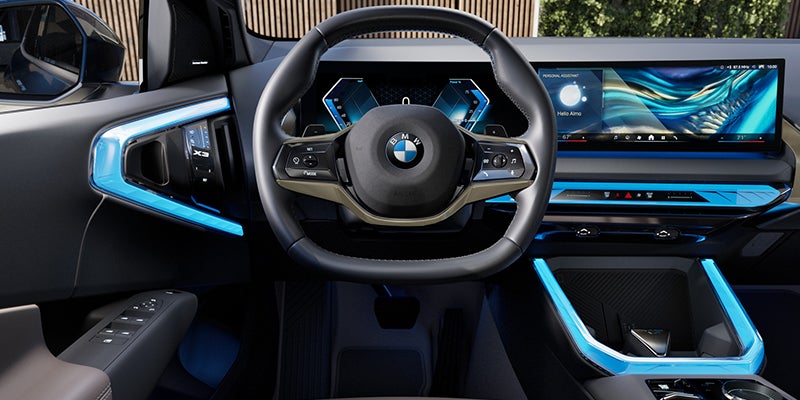
Modern vehicles are increasingly defined by how drivers interact with technology inside the cabin. For BMW, the digital cockpit is not simply a place to display navigation or media information. It functions as a central interface that connects vehicle systems, driver information, and connected services into one integrated environment. Shoppers researching BMW vehicles often notice the BMW Curved Display, a distinctive panoramic screen that stretches across the dashboard. While the visual design stands out immediately, the real purpose of the system is to organize critical driving information in a way that keeps drivers informed while maintaining focus on the road. Understanding how the BMW digital cockpit works helps explain why it has become a defining feature across the BMW lineup. How the BMW Curved Display Organizes Driver Information Many shoppers ask what the BMW Curved Display actually does beyond replacing traditional gauges. The BMW Curved Display is a panoramic digital interface that combines the instrument cluster and infotainment screen into a single driver oriented display system. In BMW vehicles equipped with this technology, the display is divided into two functional areas. The portion directly in front of the driver acts as the digital instrument cluster, while the center portion serves as the primary infotainment and control interface. This layout allows drivers to access several types of information simultaneously: more Vehicle speed and driving data Navigation guidance and route information Media and audio controls Vehicle status and driver assistance alerts Connected services and communication features The curved orientation of the display is designed to angle information toward the driver. Instead of placing screens flat across the dashboard, BMW positions the interface so that key driving information remains within the driver’s natural line of sight. How the BMW iDrive System Powers the Digital Cockpit The visual display is only one part of the BMW cockpit system. Behind the interface is BMW iDrive, the operating system that manages infotainment, vehicle settings, and connected features. BMW iDrive organizes the vehicle’s technology into several primary functions that drivers can access through the central interface. These include: Navigation and route guidance Media streaming and audio control Climate system adjustments Vehicle configuration settings Driver assistance system monitoring The BMW iDrive interface is designed to simplify access to these systems through clear menus and customizable layouts. Drivers can arrange frequently used features so they appear quickly within the display. Instead of relying on a single control method, BMW provides multiple ways to interact with the system. Drivers can use touch inputs on the screen, steering wheel controls, voice commands, or the center console controller depending on preference. How the BMW Digital Instrument Cluster Supports Driving Awareness The BMW digital instrument cluster replaces traditional analog gauges with a dynamic display capable of presenting multiple layers of information. Many drivers wonder what information appears on the BMW digital cluster and how it changes during driving. The display adjusts based on vehicle activity, navigation guidance, and driver assistance systems. For example, the BMW digital instrument cluster can display: Current speed and driving mode Navigation directions integrated directly into the gauge display Adaptive cruise control distance indicators Lane guidance from driver assistance systems Fuel or energy consumption data Because the system is digital, the layout can change depending on the selected driving mode. Sport oriented modes may emphasize performance data, while comfort oriented modes may prioritize navigation and efficiency information. This adaptability allows drivers to see the most relevant information without switching between screens or menus. Voice Control and Connected Technology Inside the BMW Cockpit Interacting with vehicle technology should not require drivers to take their attention away from driving. For this reason, BMW integrates voice control and connected technology directly into the digital cockpit system. BMW voice commands allow drivers to access several functions without touching the display. Drivers can request navigation destinations, adjust climate settings, or change media playback through natural language prompts. Connected services extend the functionality of the cockpit beyond the vehicle itself. Drivers can access real time traffic updates, remote vehicle services, and integrated smartphone connectivity. These features allow the BMW cockpit to act as a digital hub that connects the driver, the vehicle, and external information sources. How the BMW Digital Cockpit Improves the Overall Driving Experience Technology inside a vehicle should enhance the driving experience rather than distract from it. BMW approaches cockpit design with the goal of keeping the driver informed while minimizing unnecessary complexity. The BMW Curved Display and digital cockpit architecture contribute to the driving experience in several ways: Important driving information remains directly in front of the driver Navigation guidance is easier to follow when integrated with the instrument cluster Multiple interaction methods allow drivers to choose the most convenient control method Vehicle systems can be monitored through a centralized interface For shoppers comparing vehicles in the luxury sedan or SUV segments, the digital cockpit has become an important part of the ownership experience. BMW’s approach focuses on integrating technology with driver awareness rather than overwhelming the driver with disconnected screens or controls. As vehicles continue to incorporate more advanced systems and connected features, the BMW digital cockpit demonstrates how thoughtful interface design can support both convenience and driving focus.

How BMW Chassis Balance Shapes the Driving Experience in the 2026 BMW 3 Series

BMW has built its reputation around a concept often described as driving dynamics. While many manufacturers focus primarily on comfort or raw power, BMW engineers its vehicles so that every system working beneath the body contributes to a balanced, predictable driving experience. For shoppers researching the 2026 BMW 3 Series, one phrase appears repeatedly in reviews and buyer discussions: chassis balance. Understanding what that term actually means helps explain why BMW sedans continue to be compared against competitors when it comes to steering feel, cornering stability, and overall driver engagement. What Chassis Balance Means in a Performance Sedan Chassis balance refers to the way multiple mechanical systems work together to keep a vehicle stable and responsive while driving. Rather than relying on one component, balance is created by coordinating several elements of the vehicle’s design. In a BMW sport sedan like the 2026 BMW 3 Series, chassis balance comes from the interaction of: more Weight distribution across the front and rear axles Suspension geometry and damping control Steering calibration and feedback Drivetrain layout and power delivery When these elements are tuned properly, the vehicle responds predictably to steering input. The car remains composed during braking, accelerating, and cornering because no single component is overwhelming the others. This balanced system is what allows a BMW sedan to feel both stable at highway speeds and agile when navigating curves or changing lanes. Why Rear Wheel Drive Plays a Role in BMW Handling One of the most discussed aspects of BMW driving dynamics is the brand’s long history of using rear wheel drive as its primary drivetrain layout. Rear wheel drive separates the responsibilities of the vehicle’s front and rear wheels. The front wheels focus on steering while the rear wheels deliver engine power to the road. This separation allows the front tires to concentrate on directional control rather than both steering and propulsion. In practical driving terms, this layout can offer several advantages: Steering response tends to feel more precise because the front wheels are dedicated to directional control Weight transfer during acceleration helps stabilize the vehicle’s rear axle Corner exits often feel smoother and more controlled as power is applied through the rear wheels In the 2026 BMW 3 Series, this configuration contributes to the composed cornering behavior that many drivers associate with the brand. How Suspension Tuning Shapes Driving Dynamics While drivetrain layout influences how power reaches the road, the suspension system plays a major role in determining how the vehicle manages motion. Suspension components control how the car reacts to bumps, weight shifts, and rapid changes in direction. When tuned correctly, the suspension allows the tires to maintain consistent contact with the road surface, which is essential for both comfort and grip. BMW engineers suspension systems to manage several aspects of vehicle behavior simultaneously: Body roll control during cornering Pitch control during braking and acceleration Damping response to absorb uneven road surfaces Stability during quick directional changes In performance-oriented models and trims, adaptive suspension systems may adjust damping characteristics automatically. This allows the vehicle to remain comfortable during everyday commuting while becoming firmer and more responsive when driving conditions demand greater control. For drivers, the result is a sedan that remains composed across different road conditions rather than feeling overly stiff or overly soft. Steering Feel and Driver Feedback Another important factor in BMW chassis balance is steering feedback. Steering systems are calibrated not only to change the direction of the vehicle but also to communicate information about road conditions back to the driver. Well-tuned steering allows drivers to sense how much grip the front tires have while cornering or maneuvering through traffic. This communication helps drivers make small adjustments smoothly rather than reacting suddenly. BMW vehicles have traditionally emphasized steering precision because it reinforces the connection between the driver and the road. In a sport sedan like the 2026 BMW 3 Series, that feedback contributes to a sense of control that many drivers describe as confidence behind the wheel. How xDrive Changes the Driving Equation While rear wheel drive remains central to BMW’s handling philosophy, many models also offer xDrive, BMW’s intelligent all wheel drive system. xDrive constantly monitors traction at each wheel and can redistribute power between the front and rear axles when conditions change. This capability becomes particularly valuable in environments with: Rain or wet pavement Snow or icy roads Uneven traction surfaces Instead of replacing BMW’s focus on balance, xDrive adds another layer of adaptability. The system maintains stability and traction when road conditions are less predictable while still preserving much of the responsive driving character that defines BMW sedans. For buyers comparing configurations of the 2026 BMW 3 Series, drivetrain choice often comes down to priorities. Drivers in mild climates may prefer the traditional feel of rear wheel drive, while those facing winter conditions may appreciate the added confidence provided by xDrive. Why the BMW 3 Series Is Often Considered a Benchmark The BMW 3 Series has been referenced as a benchmark sport sedan for decades. That reputation exists not because of a single feature but because of the way the car integrates multiple performance characteristics into one cohesive driving experience. The 2026 BMW 3 Series continues to represent this balance by combining: Precise steering feedback Well managed weight distribution Sophisticated suspension tuning Multiple drivetrain options suited to different driving environments Instead of prioritizing only comfort or only performance, the 3 Series is engineered to deliver a blend of both. That balance is what allows the vehicle to function equally well as a daily commuter, highway cruiser, or engaging driver’s car. For shoppers comparing sedans in this segment, understanding the mechanical principles behind BMW chassis balance can help explain why the driving experience often feels distinct.

How Adaptive Cruise Control Works and Why Drivers Want It in Modern Vehicles

Driver assistance technology has evolved quickly in recent years, and one feature that many drivers now expect in a new vehicle is adaptive cruise control. Traditional cruise control has existed for decades, helping drivers maintain a steady speed on long highway drives. Adaptive cruise control builds on that idea by allowing the vehicle to automatically adjust speed based on surrounding traffic. Instead of simply holding a constant speed, adaptive cruise control monitors the road ahead and responds to changing traffic conditions. The system can slow the vehicle when traffic slows and accelerate again when the lane clears. This helps reduce driver fatigue during highway travel and adds an additional layer of safety by maintaining a consistent following distance. Understanding how adaptive cruise control works helps drivers see why this technology has become a core part of modern vehicle design. How Traditional Cruise Control Works Traditional cruise control focuses on one task: maintaining a set speed. When a driver activates cruise control and selects a speed, the vehicle’s engine control system automatically manages throttle input to keep the vehicle traveling at that speed. This works well when traffic conditions remain consistent. However, it has a major limitation in real world driving situations. more If the vehicle approaches slower traffic, the driver must manually disengage cruise control and apply the brakes. Once traffic clears, the driver must accelerate again and reset the system. Adaptive cruise control solves this limitation by allowing the vehicle to respond to traffic automatically. What Adaptive Cruise Control Adds Adaptive cruise control takes the basic idea of speed control and combines it with traffic monitoring. Instead of simply maintaining a constant speed, the system actively tracks vehicles ahead and adjusts speed accordingly. When the system is active, drivers select both a target speed and a following distance. The vehicle then manages acceleration and braking to maintain that spacing. Key functions include: Detecting vehicles ahead in the same lane Maintaining a safe following distance Automatically slowing down when traffic slows Returning to the preset speed when the road clears This creates a smoother and more relaxed highway driving experience, especially during long trips or moderate traffic. The Sensors That Power Adaptive Cruise Control Adaptive cruise control relies on several sensors that constantly monitor the road ahead. These sensors gather data that allows the vehicle’s computer to determine how far away other vehicles are and how quickly the distance between them is changing. Most systems rely on two primary technologies: Radar sensors mounted in the front grille or bumper Forward facing cameras positioned near the windshield Radar sensors send signals forward and measure how long it takes for those signals to bounce back from objects ahead. This allows the vehicle to calculate distance and relative speed with high accuracy. The camera system helps identify vehicles, lane markings, and other objects. Together, radar and camera inputs give the vehicle a clear picture of traffic conditions ahead. The vehicle’s onboard computer processes this information many times per second, allowing the system to respond smoothly to changing traffic speeds. How the Vehicle Adjusts Speed Automatically Once the system detects a vehicle ahead, adaptive cruise control begins managing speed automatically. If the vehicle ahead slows down, the system reduces throttle input and may apply the brakes to maintain the selected following distance. When the lane clears again, the system gradually accelerates back to the preset cruising speed. This process involves coordination between multiple vehicle systems: Engine management system adjusts throttle input Electronic braking system slows the vehicle when needed Distance control software determines the safe following gap Drivers typically have the option to choose between several distance settings. These settings control how much space the system maintains between vehicles, allowing drivers to adjust the system to match their comfort level. Adaptive Cruise Control in Stop and Go Traffic Some modern vehicles extend adaptive cruise control functionality even further with stop and go capability. These systems can bring the vehicle to a complete stop if traffic ahead stops. Once traffic begins moving again, the system can automatically accelerate and resume following the vehicle ahead. In many vehicles, the driver may only need to tap the accelerator or press a button to reactivate the system after a stop. This feature can significantly reduce driver workload during heavy traffic conditions or long highway commutes. How Adaptive Cruise Control Works with Other Safety Systems Adaptive cruise control is often part of a broader network of driver assistance technologies. These systems work together to improve situational awareness and help drivers respond to changing road conditions. Common related technologies include: Forward collision warning alerts the driver if a potential collision is detected Automatic emergency braking applies brakes if a crash risk becomes imminent Lane centering or lane keeping assistance helps maintain position within a lane When combined, these systems create a more comprehensive driver assistance environment. While they do not replace the driver, they can make highway travel smoother and less stressful. What Drivers Should Know Before Using Adaptive Cruise Control Although adaptive cruise control adds convenience and safety support, it is still important for drivers to understand its limitations. Driver attention remains essential. The system is designed to assist, not replace, the driver. Situations where adaptive cruise control may require additional driver attention include: Heavy rain, snow, or fog that may affect sensors Sudden lane changes by other vehicles Stationary objects beyond the system’s detection range Complex road environments such as construction zones Drivers should always keep their hands on the wheel and remain ready to take control when necessary. Why Adaptive Cruise Control Is Becoming a Must Have Feature As vehicles become more advanced, driver assistance technology continues to evolve. Adaptive cruise control is now widely available across many vehicle segments, from compact cars to full size SUVs and trucks. Drivers appreciate the technology because it improves comfort during long highway trips and helps manage the constant speed adjustments required in traffic. By combining radar sensors, cameras, braking systems, and advanced computing, adaptive cruise control represents an important step toward safer and more intelligent vehicle systems. For many shoppers researching modern vehicles, understanding how these systems work can make it easier to choose a vehicle that fits their daily driving needs.

BMW Lease Insights for 2026 Models for Orange Park Drivers

Leasing is one of the most common ways drivers experience a new BMW. Many shoppers researching BMW lease options want to understand how the process works, why lease payments vary between vehicles, and what happens when the lease term ends. Unlike traditional financing, leasing focuses on paying for the vehicle’s expected depreciation during the time you drive it rather than the full purchase price of the vehicle. For drivers exploring the 2026 BMW lineup, leasing allows access to BMW engineering, technology, and performance while maintaining flexibility when the lease term is complete. Understanding how BMW lease structures work helps shoppers evaluate monthly costs, mileage allowances, and long term ownership options before deciding whether leasing aligns with their driving habits. How BMW Leasing Works Many drivers researching BMW lease payments ask how leasing actually determines the monthly cost of driving the vehicle. Leasing is a financing structure that allows drivers to pay for the portion of the vehicle’s value that is used during the lease term rather than purchasing the entire vehicle. A typical BMW lease is structured around several key components that influence the monthly payment: more • the vehicle’s starting price • the predicted value of the vehicle at the end of the lease • the length of the lease term • expected mileage during the lease • the financing rate applied to the lease Because a lease payment is based primarily on depreciation, two BMW models with different resale values may produce very different lease payments even if their original prices are similar. For example, a 2026 BMW 3 Series lease payment reflects the projected resale value of the vehicle after the lease period. Vehicles that maintain stronger long term value often produce lower monthly lease payments because the driver is paying for a smaller portion of depreciation during the lease term. Why Residual Value Influences BMW Lease Payments One of the most important concepts in leasing is residual value. Many shoppers see this term in lease agreements but may not fully understand what it represents. Residual value is the projected value of the vehicle at the end of the lease term based on expected depreciation. Financial institutions estimate how much the vehicle will be worth after a certain number of years and miles. This projected value becomes the foundation of the lease structure. When leasing a BMW, the monthly payment largely reflects the difference between the vehicle’s starting price and its projected residual value. For example, if a vehicle is expected to retain strong resale value, the amount of depreciation financed through the lease will be smaller. This often results in lower monthly payments compared with vehicles that lose value more quickly. This is one reason luxury vehicles such as the BMW 3 Series or BMW X3 are frequently leased. Their resale value projections help create lease structures that align well with drivers who prefer newer vehicles every few years. How Mileage Allowances Affect BMW Lease Terms Another common question drivers ask when researching BMW leasing is how mileage limits work and why they affect lease pricing. Lease mileage allowances exist because mileage directly affects a vehicle’s future resale value. Vehicles driven significantly more than expected typically experience greater wear, which reduces their market value at the end of the lease term. When a BMW lease is structured, the leasing company estimates how many miles the vehicle will accumulate during the contract period. This estimate helps determine the projected residual value of the vehicle. Typical BMW lease mileage options include: • lower annual mileage for drivers with shorter daily commutes • moderate mileage allowances for average driving habits • higher mileage structures for drivers who travel longer distances Choosing the mileage allowance that matches real driving habits helps ensure that the lease structure accurately reflects expected vehicle use. Understanding BMW Lease End Options Many shoppers researching BMW lease programs want to understand what happens once the lease term ends. Leasing offers several potential paths depending on how the driver’s needs have changed during the lease period. When a BMW lease concludes, drivers generally have three primary options available. Return the vehicle Drivers may return the BMW at the end of the lease if they no longer need the vehicle or want to transition to a different model. Purchase the vehicle The lease agreement typically includes a purchase option that allows the driver to buy the vehicle at the residual value defined in the lease contract. Begin a new lease Many drivers choose to lease a newer BMW model when their current lease ends, allowing them to transition into updated technology and vehicle design. Understanding these options allows drivers to view leasing not just as a short term financing method but as part of a longer ownership strategy. Why Leasing Is Common for BMW Vehicles Drivers researching BMW lease options often notice that leasing is especially common among luxury vehicles. This pattern is closely tied to how premium vehicles evolve through technology and design updates. BMW regularly introduces advancements in driver assistance systems, digital cockpit displays, powertrain efficiency, and connectivity technology. Leasing allows drivers to experience these improvements more frequently by transitioning into newer vehicles every few years. For drivers who prefer staying current with vehicle technology while maintaining predictable monthly costs, leasing can provide a structured path into the latest BMW models without committing to long term ownership of a single vehicle. Understanding how lease payments are calculated, how mileage influences lease structures, and how lease end decisions work allows shoppers to evaluate BMW leasing with greater clarity. When drivers understand the mechanics behind leasing, they can better determine whether the flexibility and cost structure of a BMW lease align with their driving habits and long term vehicle preferences.

BMW Interior Craft and Driver Focused Design Principles Explained

BMW interior design is driven by function before appearance. Every surface, control, and material choice is engineered to support driving confidence, comfort, and long term usability rather than visual impact alone. For shoppers evaluating BMW interiors, especially in larger SUVs and three row configurations, understanding the intent behind the design explains why BMW cabins feel different over time, not just at first glance. Interior craft at BMW is an extension of vehicle engineering. The cabin is treated as a working environment where ergonomics, durability, and driver awareness matter as much as aesthetics. The Driver Focused Design Philosophy BMW interiors are built around a driver centered cockpit layout. This philosophy prioritizes control access, sightlines, and feedback rather than symmetrical design for its own sake. Key principles include: Controls angled toward the driver for reduced reach Clear separation between driving functions and comfort settings Instrument placement that minimizes eye movement Logical grouping of frequently used controls This layout reduces cognitive load while driving, especially at speed or in complex traffic environments. more Ergonomics and Seating Position Seating position is foundational to BMW interior design. The relationship between seat height, steering wheel placement, and pedal alignment is engineered to create a natural driving posture. BMW seating design emphasizes: Upright but relaxed posture for long distance comfort Proper thigh and lumbar support to reduce fatigue Consistent steering wheel reach across body sizes Clear forward and side visibility This ergonomic consistency supports both performance driving and daily commuting without requiring constant adjustment. Materials Chosen for Longevity BMW interior materials are selected to balance tactile quality with long term durability. Soft touch surfaces are used where contact is frequent, while high wear areas are reinforced for resilience. Common material considerations include: Leather and upholstery treated for abrasion resistance Trim finishes selected to resist glare and fingerprints Switchgear designed for repeated mechanical use Structural materials that reduce vibration and cabin noise Rather than prioritizing novelty, BMW focuses on materials that age predictably and maintain their feel over years of use. Craftsmanship and Assembly Precision Interior craftsmanship extends beyond material choice into assembly quality. Tight tolerances and consistent panel alignment reduce noise, vibration, and movement over time. BMW interiors are engineered to: Minimize squeaks and rattles Maintain control precision as components age Preserve tactile consistency across temperature changes Support long term structural integrity This attention to assembly quality becomes more noticeable as vehicles accumulate mileage. Technology Integrated With Purpose BMW integrates technology into the interior without allowing it to dominate the driving experience. Screens and interfaces are positioned to support awareness rather than distraction. Design priorities include: Display placement within the driver’s natural line of sight Retention of physical controls for critical functions Clear visual hierarchy for driving related information Interface logic that prioritizes clarity over complexity This balance allows drivers to interact with technology intuitively without diverting attention from the road. Interior Design in BMW SUVs and Three Row Cabins In larger BMW SUVs, interior design principles adapt to support passenger comfort and cargo flexibility without losing driver focus. Key SUV interior considerations include: Clear sightlines despite increased vehicle height Second and third row seating that preserves structural integrity Cargo layouts that maintain load stability Climate control zoning that supports full cabin comfort Three row configurations are designed to balance passenger accommodation with driver control, avoiding the detached feel common in large cabins. Practical Storage and Daily Usability BMW interiors incorporate storage solutions that reflect real world use rather than decorative placement. Functional design elements include: Storage positioned within natural reach Console layouts that support daily items Door pockets sized for practical use Cargo areas designed for varied load shapes These details improve daily usability without drawing attention away from the driving task. Interior Noise and Comfort Management Sound management is a critical component of interior design. BMW cabins are engineered to control noise without isolating the driver from feedback. Interior acoustic strategies include: Strategic insulation placement Structural damping to reduce vibration Materials that absorb rather than reflect noise Cabin tuning that preserves engine character without intrusion This approach supports long distance comfort while maintaining a sense of connection to the vehicle. Long Term Ownership Experience BMW interior design is evaluated over years of ownership, not showroom impressions. Materials, layouts, and controls are tested for consistency over time. Long term considerations include: Wear patterns on high contact surfaces Retention of control responsiveness Interior noise stability Seating comfort after extended use This focus helps explain why BMW interiors often feel cohesive and purposeful well beyond the initial ownership period. Interior Craft as an Engineering Decision BMW interior design is not decorative by accident or minimal by trend. It reflects a deliberate engineering approach that prioritizes the driver, supports passengers, and maintains quality over time. For shoppers evaluating interior quality and usability, understanding this philosophy clarifies why BMW cabins emphasize control, clarity, and durability rather than visual excess. That intent is central to how BMW designs the space where driving actually happens.

BMW Connected Services and Digital Features for Everyday Use

BMW digital systems are engineered to support driving rather than compete with it. Connected Services and interior technology are designed around the driver’s environment, integrating navigation, vehicle data, and convenience features in a way that feels intentional instead of overwhelming. For shoppers evaluating modern BMW interiors, understanding how these systems work in daily use is more important than knowing feature names. BMW approaches in vehicle technology as an extension of vehicle engineering. Software is expected to behave predictably, stay relevant over time, and remain secondary to the driving task. What BMW Connected Services Actually Include BMW Connected Services function as a centralized digital layer that links the vehicle, the driver, and supporting infrastructure. These services are not a single feature but a collection of systems working together. Core capabilities include: Remote vehicle access for locking, unlocking, and status checks Vehicle location and security monitoring Maintenance alerts and service information Weather, traffic, and infrastructure data integration Digital key functionality on compatible devices These services are designed to reduce friction during ownership rather than add interaction steps. more The BMW Digital Cockpit and Driver Environment BMW interiors prioritize a driver focused layout where screens and controls support situational awareness. Displays are positioned to minimize eye movement, and interface logic follows driving priorities. Key elements of the digital cockpit include: A configurable instrument display that adapts to drive modes A central display designed for glanceable information rather than deep menus Steering wheel controls that reduce reliance on touch interaction Logical separation between driving functions and comfort settings This layout allows drivers to interact with technology without disengaging from the road. Navigation That Integrates With the Vehicle BMW navigation is built into the vehicle’s operating system rather than functioning as a standalone app. This allows it to interact with driver assistance systems and vehicle sensors. Navigation advantages include: Real time traffic routing based on vehicle location and speed data Integration with adaptive cruise control and driver assistance alerts Display of route guidance within the instrument cluster Predictive routing that adjusts based on driving conditions Unlike phone based navigation, built in systems can influence how the vehicle prepares for upcoming conditions. Over the Air Software Updates and Longevity BMW supports over the air software updates that enhance functionality after purchase. These updates are designed to maintain system stability while adding features or refinements. Over the air updates can include: Interface improvements and usability refinements Feature expansions for supported systems Security and stability enhancements Compatibility updates for connected services Updates occur without requiring a service visit and are designed to preserve vehicle reliability rather than introduce experimental behavior. Subscription Transparency and Ownership Reality Connected Services often raise questions about subscriptions and long term usability. BMW structures these services so that core vehicle functionality remains intact even if subscriptions expire. Important ownership considerations include: Essential vehicle functions remain active without subscriptions Connected features may require renewal after an included period Navigation and safety systems continue to operate independently Subscription services primarily affect convenience and remote access This structure helps prevent dependency on ongoing payments for core driving functionality. AI Assisted Features Without Disruption BMW integrates intelligent assistance carefully. Rather than branding features aggressively as artificial intelligence, BMW applies adaptive logic where it improves usability. Examples include: Predictive navigation suggestions based on driving patterns Voice interaction tuned for command clarity rather than conversation Adaptive interface behavior based on driving context The focus remains on reducing cognitive load rather than adding novelty. Everyday Usability and Learning Curve BMW digital systems are designed to become intuitive quickly. Physical controls are retained where tactile feedback matters, and digital elements are introduced where they provide clear benefit. Daily usability benefits include: Minimal menu layering for common tasks Consistent control placement across models Customization options that do not require constant adjustment Clear visual hierarchy for driving critical information This balance supports long term satisfaction rather than short term excitement. How Digital Features Support Driving Rather Than Distract BMW places strict boundaries on what digital systems are allowed to do while the vehicle is in motion. Features are prioritized based on safety relevance and driver attention. Design principles include: Limiting complex interactions while driving Prioritizing alerts over entertainment notifications Maintaining manual control authority Ensuring system behavior remains predictable This reinforces the idea that technology exists to support driving, not replace it. What Shoppers Should Evaluate When evaluating BMW Connected Services and interior technology, shoppers should consider: How much remote access matters in daily routines Preference for built in navigation versus phone mirroring Comfort with software updates over time Desire for customization versus simplicity Understanding personal usage patterns helps determine which digital features provide real value. The BMW Philosophy Behind Connected Technology BMW’s approach to digital systems reflects a broader engineering philosophy. Technology should enhance awareness, reduce friction, and remain secondary to the driving experience. Connected Services and digital features are designed to evolve quietly in the background, maintaining relevance without demanding attention. That approach aligns with the broader design intent of BMW and explains why BMW interiors emphasize clarity, control, and longevity over spectacle.

Contact Us

Fill out this form below and we'll contact you shortly
*Required Fields